Saturday, March 19, 2016

We Happy Few Update

I feel like I’ve had a productive day when I do something that results in big hunks of content. For example, the other day we had a recording session for a soldier. We got 180 lines recorded in an hour. Since we’d scheduled two hours, I had to scramble to come up with some other stuff for our actor to record.

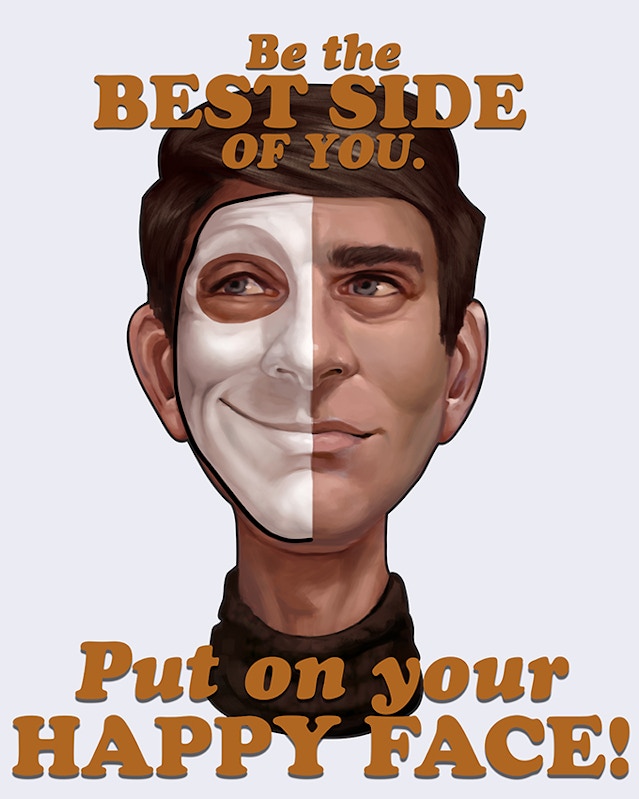
However, I’m also responsible for lore. On Monday, Whitney asked me for some ideas for posters and things to flesh out the Garden District. The easy way to do this would be to repeat something you already know: a poster promoting Joy, for example, or another war poster. The harder and better thing to do is to show you something you didn’t know. In this case, it was, “What is it like for the Wastrels to come off Joy?” Now there’ll be a painting that tells you something about that. And a painting that’s the flip side of that: what proper decent Wellies do when they’re confronted with the awkward past. Sarah and I had fun coming up with that one.
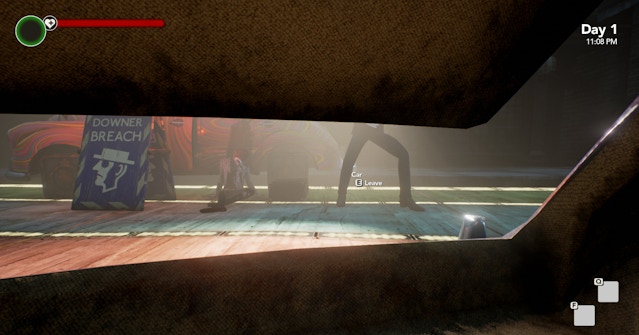
You can hide in car trunks!
And, I wrote three editorial cartoons from some sort of samizdat dissident paper. Who knew there were ever dissidents?

I sometimes wonder where my day goes. Something like “think of five ideas for the art team” can take an hour or more. We are also coming up with a new game mode. But what to call it? The names of the modes have to communicate what they’re like while being of the game world -- for example Wakey Wakey for the mode where you wake up after death, and We’ve Come to the End of Our Time for permadeath mode. See if you can guess what the middle mode is from the following rejected trios of game mode names:

Die Another Day
You Only Live Twice
Dr. No

As the World Turns
General Hospital
One Life to Live

But Soft, What Light from Yonder Window Breaks
Double, Double, Toil and Trouble
To Be, Or Not to Be

This sort of thing can also take an hour or more: a lot of thinking, and not very much writing. The best way to do it is to write down all the ideas you have, not just the good ones; a probably bad idea (Please Sir, Can I Have Another mode anyone?) can be a “bridge” to a good idea.

These things take up a lot of time, but they’re the difference between feeling that the world is deep and rich and strange, and would exist even in Arthur’s absence, or feeling that it is merely there to support gameplay.

Rest of the update here.

Far Cry Primal: Some Thoughts


I've enjoyed the Far Cry franchise, particularly Far Cry 4. Exotic locations, solid combat, open world, lots of different strategies to try; but most interesting for me, Far Cry 3 and 4 told good stories. Far Cry 3 was about a privileged white kid who becomes a badass, and what that costs him. Far Cry 4 made you choose between two or three allies, each of whom had serious flaws. Oh, and the hero is non-white! As is almost everybody in the game.

So I was pretty excited about Far Cry: Primal. And it does indeed have exotic locations, solid combat, a big huge open world to explore, and lots of different strategies to try. Oh, and the only white people in the game are Neandertals!

And it has colorful characters, oh yes, from the crazy shaman to the badass queen of one of your enemy tribes. But with the exception of one joke character, none of them has flaws. They are all just fighting for the survival of the clan.

It could have been possible to give the player some flawed characters, and some of the choices that flaws lead to. As written, your tribe is in an existential crisis, squeezed between cannibals and human sacrificers. You can kill them or be wiped off the face of the planet.

Suppose one of your allies wanted to try to reach out to these enemies? Suppose one of the enemies was willing to be an ally, at least against a third party? Without making the whole game about factions, developing one or two characters so that they present choices? You could make "kill'em all" the straightforward, low-risk road, and "reach out" a high-risk, high-reward road, where if you play it right you get an ally, but if you play it wrong, some of your people get killed.

Or, even, if you don't want to go that far in re-tooling the franchise, do what Far Cry 4 did, and demand that the player choose between two visions for the society he's building.

Or even simply, have some of the allies ask the player to do things that are not purely 100% good things. E.g. an optional mission to slaughter all the mammoths to deprive the Neandertals of their food supply, reducing their number.

Or even simply, give them some character flaws of the personal sort: an ally who does not like you, who has to be placated with gifts. An ally who leaves you in a ditch to die, who you need to work with anyway.

As it is, the game is strangely flat. Although it has tons of atmosphere and lovely rendered animals and mountains you can climb and combat that is simply yet flexible... I'm not as engaged as I was by Far Cry 3 and 4.

Character flaws are why we care about characters. Can a AAA single player game really afford these days not to have emotional engagement?


Saturday, March 12, 2016

We Happy Few Update


This week I’ve been working on passive conversations. These are conversations that you might hear while you are very stealthily not interacting with Wastrels or Wellies.

Active conversations are conversations that NPC's have with you, either while they're trying to persuade you to take your Joy, or if they have a problem they hope you can solve, like this guy, whose wife seems a bit under the weather:


We have two kinds of these. One I’m calling “Atmosphere.” These are the sort of conversations you might hear dozens of times. “Oh, there you are!” “Were you looking for me?” “Not at all – but there you are. Hahaha!” “Hahaha!”

These sorts of conversations are standard in video games. However, we’ll also have showcased conversations. These are conversations you’re probably only going to hear once in a playthrough. They’re longer, and they are about people’s distinct desires and problems. We’ll rig these conversations to play in specific encounters where you will, for example, have to stealth your way through a specific location in order to achieve a goal. So your reward for not killing everyone in the house, in addition to whatever loot we give you for being non-homicidal, will be learning about someone’s life.

The showcased conversations really came about because in my first effort at writing atmosphere, all the conversations came out very specific and personal – all way too memorable to be conversations that you might hear from any number of totally different people in totally different places. Asking a screenwriter to write undistinctive dialog is like asking a singer to sing off-key: all their ten thousand hours of training are telling them not to do what you’re trying to do. Fortunately, rather than scrapping the memorable conversations, we’re going to use them along with some more general conversations.

All of this represents yet another metastasis of the amount of recorded narrative in this game! This game is going to have a lot a lot a lot of voice work. Should be fun.

Read the rest of the team's update here.

Thursday, March 03, 2016

London Sound Survey

The London Sound Survey is hundreds of recordings of ambient sounds across London, arranged geographically. If you were writing a scene set at a pie shop, say, you could throw on the ambient sound of a London pie shop.

There are birds and buskers and beggers and bells. There's the whispering gallery in St. Paul's. There's the river. And some of it is old recordings by the BBC: preachers and cheapjacks and herbalists selling their wares.

Awesome.

Saturday, February 27, 2016

We Happy Few Update!

I’ve been continuing to search for a voice for some revelatory audio. There’s a character in game who’s autistic. Good actors are hard enough to find; actors who can play autistic with emotional truthfulness are rarer still. And, the role has another characteristic I can’t tell you yet. Few people can handle a speech impediment without the impediment becoming the whole performance. And, we want charisma in our voices.

(My daughter is autistic, so autism is something I think about a lot. It’s nice to be able to put it in the game. And by “nice,” I mean that it’s going to take us to a seriously effed-up place.)

Meanwhile, I’m continuing to work on dialog for encounters. Writing encounter dialog is tricky because sound eats memory, and we need the game to be a reasonable size on your computer or console. So I need to suggest as much as possible in as little dialog as possible. Also, any time Arthur talks, that means our other player characters will eventually have to have something to say, too. On the other hand, we’re long past the point in video games where we can get away with throwing text on the screen. And a voice performance adds so much, anyway.

I’ve also been having a bash at tooltips. The designers have written very “gamey” tooltips, e.g. “does .2 shock damage + .4 blunt damage.” I feel that takes you out of the game, so the tooltip will now read something clever-ish like, “this weapon is really smashing, and a bit shocking too.” I changed the "sharpened stick" to a "pointy stick," and of course the tooltip is "much more effective than any tropical fruit."


And there’s the usual ongoing support. What brand gin do people drink? What do Wellies say after they are no longer distracted by Rick the Stunt Duck? What do Bobbies say? Each one of these is not a lot of work, but they add up, and there’s a fair amount of bookkeeping necessary as well, to make sure that everything gets recorded and shepherded into the game.

The rest of the team's update is here.

Friday, February 26, 2016

The Church in the Darkness


My friend Richard Rouse III has a new game coming out! It's a top-down infiltration game. Looks pretty fun, and full of lovely irony.

Check out the teaser trailer! And his interview on IGN!

Thursday, February 25, 2016

We Happy Few updates

It occurs to me I should have been posting my We Happy Few Updates here, too. Here's February 12. You can find the rest using the handy We Happy Few tag.


The other day a narrative designer friend o’mine who works at a Big Studio tweeted, “Pro tip: if you design a narrative/audio heavy feature, loop them in early so they can spot potential problems before they happen”.

Compulsion is a strange beast - something in between a 4 person indie team and a 100-500 person AAA team.

What we get in return is that the team is small enough that everyone talks to everybody. At least, I talk to everybody.

I want this on a t-shirt, don't you?
For example, Mike is designing in-game tips. How do you pick up a body? How do you throw one? An in-game tip can throw you out of the game world if it’s written in gamer terminology; on the other hand, if it’s not clear, it’s useless as a tip. So I have to figure out how to rephrase the tip so that it sounds like our world.

Meanwhile, Valentino is building soundscapes for the introduction. There’s a critical flashback to a traumatic event. He’d like to know: what does that sound like? I’ve already recorded and edited the dialog, but what else do we hear? There’s a train. Do we hear steam building? A whistle? A bell? Crowd walla?

Meanwhile, there’s an encounter where you can find a note on a bobby describing you. Well, it takes a level designer two seconds to write that. It sends me down a rabbit hole. Who’s writing the note? What tone is it? Is it officious? Are they scared of you? Do they want the bobbies to follow normal procedure? What is it? Or do they want the bobbies to take care of you by any means necessary?

Meanwhile, David is working on combat buffs. I feel an urgency to rewrite the combat buffs into the voice of the game world, to strengthen your immersion in it. Oh, and, sometimes we want both the player character and the NPC’s to react when these buffs take effect. So those lines of dialog get added to my dialog list, and I start pestering our sound guys to set up another recording session.

And since I’m recording and editing all sorts of cutscene dialog and gameplay barks and encounter dialog... I have to keep after the sound guys to make sure none of it gets lost along the way.

And, there is a Very Important Article that you’ll read in-game that wasn’t clear enough. So I rewrote it, and that meant poor Whitney had to throw out her old painting and make a new one. And then the advertisements were wrong for the date, so we had to fix that. In this game, the advertisements look like throwaways, but they’re important lore, and they’ve got to not only be consistent with our lore, but be revelatory of it.

Oh, and, just now, one of our programmers complained that a Pythonesque object description I wrote turned out to be too long for the UI. It doesn’t take long to do each little thing; but they do all require thought.

In all this, of course, I’m piling up a bit of work for myself. Anything specific to Arthur I’ll have to redo, or replace, for Girl With Needle or the Mad Scotsman. They don’t just have different barks. Anywhere Arthur has a journal entry after an encounter, I’m going to have to rewrite the entry in the other PC’s voice.

This is an ambitious game for its narrative. It would be much easier for me to write generically. The more generic a bark (“Go go go!”), the more often the player can hear it without getting irritated. I’m writing distinctive barks. Hopefully we’ve got enough so they won’t get old. Let me know if they do get old.

And then, there are always the recording sessions and the cutscenes. I can’t tell you what amazing actor I recorded last Thursday, or what role she plays, because it’s all a Big Secret. But the animators are slowly chewing their way through several playthroughs worth of cutscenes. Tuesday and Wednesday I put together a cutscene for the Mad Scotsman’s playthrough; Vincent Schneider’s been storyboarding it since. I also spent a bit of time inserting new dialog in old cutscenes; sometimes there’s a line that doesn’t get recorded, or a brilliant idea that we have after the recording session, and I’ve got to wait until my next session to get it recorded. (Recording with union actors is crucial, but Not Cheap.)

It is a miracle to me that I haven’t fallen behind. Sometimes I wonder if it would be the end of the world if I, you know, left the text of the combat buffs alone; so what if they’re a bit gamey? But I count myself blessed to be in a team where I have the privilege of meddling like that.

Find the rest of the team's update on our Kickstarter page.
Here's the previous update.

Thursday, February 18, 2016

How To Sell It


This nifty little video explains some reasons why Donald Trump is crushing it in the Republican race. Short words, repetition, rearrange your sentences so you put the sharpest word at the end.

Donald Trump speaks at a Fourth Grade reading comprehension level. I bet an analysis of Bill Clinton's speaking style would show similar things. I've noticed that when Hillary talks, you have to think about what she said in order to parse it, while when Bill talks, you feel like you just totally got it. As Churchill said, "Short words are best. Short words when old are best of all."

(Don't like the guy or his politics, this is just a rhetorical analysis.)