Friday, October 16, 2020

Jon Ingold, Part Three

Alex: In a narrative game, the main character can be a distinct character with a voice and a past, or a blank slate. How is the player experience different between the two story modes? In the case of a distinct character, is it important to make sure that the player always has their own reason to do what the player character wants to do? How do you make sure of that?

Jon Ingold with a scruffy beard

Jon: I’ve got very little interest in blank characters for the player to project onto; I find it makes for very disposable storytelling. (We did it for Sorcery! and it worked out ok, I think, but it does reduce every encounter to “let’s meet another funny local!”) For me, character comes first and story comes second - I think people are interested in human beings, and what those humans do is only a vehicle for letting us spend time with them. (The plot of the Avengers movies are irrelevant, right? We’re there for the banter.)

I also don’t worry very much about the player wanting to do what the protagonist wants to do: it just doesn’t seem to be a problem in my experience. The player, picking up a game, wants to be told what they’re supposed to be doing, because they want to play the game “correctly”.

From there it’s a question of - does the game reward the player for joining in? Does the story surprise and delight you? Do you warm to the characters and want to spend time with them? I have a feeling most people who got into Assassin’s Creed Odyssey did so because they liked Cassandra’s arms; people who got into Outer Wilds enjoyed piecing together its back-story, but in neither of those games does the protagonist’s motivation really matter. There’s enough to keep the game ticking over, and we’re enjoying the ride.

For me the most appealing things about a distinct character are - what is being with this character going to allow me to do? - and I can’t wait to see how this character going is to react to what’s coming next!

Alex: What are the different needs of dialog to be delivered as text on the screen, and dialog intended to be performed and recorded?

Jon: Oddly enough, I’ve got very little experience of recorded dialogue! Almost all the work I’ve done is either prose, or “graphic novel”-style dialogue bubbles, and I suspect all three are different in terms of their pacing and delivery. I generally think a lot about pace and length: our prose games try to be very snappy; ideally every paragraph has a joke or a moment of insight. And I’ve really enjoyed writing “paced dialogue” of Pendragon and Heaven’s Vault, where each dialogue line has to be short, but the way they stack together of chain can deliver some nice effects.

I’d love to work with actors more, though; as a writer it’s a delight to have moments really brought to life. I’d just need them to patient with me while I work out what you can and can't actually *say.*

Alex: I think the key thing is never give an actor a result if you can avoid it — no “say the line faster.” Give them an organic reason to give the result — “Okay, you’ve just noticed that the house is a little bit on fire.”

John Badham's book "I'll Be In My Trailer"

John Badham has an excellent book about directing actors called I’ll Be In My Trailer.

Jon: I did a day’s work on the film set of the movie The Imitation Game as a mathematics consultant, where I worked with Benedict Cumberbatch and Kiera Knightley teaching them some maths for a scene. It’s blink-or-you-miss-in in the final film, but what was really interesting for me was watching a professional actor trying to absorb “how a mathematician talks” as fast and as efficiently as possible.

Alex: What is your favorite narrative delivery victory? What is a narrative delivery system you weren’t able to implement, what were you trying to do, why didn’t it work, and what were you able to do?

Jon: Wow, that’s a hard question. We’ve done some things that have been lovely and emotional and I’m super proud of - I adore the death of Fogg in 80 Days [Fogg can die??? OMG]; I like the romance between Flanker and the protagonist in Sorcery!; I love Aamir the ten year old space pirate in Heaven’s Vault.

But my absolute favourite beat is either the moment in Sorcery! where you - the classic nameless D&D protaganist - confront the mind-meddling Archmage after four long episodes, and he convinces you that your whole journey has been a brainwashed set-up because, after all, you don’t even know your name.

Or else it’s the bit in 80 Days where Passepartout gets drunks on vodka and can’t spell Novorossiysk; and the journal keeps trying alternatives and deleting them, which was an effect that just fell out of the way we were happening to handle the text UI.

The list of things that didn’t work is much, much longer: every game we release is full of compromises - places where I hope the player can’t tell that what I hoped a scene might turn into is quite different than what it actually was. A lot of those are action sequences; action doesn’t leave much room for player failure - so while you can conceive “Passepartout scales the balloon to patch the air leak," making that interactive doesn’t pan out so well since he can hardly be allowed to fall off. My chapter of Over the Alps has a car chase which seemed like such a good idea until I was trying to write choices to pace out the narrative and I had nothing: er, steer efficiently and drive fast, please?

My solution to action set-pieces, by the way, is almost always to have a secondary character, so the player can be busy arguing with someone while the action happens as it must!

Alex: Many of your games deliver narrative non-linearly; the player can access narrative chunks in different orders. Do you write differently for non-linear narrative? What does that give the player that a linear narrative can’t?

Jon: For me the most important thing is narrative momentum. I hate that thing in games where you’re wandering around aimless waiting to hit the next checkpoint to kick the next bit of narrative along. I want the story to be constantly spooling out - even if that’s the characters walking in silence because that’s appropriate.

And you simply can’t get that effect if the narrative is linearly delivered - or even if the narrative is non-linearly delivered, but non-contextual. (To give an example of that, I loved the Outer Wilds, but I didn’t like its narrative stuff very much because I would do some hair-raising gameplay, then meet a character and have a really sedate chat with them. The lore and content was interesting, but the delivery was only “pick things up”.)

I want the narrative to envelop and evolve around me, and in any game that isn’t a branching 80 Days-style flow, that means in my experience that the narrative has to be built from opportunities and guards. We write a script full of narrative moments, guarded by the conditions that make them make sense; and some of those moments are opportunities that create narrative moments later down the line, and we push those onto the player when the game thinks they’re running dry.

(So for instance, in Heaven’s Vault, Huang the librarian has a story he can tell the player about a trader on the market moon of Renaki. He’ll only tell it to you if you’re nice to him - but also, only if the game thinks you need it.)

But that design means that there’s very little control over what order things happen in - in Pendragon, when characters encounter a scene, we never know who's in the party, how many people are there, how healthy they are - so we try to cover all those possibilities with a strategy of sensible defaults and specific overrides. Everyone will have *something* to say, but if you’re there with Merlyn, you’ll get this particular insight.

It’s all about having a good authoring system; once you have you have your content pattern worked out, this kind of structure is very easy to throw content into because you don’t need to think about the flow of the scene at all, and there’s no limit to how much you can throw it because all of it turns up sometime, for someone.

The flip side is that it does limit your ambitions: a scene which would require too much specific writing to handle being told out of sequence simply can’t go in the game. But writing within constraints is… normal?

Alex: Is there academic theory that you find useful in your game writing? What did you learn from it?

Jon: I tend to pick up theories and advice quite impressionistically: a tidbit here, an idea there; things I hear from clever people that resonate with my experience of writing. I’ve never seen any holistic theories I can get behind; they’re usually too simple, and they never seem to resonate: they often feel like people theorising in a vacuum rather than describing how they work.

The most significant things I picked up were ideas floated by the interactive fiction community in the early 2000s, where we used to make really ambitious text-based games that explored wonderful ideas, like the separation of the player and protagonist (with unreliable narrators, and games that lied to you, and games built on dramatic irony). And I attended a 4 day Robert McKee “Story” course, which I detested, but came away from with a huge number of useful ideas. (I think many of them are actually Aristotle’s, not McKee’s; and many are just ideas - not rules - but I can’t deny I was challenged and stretched by the course.)

But one thing I’ve noticed is that the most useful tools to me are all really lenses for working out why things aren’t working, rather than ideas for how things Should Go.
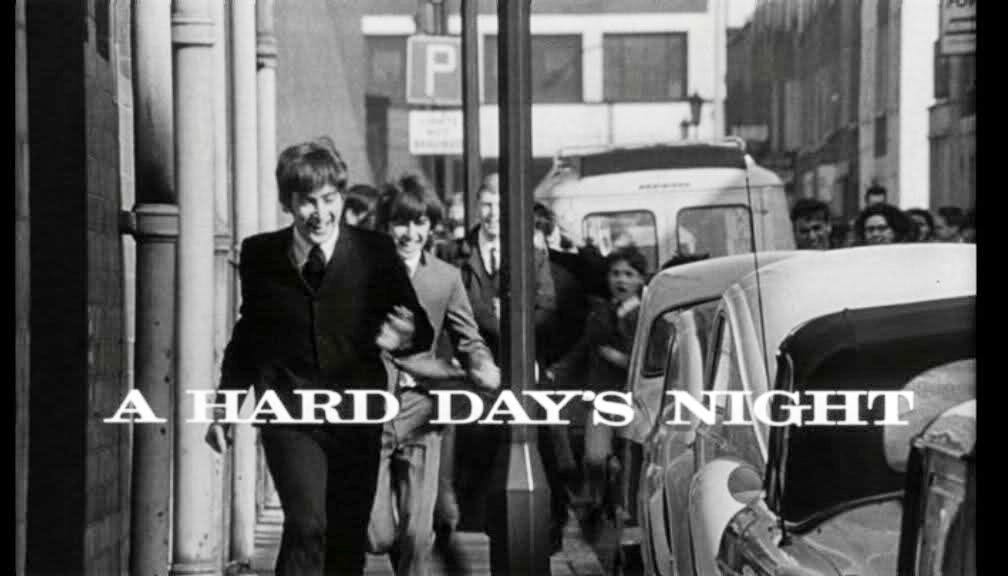
The Beatles run away from fans

Alex:
I think that’s a really good point. There are all sorts of games and films that seem to break the rules and work anyway. What’s the three-act structure of A Hard Day’s Night? When something works, you don’t need the rules. You need them when it doesn’t work.

Which are the games that inspired you? And did they work?

Jon: Spider & Web - a spy story, told in flashback during an interrogation. Every time you fail a timed puzzle, the interrogator insists that you’re lying and makes you tell the story again. As you fail, you slowly learn a few more details about what happened leading up to that point, culminating in a moment of pure insight which allows you to escape. It’s a bit like the device Prince of Persia used, only tied directly into the core game mechanic.

9:05 - a short game in which you get up and go to work, and then it turns out you weren’t who you thought you were, and you replay the game and realise you just assumed you were, but you weren’t.

Galatea - a short game in which you talk to someone, and that’s all you do, but they slowly change their attitude to you based on what you say.

Rameses - a game about an introvert teen, who refuses to do most of the things you ask him to because he’s too introverted. Has a great twist when you think you know how the story is going, because it’s that kind of story, but then he’s too shy to do that too.

Shrapnel - a game that occasionally types in commands for you regardless of what you type, because destiny

The Gostak - a game that’s written in a language that isn’t English, which you have to figure out as you play

The Edifice - a game where you have to learn an alien language to communicate with another character

Photopia - a game about a tragic, needless death, where nothing you do can change anything, told out of sequence for maximum impact

… honestly, it was a melting point of brilliant ideas, and within the constraints of being parser games they were well-implemented too.

Alex: What do you do to stay sane?

Jon: I don’t stay sane very well, I think; I tend to get over-excited mid-project and then heart-broken post-project, and then pick myself up by doing another project and repeating the whole cycle… luckily, though, I have small children, who are extremely diverting and distracting and ground me in a little in something more closely resembling reality.

Sometimes I manage to read books, too - mostly Agatha Christie, Ursula Le Guin or Gene Wolfe - though I find my concentration span is rather feeble these days. And my wife and I watch dramas on TV but only if they have jokes and no torture, which rules out 99% of shows.

Wednesday, October 14, 2020

Jon Ingold, Part Two

Alex: One of the hardest skills for a writer is learning how to accept and use criticism. What do you try to keep in mind when you’re getting feedback from above? From below? From other disciplines? How do you get and use feedback?

Jon: The key thing for me about feedback is not to listen to people’s advice, but to try to understand their problems. I mean, sometimes people have good advice, and good ideas, and you should take those, but usually all feedback is an emotional reaction to something, and you have to unpick what that something was before you can deal with it. “I found the story slow” is often code for “I didn’t like the main character”, that kind of thing.

And I try not to be too precious about anything I write. Years ago, I remember hearing an interview with Tony Gilroy, the writer/director of Michael Clayton, a pretty good movie from about 15 years ago. He’d written screenplays before and the interview asked, did you take on the directing role because you were sick of people changing your scripts? And his response was, “changing the script doesn’t matter; as a writer you’re always looking to trade up.”

I love that. Forget the bullshit idea that you’re a genius creating masterworks; or that your truth is the one worth telling; or that there’s a perfect sentence out there… you lay out the thing as best you can, and then you look for ways to trade up, and you keep doing that, until you can’t face it anymore, and then you’re done.

Alex: The auteur theory has done so much damage to filmmaking. You can’t make a film in Canada without federal and provincial support, and in Quebec, the people that hand out the provincial support prefer to give their money to writer-directors. But a film gains a lot from having a writer and director who want the same result but don’t necessarily agree how to do it. If you don’t agree, often you come up with a third solution which is fresher and better.

Jon: I love working collaboratively; it’s one of my favourite things about inkle, and my partnership with Joseph as been so creatively beneficial to my writing, despite the fact he’s not especially interested in writing!

Alex: I think to be a successful writer, you either need to find out which of the things that you love writing are the ones that other people really want you to write; or you need to learn to love writing the things you have to write. That sounds unartistic, but it’s not. When I began as a writer, I loved writing action, and not that interested in creating dramatic moments. I kind of live for dramatic writing now, and it seems to be one of the things people like about what I do.

Jon: When I was younger I would have spat and fumed at the idea of writing things which “aren’t me” - other people can do that, so what’s the point? Then after ten years of no one reading anything I wrote, I think I came around to the idea that maybe I’d be happy to write anything, really. Now, I quite like spinning whatever I need to write into a me-ish version of it. But more than anything, I’ve realised that I’m still very much learning, and always will be. I still don’t feel like a “competent” writer, even though I know rationally that I’ve completed quite a lot of projects by this point. I find that quite reassuring, to be honest: I’m never going to feel like I know what I’m doing, so I can stop worrying about it.

Alex: You’ve hired some fantastic writers for your games, e.g. Meg Jayanth on 80 Days. What do you look for in hiring a writer, and how do you go about finding that?

Jon: I’m honestly not sure, but I’m certainly very happy with our hit rate so far. I’ve done three collaborations - with Meg Jayanth on 80 Days, Graham Roberston on Sorcery! 4, and Katherine Neil on Over the Alps. In each case, going in, I was absolutely certain that my fellow writer was going to be perfect for the game, and in each case they were better than I’d hoped.

I think I go into hiring a writer with a strong sense of what their strengths are and what kind of brief they’ll enjoy: what will allow them to shine. That said, though, they’re good writers and highly professional, and would turn out great performances over a wide range of projects, and I can’t really take credit for that.

Otherwise, I knew them as humans before knowing them as writers, and they were all empathetic, and intelligent and widely read. I think also they were people who I could communicate with easily - now I come to write that down, I wonder if that isn’t really the main point, actually.

Alex: Had you run into them at conferences? Or university? Or in the creative community at large?

Jon: Different places - I met Meg at an industry meet up in the earliest days of inkle, then happened to work with her again on a freelance design gig; I met Katherine through Jennifer Schneidereit who runs Nyamnyam; I met Graham on a writer’s course that I co-led with David Varela. Networks, I suppose, but all professional ones. God, I hate COVID.

Monday, October 12, 2020

Jon Ingold Interview, Part One


Jon Ingold is the Creative Director at Inkle, an indie studio known (but not well enough!) for making beautiful, literate, text-based narrative games such as Heaven’s Vault and 80 Days. They’ve just come out with Pendragon, a “narrative roguelike” about the final battle of the Arthurian era. Appropriately, this is a written interview – I sent him questions, and some follow-ups, and he wrote the answers down. This is quite a bit less work for me, though thinking up good questions is still half the work. 

Jon Ingold
Alex: What phase of game development are you in currently? What do you actually do in a day?

Jon: We just shipped a game, Pendragon, so right now I am in a “doodling” phase, while I try to come up with an idea that excites me enough to work on it! I usually have two or three prototypes kicking around at any time, so the hope is one of them will turn into something intriguing!

Meanwhile, there’s company stuff to handle, and inkle’s cofounder Joe is spearheading our next game, and I’m doing a little work towards that occasionally.

Alex: Who are the people you have to make happy, and how do you keep them happy?

Jon: One of the nice things about running a studio is there’s no one above us we have to please: we make games we believe in, and we make them the way they think they ought to be made. So the only people we really have to make happy are our players, though we never really seem to know who they are, or what they like… they come and go! So we try to keep ourselves happy, and make the things we want to make.

Alex: I’m surprised you don’t know who they are. Surely you must have a fan base? I’m sure I’m not the only player who thought, “Pendragon? By the folks who made 80 Days and Heaven’s Vault? Yes, please.” Is it that as an indie you have only limited resources for community management?

Jon: We have a Discord server which has a community of people we recognise, and there are some familiar faces on Twitter - but otherwise there isn’t a space for “fans” to really congregate and become visible. It’s particularly a problem coming from mobile development - Apple creates a solid wall between developers and customers; which has some benefits - you don’t have to moderate the racists yourself - but it also means it’s impossible to, say, tell people who bought 80 Days that a new game has come out.

The problem is always reach, rather that community management. We can announce Pendragon to our circle, but it’s still going to be the case that 90% of the people who would be interested to hear about it will never hear about it. Even Heaven’s Vault is still being discovered, despite awards, reviews and a year and a half!

But it’s also our fault for constantly changing platforms. A lot of people who enjoyed 80 Days are probably waiting for the iPad version of Heaven’s Vault, and so on.

Alex: What are the hardest battles you fight?

Jon: The hardest creative battle is avoiding cliché. Writing in games has to fit itself around what the player can do, same as storylines in spy TV shows have to make space for a car chase, a couple of fights and a third-act twist. But each scene has got to be different, and interesting. You can’t just have a character tell you to take an object to another character in return for some gold. You can’t. You mustn’t. But the temptation to write the easiest storyline, to just recycle the same flow over, can be very strong.

The hardest actual battle we fight is being seen. Indie games appear, then disappear, taking whole studios with them. Every month we’re asking ourselves the question, how to do we help inkle’s games to stay relevant, to stay remarked upon? It’s a battle we’ll always lose in the end - I recently saw a “10 best video games based on novels” list that didn’t include 80 Days - but every little thing we can do keeps the lights on for a little longer.

Alex: Cheer up — maybe the reviewer never heard of Jules Verne!

One of the striking things about your adaptation of “Around the World in 80 Days” was how you guys changed its world from the colonial one that really existed to one where places like Haiti are strong and sovereign and have their own steampunk technology. When did that idea come up and what went into that decision?

Jon: The core concept was design - we needed there to be good reasons for a player to go to, say, South Africa, even though it’s definitely going the wrong direction. We also played into the fact that most people haven’t read Verne’s book, and assume it’s steampunk, because we associate Verne with steampunk (mostly because of the end of the Back to the Future III, I think.)

Meg Jayanth took that idea and developed it, introducing the idea of non-steam steampunk for places where water was too valuable to waste. That was a brilliant piece of world-building which she grew out to cover the various regions we wrote about.

Alex: Is it important to have a voice as a video game writer, or is it better to be a chameleon? How did you find your voice?

Jon: If you’re a freelancing professional, I’m sure you need to be a chameleon; and I often think that ideally a professional writer can write anything, and if they can’t, they can learn. For me, though, I’m determined to have some kind of voice. We flit between genres and styles and different kinds of frames, but I always want our games to have characters, to have humanity, to have intelligence, and to be about something.

I think I found my way to my style the long way round: bouncing between writing things that were “all me” that no one else could get much enjoyment from and writing things weren’t at all me, that came out a little vanilla, a bit oddly echoey.

Tuesday, September 29, 2020

Richard Dansky, Part Three

Clanbook Lasombra cover art

...Did I mention RPGs?  Richard Dansky also writes RPGs.


Alex: You have an M.A. in English.

Richard: I'm one degree away from being completely unemployable, so...

Alex: How has that informed your work? Is there an academic theory you find useful?

Richard: In terms of theory... just the notion of literary analysis and being able to deconstruct story structures and narrative structures. The training that I got as a graduate student, the analysis of those narrative structures, is something that served me very well.

Alex: So the ability to see the hidden structures in stories.

Richard: Yeah. And I could start rambling on about [Russian philosopher Mikhail] Bakhtin and all that, but...

Alex: Oh, please do. "What can Bakhtin do for you?"

Richard: Bakhtin actually helped me write a thesis on H.P. Lovecraft as an undergraduate at Wesleyan.

Alex: And what what was your Bakhtinian take on Lovecraft?

Richard: This was before Lovecraft was cool and long before everybody figured out he was a howling racist. But I was talking about spheres of influence and transgression between those spheres of influence. The idea that Lovecraft's horror comes from the trespass, one into the other, human into the monstrous and the monstrous into the human. I could go into a great deal more detail if I could find in the damn thing somewhere in my office.

Alex: Does that work in games as well, this sense of transgression? Or are we just always in a very carefully defined, consistent fantasy world?

Richard: Our worlds are so carefully crafted that it's hard to be allowed to transgress against them. The worlds generally don't allow for a sense of transgression against the story they want to tell. Every so often you get a game that tries to go there. And sometimes the results are fantastic.

Alex: What's one that's fantastic?

Richard: I would say The Last of Us transgresses. And sometimes it doesn't work so well. Where it comes across as crude or the player does not enjoy the feeling of transgression.

Alex: In what way does The Last of Us transgress?

Richard: Well, the standard ending would have ended with the delivery of Ellie to the doctors, happy ending, OK, they're going to save the world now.

Alex: You're a hero.

Richard: And the fact that it doesn't stop there, the fact that we find out more and we act against what was seen as our heroic goal all the way through the game... I think that's a moment of transgression. And an excellent one.

Alex: It is certainly one of the most earned unexpected endings. You're going, oh, my God, that's horrifying. And then you go, but everything that has happened has led up to this. And he couldn't have made a different decision.

Richard: It feels a piece of the world and it feels like something that character would rationally do. That feels righteous to do. And even though it's going against the proposed heroic ideal of the first 90 percent of the game.

Alex: I think that's probably why it was so memorable. If it had had the standard ending, I don't think people would have been over the moon about it.

Richard: Well, and the giraffes. I love the moment with the giraffes. It's the moment of, This is what you are fighting for. That quiet moment. When the shouting stops and the shooting stops and you're not running, you take a deep breath and say, OK, these are real people, these are people who I can care about because they have this humanity to them.

Alex: They have an ability to experience the quiet moments.

Richard: Yeah.

Alex: I think that's right.

Richard: And you contrast that to games where everybody is always shouting all the time. You don't get an impression of characters, because after a while you tune it out. It's just another order, another description, another bit of pipe being laid.

Alex: What question would you most want answered by this book I'm writing?

Richard: What comes next?

Alex: In terms of ... theory? AI?

Richard: Storytelling. We still don't even have a common vocabulary for video game storytelling.

Alex: What would we be looking for in a vocabulary?

Richard: A common language, a formalization of the role, and a professional jargon that could be respected outside of the club.

Alex: Like in show business with your turning points. Act outs. Teasers. Ghosts.

Richard: I mean, we have barks and that's about it. And I think we need our own language to differentiate ourselves from cinema, from television. Now, obviously, there's a lot of overlap, but there's also a lot of space that's ours alone. And trying to cram us into their boxes has, I think in some cases set video game storytelling back.

Alex: Each medium has things that it does well. A novel can slow down or speed up time in a way that a movie or a TV show can't, because everything has to happen in real time. You can jump between times, but you can't speed up time, except for the occasional slow-mo or time lapse shot. You can't show, say, "over the course the next few months, she began to wonder if her marriage was working..." -- you can't show that. What do you think in that sense the medium of videogames is able to do that you can't do in, say, film and television?

Richard: The cheap answer is, interactivity. But the phrase that I've always used is the "player shaped hole." There is a player shaped hole in the center of every videogame story. And as creators, we write to the possibility space of what the player might do. We don't dictate every moment. We prepare for the eventuality of what the player might choose to do at any given moment.

Alex: I think it has parallels to theater. The thing that theater does is, you are physically in the same space with the actors. And that gives you something that film doesn't do, even though, you know, a stage set is so much more artificial than what you see in the film. The fact that you're actually physically there, breathing the same air as the actor, that creates a sort of ritual space. And when a player does a thing, especially when a player gets to choose a thing, they own it in a way that they can't own it as a passive consumer. As you were saying that, you know, "I did this. I decided to save Ellie." That can be quite powerful.

Sunday, September 27, 2020

Richard "Safety" Dansky, Part Two

Vaporware, by Richard Dansky (Book Cover)

Richard Dansky is a veteran game writer and horror novelist. Among his many novels, Vaporware is the horrifying tale of a game project that refuses to allow herself to be killed off. There is a monster in it, but not the one you think.

Alex: How would you define a narrative designer versus a writer?

Richard: I would say that the two jobs can overlap, but the narrative designer is responsible for the systems for delivering narrative to the player while the writers are responsible for the content that gets delivered.

Alex: And why do you think it's valuable to separate those job descriptions?

Richard: Because it's…. how can I put this delicately?--

Alex: --Some people can't write, and some writers can't program, is that it?

Richard: Some writers can't program, some writers can't design. As games get more sophisticated, you need more and more sophisticated ways of telling stories, you need more intricate artificial intelligence structures to call on for systemic dialog, you need better environmental storytelling. You need somebody to keep track of all of that, and somebody whose primary skill is writing may not have those skills. At the same time, someone whose primary skill is writing should be able to go ahead and write. Maximize the resources, make sure that you're getting people in a position to succeed. But it's not just writing, it has to be a way of delivering the story as well as the story itself.

Alex: So talking about narrative delivery systems: what's a narrative delivery system that you really thought worked? Something that you thought, This is cool, this is doing a new thing. This is something movies don't do.

Richard: I thought that the narrative delivery in Assassin's Creed: Odyssey was fantastic. Really brought you into that world.

Alex: How so?

Richard: For the first time in that series, you really got a sense of who the people in that world were. And it was deeper immersion. The sense that their lives have been going on before you got there and will continue to go on after you left.

Alex: I was talking with Anna Megill and she was saying that's apparently called "negative capability." Was that a term you've heard?

Richard: It's not a term I've heard, but I'm happy to steal it.

Alex: What was happening in the game that was new that was making you feel like these people had lives?

Richard: Part of it was the content, what they were talking about, what they were asking the player to do. The language that was used felt realistic and personable. And part of it was the structure of the conversations. There wasn't a character standing around waiting for you to interact with them, in a way that was obvious that they were just tools in the delivery of narrative. They felt like characters. They did not feel like signposts on the way to the story.

Alex: So were these were these branching conversations? Was there AI going on, do you think?

Richard: Yes. And I fully imagine that QA spent many hours screaming into the night testing that because branching dialog is hell. But they did a wonderful job of it.

Alex: What is an interesting narrative delivery system that you weren't able to implement, that you wanted to?

Richard: Well, the early days of the Clancy franchise we basically had no narrative implementation except for a giant wall of text at the beginning of the missions. And with pressure from production and management to fill in every last detail of the mission, those walls got pretty tall indeed.

Alex: I feel like games had way more dialog in the 90s, and then there was a big step back. Because in the 90s it was all just text, so you could write as much as you like. Like Planescape: Torment, there has to be several novels worth of dialogue in there. And then once we started voicing lines and animating characters, then it's like, oh, my God, we can't do that anymore. And we're only now getting back to where we were in the 90s when it was just texts. Does that feel right?

Richard: I think so. But I would say you look even at a game as venerable as Knights of the Old Republic, that had a metric fuckton of dialog. The revolution happened a while ago, to get us back to more and more dialog. Planescape: Torment, I used to know the word count on that. But if you looked at Old Republic, that must be 26 times as large. Just the blossoming of how much is in there. Part of it is the game types that are available now. Part of it is the idea of games as a service so you can keep extending the life of the game and keep on telling more story with that one game. And part of it, like you said, is the advanced technology and the ability to record more easily and more cheaply.

Alex: The mocap, the cost has come down. We're putting more of those dots on people. They can capture more expressions. People don't have to go to a mocap studio anymore, they can have a mocap room in their studio.

Richard: Yeah, ours is in the break room at Red Storm. So when the animation team is at work, everybody clears out, nobody's getting any snacks.

Alex: Oh noes!

Richard: They all deny that. They will say, “You can walk around the edges.” But you don't want to go in there.

Alex: What can you do in non-linear narrative that you can't do in linear narrative?

Richard: We can do a lot of things with messing with the players expectation. One of the nonlinear narratives that I wrote was Splinter Cell: Conviction. That starts with Grimsdottir shooting him. And then the entire game is a flashback leading up to that moment. It tells you how you got there and why that's actually a perfectly rational thing for her to do. Except there's also a flashback within the flashback.

Alex: OK, but to me that's telling a linear story, just not chronologically. I'm talking about, in games, you can have the player discover narrative bits in different orders.

Richard: Sure, that's something that's more prevalent with open world now. Yeah, games like The Division. You still have a lot of short, overlapping stretches of linear narrative. It's a question of what order of the player encounters them. And whether they're gated by difficulty for the player to only run across some of the easy stuff early on.

Alex: Do you think that that is more fun for the player? Does that create verisimilitude? Is that more powerful emotionally? Does it immerse the player more?

Richard: It certainly gives the player more feeling of authorship of their experience. If you talk to somebody who's played a video game, they're going to say, "I did this." Not, "The main character did this." And by letting them choose, you're increasing the amount of authorship that they can have. They'll even say, "I did this" on something that's a roller coaster ride straight rail shooter. Because they will have a better feeling of ownership of their actions, I think, when they have an open world to play with and they can go in any direction.

Saturday, September 26, 2020

Richard Dansky, Part One

Richard Dansky in a wildlife refuge

I met Richard Dansky when he kindly invited me to give a talk at the East Coast Game Conference, down in the wilds of North Carolina, where you're not sure if the "check all weapons" sign at the entrance to the con refers to twelve foot foam swords or firearms. There was fine dining, and there may possibly have been some drinking of whisky. Richard is a seriously veteran game writer, as well as a horror novelist. This is the first part of my interview with him.

Alex:
You've worked at Red Storm for 21 years. That's some serious sitzfleisch.

Richard: Well, I’ve worked with Red Storm, but I've been essentially an internal freelancer for Ubisoft most of the time. So I've been based out of Red Storm, but I've worked with Toronto, with Massive in Sweden, with Shanghai, with all sorts of studios all over the world. And so I've gotten the best of both worlds, the stability of having a home base and the chance to work on different projects and go different places, work with different teams.

Alex: So does that mean you spend a year in Malmö or that you fly into Malmö and tell them a few things and then fly back or...

Richard: It depends. I did four months of Malmö for The Division 2. But generally, I fly in for a couple weeks, get in good with the team, figure out what I need to do, and then go back home and write.

Alex: And as Central Clancy writer, what is it you do in a day?

Richard: You know, that's an excellent question, and if I find out, I'll tell you.

Alex: I've had days at work like that.

Richard: The title "Central Clancy Writer" is kind of an old one. The role was defined as being a resource for all things Clancy and narrative. So it could be anything from writing the scripts for a game to serving as a gut check for how Clancy a story was, to saying, No, you can't set a mission in Rio de Janeiro because we blew up a parade there in the last game.

Alex: So you are the lore-brarian, among other things.

Richard: These days I'm doing less of that, more work on non-Clancy projects. But for a while, I was the resource.

Alex: How important is it that everything be as Clancy as possible? And what does that mean?

Richard: There's pillars of Tom Clancy's writing that you want to stick to to make sure the games have that authentic feel. You want that techno thriller feel. You want, "It's tomorrow, it's not the day after tomorrow." You want a clear and present danger and you want the righteous use of force to solve a problem. Those are the guideposts of the brand.

Alex: And have you worked a lot with him?

Richard: He worked closely with Red Storm on the original Rainbow 6. After that, he sort of drifted away. And I did a lot of the original story writing. Brian Upton came up with Ghost Recon. J.T. Petty came up with Splinter Cell. A slew of writers and designers came up with the games that were Tom Clancy, and I shepherded some of those brands through various incarnations storywise.

Alex: So how do you keep the franchise fresh? Or does history do that for you?

Richard: History does that for us. The world is so different from when I started working on Clancy games. I remember walking into the office on the morning of 9/11 and going into my boss's office and saying, OK, we need to rewrite everything now because the world's changed. And it has and it keeps on changing and that provides... endless opportunities for storytelling. On the one hand, you wish the world would be a little more peaceable place.

Alex: Do you know the speculative fiction writer Charles Stross?

Richard: Yes. Yes.

Alex: He writes novels about bureaucrats fighting Lovecraftian elder gods. And he's been complaining that 2020 just keeps getting ahead of him. He's just throwing out shovelfuls of plot that can no longer be put in a spec fiction novel because it's not speculative any more, it's just real life.

Richard: I've read The Laundry Files novels and enjoyed them.

Alex: I would think they'd be up your alley. You also write horror stories.

Richard: Yes.

Alex: And so is that to stay fresh creatively, to stay sane?

Richard: That's where my voice is as a writer. I can write video games ecstatically. And do whatever voices are needed for a game. But when it's my own genuine voice, it's in the horror field. And so those are the ones where the story won't leave me alone until I put it on paper.

Alex: What are the hardest battles that you fight?

Richard: The hardest battles. In a bunch of different arenas they can be anything from fighting for soft, quiet moments in the story when all everybody wants to do is shooting. Bang bang pow pow. They can be fighting for line counts. They can be fighting for the story. And holding the story up against real life and seeing whether something really is appropriate for us to make a game out of.

Alex: When you say fighting for line counts, for more lines or fewer lines?

Richard: Sometimes for more lines, sometimes for fewer. When you're talking about systemic dialog, sometimes less is more. And people want to have every single possible edge case taken care of, and you're like, no, we only have so much footprint on a disk.

Alex: When you say fighting for soft, quiet moments, I think we both know why those are so important. But how do you articulate that? What do you tell people?

Richard: I tell people that if the volume's at ten the whole time, then it's going to turn into white noise. We need contrast. You need those human moments to show why the characters are sympathetic, why you should care about what they're doing as anything other than a walking gun rack. And to have that change of dramatic pace that allows the story to breathe. And it works better when you're dealing with folks who can see the games as a gestalt and see the whole story. You see every mission at once; where you get into trouble is when you're doing one mission at a time or one chapter at a time. And every chapter has to be the greatest and the best chapter.

Alex: I guess it's the creative director whose job it is to see the whole vision.

Richard: Which is why I keep mine plentifully supplied with Scotch. -- I didn't mean it, that is not true!

[Note: Richard has the best single malt Scotch collection I’ve seen outside that big liquor shop on the New Hampshire border.]

Alex: As you say, you wrote some of the stories for some of these games. What goes into deciding what the story of a game should be? How do you think about it?

Richard: That process has evolved tremendously over the years. From being told, right, OK, we want a game set here, come up with a plot line, to where we are now, which is brainstorming with creative directors and game directors and thinking about the features that we want to show off... all these things that were not on my plate when I first started doing this,.

Alex: Do you think that's because story has become more important and therefore people really want to be involved in it, whereas previously they didn't care?

Richard: I think story’s become more important. I think people figured out the narrative as a place where we can make big gains without spending huge dollars. Sorry, cynical there...

Alex: No, but that's a perfectly valid thing. I mean, there's only so many polygons you can add. People are paying 80 bucks, they want everything to be great. It's not just the polygon count, not just better AIs, or the tightness of the gameplay. Everything has to be better. So that means the stories have to get better. The characters have to get better. The acting has to get better. The character models have to be capable of communicating more.

Richard: Yes, absolutely. And it's funny. When I first started doing the game writers roundtables at GDC, we had this wish list of things we wanted, you know, getting involved in stories sooner, having narrative design taken seriously, all these things that have come true. You know, the pie in the sky wishlist from those early days is now standard operating procedure. And that's good to see it because it makes for a better story and makes for a better player immersion, makes for a better player experience.

Thursday, September 10, 2020

Kim Belair, Part Four

Alex: If you have a team of say four or five writers, what specialties would you be looking for? What's your handful of writers?

Kim Belair with wallpaper

Kim: I think if I'm assembling a narrative team, I'd be looking for diverse experiences. And I want to make sure that it's representative of the characters that we have, of the attitudes and ideas and cultures that we want to represent.

There's this idea that, like, we can cohese around our skill in writing.

Alex: "We're imaginative, we can write anything!"

Kim: But that's obviously insufficient.

It's important to me to have someone who can really get the systems and the mechanics working alongside the story, someone whose best form of expression of story is in the country of mechanics. I worked in the past with a narrative director who is by no means a writer. But his vision of story was so different from mine and allowed me to see a different perspective and really structure things differently.

Then I always want someone who's an expert in voice, in punch up, in cleverness on almost everything. Someone with a good sense of humor. Even if the game is not funny. The construction of a joke is very hard to do when it's a natural dialog.

Someone with a strong sense of place, of worldbuilding, someone who can really give a sense of lore. I don't like world bibles. I'd rather have people who can get across a sense of the economy of the world.

Then I also want someone who can take on a variety of different kinds of writing and who is really, really adept at it. Someone who can write a couple hundred lines of barks and enjoy that process. And who's going to be able to give quantity while maintaining quality. … But I do want someone [else] who's a little bit slower who can think about things.

Overall, team composition for me is just: generosity, collaboration, and free discussion in between people.

I think that if you could assemble a team that has those components, then, you know, one person might have a super full week while the other was supporting them. And someone else the next week is gonna take the lead. When the workhorse writer is through and just needs someone to punch it up.

Alex: Have you worked with videogame narrative editors?

Kim: I worked with a woman named Paula Rogers. She's also the lead writer on Goodbye Volcano High and was also, I think, head of story on Neo Cab. She has fantastic editing skills. I think that we don't use editors enough. Like we almost wait until QA gets a hold of it. Working with editors is really, really nice, especially when they're external and coming in on a project and saying, What do you need? What do you not?

We worked with a script coordinator on Suicide Squad and that is so helpful. Someone who's going to make sure that we're keeping the tone right, that we're staying consistent with what we've already said. Yeah, I would always advocate for editors.

Alex: Kim McCaskill was saying she's really good at continuity. Like, waitasecond, the character met that person last week and now she's saying she met that person two years ago.

Kim: Yes, exactly.

I know that if I'm on an open world game and I'm writing a cinematic and then a year later I'm writing a bunch of combat barks and one contradicts something I wrote a year ago, there's no one else to check on that until it hits QA. And then finally, when we play it, we go, oh, no. It's already been recorded.

Alex: So talking about toxic work environments, which is always fun. Obviously they suck and nobody should have to deal with them. What do they do to the game?

Kim:  We have this assumption that if it's toxic, it doesn't show up in the game.

But it does it in ways that we can't immediately quantify, even if the game is successful.

Because if I am in a toxic workspace where I don't feel I can express myself as a woman of color, then when I'm in a creative meeting and someone says, OK, well, this character is a woman of color, she does this thing. In an environment where I am being fostered, I might have the courage and the strength to say, hey, I don't think is a good idea. Let me explain to you why. But in an environment that's toxic, where I have been treated like I don't matter, where I've been desolate, where I've been made to feel small, I'm not going to say that. And so even if it's not something offensive, even if it's not something particularly awful, the reality is that if I had been empowered to say something, we could have had a better game. That works across the board. Anyone who is stuck, who is oppressed, is going to be limited in what they can express creatively.

And I think that we don't pay attention to that, because even with studios, if you have a studio where everyone's treated super, super well, but the game has like a deeply racist, sexist, homophobia, transphobia, whatever it is, someone at that studio now feels unsafe. Even if they're treated well, even if they're not, you know, being actively harmed or harassed. There's this now sense of microaggression. I was actually in a meeting earlier today talking about a similar thing. And I was saying that, if you go to a social worker, and they're really, really fantastic. And you walk in there and there's like, Playboy centerfolds. And maybe to that person, they're like, "no, I just like the art. This is not a problem." But I'm not sure if I'm going to be able to speak to this person without being objectified

So it's about creating a space where I feel comfortable enough to contribute to the game.

There's so many games that, they might not be offensive, they might not be obviously bad. But you can tell that no one said, what can we do to represent these people more? It's being additive, and that's what you lose out on.

Alex: On we happy few, we had a thing in the story where some of the women in the office said, "thaaat's a l'il rapey." So we changed it. And it wasn't obvious to me, as a guy, how it was rapey?

Kim: A lot of the time you will say something like, OK, well, in this scene we're going to really show how bad sexual assault is. We want to make sure that it's evil. But who are you showing that to?

Alex: You're putting your women players through that.

Kim: Yeah. Exactly. This is a thing that she has to think about when she walks home every day.

Alex: OK, so last question, how do you stay sane?

Kim: Oh. Who says I do?

I think that for me, it's always working with people who I like, which is what Sweet Baby allows.

If I end up on a project where I am encountering a problem, I can still go back to the same group of people who I trust and love. I'm kept sane by the people around me. If I'm in a meeting where someone treats me with some disrespect, I always have people around me to do a sanity check. Was I crazy? That is the biggest difference from working in a studio: you don't know.

Alex: Do you want people to hit you up like, Hey, I love the idea of Sweet Baby, can I get you a sample?

Kim: Yeah. Folks are welcome to. I'm always looking for, especially, marginalized developers from all disciplines. Obviously we're a narrative agency, but we often encounter projects that go, hey, we're looking for a programmer. Hey, we're looking for an artist. So just having a roster of people who we can offer up is nice. And frankly, we're also here for people who need to vent about something. It might take me longer to answer those emails, but I do want to hear what people are dealing with and help in whatever way I can.

So should people just e-mail you?

We actually have an email setup for that, talk@sweetbaby.com. And beyond that, I'm on Twitter and on everything as @bagelofdeath.

Alex: So why @bagelofdeath?

Kim: When I was 15 or 16 years old, I did a comic and the villain of the comic was threatening the hero with this thing that was going to absolutely kill him. And he holds up a bagel. And the protagonist is like, is that just a bagel?

And he's like, it's a Bagel of DEATH.

And he's like, OK. And so he takes a bite of it and goes like, are these raisins?

And he goes "raisins ... of DEATH!".

And then he's like, no, these are just raisins.

And so the villain goes like, wait, these ARE just raisins.

And then the last panel is like a Frenchman in a bistro about to bite into this bagel that's like glowing green, full of needles, broken glass and scorpions.

Monday, September 07, 2020

Kim Belair, Part Three

Alex: How do you explain the importance of what you're trying to do?
Kim: We're hitting, what, 40 years of video games. And I think people are starting to ask, why are we making very similar products? Why are a lot of our stories not resonating with the younger audiences? Why is our audience not growing? I like to say that representation is innovation. I think when people are asking for diverse stories, we're not asking for the same story with, you know, diverse characters.

Kim Belair in a sunny dressWe have to look at story and narrative as one of the things that we can innovate on. Like when you bring someone in from a different culture, from a different background, from a different gender, they’re going to create something that we haven't seen before.

The way that we look at demographics is that we go, OK, the majority of our player base is, let's say, a white male. So we're going to make stuff for white males.

But if you make something from the perspective of an Asian trans woman, and it’s really strong, then it will work for people. People crave new stories. If you want to innovate, even to stay current, it's not about graphics, it's not about hardware. It's about opening up new perspectives for people. So I explain it as, it’s important to game development to diversify. It's not just part of advocacy or activism. It is going to make your games better.

Alex: Also, of course gamers are mostly white guys: you’re making games for white guys! Try making games for somebody else, maybe they'll show up!

There’s an old story about Harry Cohn, the founder of Columbia Pictures, who everybody hated. But everybody went to his funeral. And someone said, “See? Give the people what they want, and they’ll show up.”

Kim: The market has always been frustrating to me because we make assumptions based on what we already have instead of what we could have. A couple of months ago we were talking a lot about player choice in Assassin's Creed. People were saying, well, no matter how good this female character is, a majority of players played as a male character. So therefore people prefer male characters.

And what I had to explain was, no, actually, from a marketing and a psychology perspective, most people are going to choose the gender that they most align with. It doesn’t mean that’s what they want. If you are male identified, it's not that you don't want to play as a woman. You're just going, oh, that one's for me. I’m a guy, I don’t go to the ladies’ room.

We look at the success of something like Horizon Zero Dawn, which is a game led by a female character. If they had made it a choice, most players would have played as a male. But they didn’t, and it was a huge success.

Alex: On the flip side, even if you did believe that players will only play their own gender, which obviously I don’t, well, if 20 percent are playing a woman, you just increased your player base by 25 percent for almost no cost.

Kim: I think that the majority of the men, if you had Assassin's Creed starring a woman, they would play it anyway. Aside from a couple of trolls on Twitter, the odds are they're gonna go, oh, this is the brand that I like, I'm going to just play.

Alex: I would add that, not only can you tell more stories with diverse characters, you can explore more worlds. Our game Contrast was set in a shattered carnival world. What would it have meant to explore that as a typical 30-year-old white dude with a beard? But an eight-year-old girl and her seven-foot-tall circus girl invisible friend, that opens a door.

What is one of the most interesting narrative systems you have not been able to implement for whatever reason?

Kim: We were talking about how your choice of character has a profound effect on your experience. And I think one of the problems is that we only look at diverse characters in terms of what deficits that creates. Like if you decide to play a Black guy in Mafia 3, people are going to call him the N-word. OK, if I'm a White guy and I play as a Black man and someone is racist towards me, maybe that builds empathy. But all it says to me as a Black person, is that this game isn't for me. I already know that people are racists. This is not teaching me anything. This is just making me experience the worst of what I experienced in my life.

Alex: So for example, other Black characters might code switch...

Kim: Yeah, and be a little more forthcoming with you.

Alex: On a project I was on I worked with a Black consultant who asked if we would present Black characters as White people see them, or as they see themselves. So if I play a Black character, maybe I get a little peek behind the curtain.

Kim: That would be really, really cool. Something inviting.

We did a cultural assessment on a game project, and I employed this wonderful Cree woman named Sonia Valentine, and we asked her, what do you see too much of when you see indigenous characters? And she said, a lot of ceremonial garb, that is only meant to show non-indigenous people that this character is indigenous. And she was like, I don't go around in my daily life wearing ceremonial garb to show people how Cree I am.

And I said, What would you like to see? And she said, beads. She was in the process of making a bead work Superman logo. She's a huge DC Comics fan. And for her, beadwork is part of her culture. But the way that she uses it is to express who she is.

And if I saw a beadwork Superman logo, I wouldn't necessarily read it as, oh, yeah, that's an indigenous character. But she would.

Alex: Did you watch Mohawk Girls, the TV series, at all?

Kim: Not yet, no.

Alex: I think this is in the pilot, one of the characters meets a guy and it immediately becomes an issue of who are his parents, because the Mohawk community is so tightly intermarried, but you're not allowed to date cousins who are too close to you. And that's a problem that someone outside the Mohawk community wouldn’t necessarily know about. But Tracey Deer, who’s Mohawk, who created the show, did know it. It’s her reality. And if you're Mohawk, maybe you're like, “Exactly. Maybe I don't want to date a white guy, but how many Mohawk guys are there that I can actually date?” And I thought that was, you know, a look behind the curtain.

Kim: And that to me is so much more inclusive. Are you creating a Maori character for people to see that this game has diversity in it, or are you creating them for Maori people to see themselves?

Alex: Is there academic theory that you find useful?

Kim: My goal on every different project is to lead by lead by emotion and to make people care about what happens in the game. I don't necessarily subscribe to a school. But as a rule, when I draw inspiration, it's largely from action and blockbuster films. I use The Fast and the Furious a lot. I use Mission Impossible rather than dramatic films. Because we’re making action products. My job is to take this action thing and add character and world stories that are emotional, grounded and dramatic. Like, if I look at Mission Impossible, that movie makes you care about the folks in it. It's a lot healthier than if I look at a dramatic film and then try to add gameplay mechanics to that.

Alex: Have you ever seen Night of the Iguana? Elizabeth Taylor? 1964?

Kim: Yes.

Alex: A friend of mine saw that. And he thought it was Night of the Iguanas, with an ‘s,’ and he was waiting for the iguanas to show up. It was a perfect horror movie setup, you know, two people, cabin in the woods. You develop these great characters and you start to care about them, and then here come the iguanas.

Kim: I want to respect the medium. I want to be a writer who serves the greater project rather than someone who comes in and goes, I really want to tell this beautiful story, and I'm going to just cram in gameplay where I have to. Show me the thing that you're trying to build and I'm going to try to bring feeling and love to it.