We're looking for a principal writer for an online shooter. You *must* know from online PvP games. Also, be legally able to work in Montreal (i.e. you are Canadian, or a permanent resident, or have an active work visa).
Thursday, February 29, 2024

Sunday, January 28, 2024
A Game Writing Glossary
Here are some terms I've heard thrown around while we were talking about game narrative. Some are entirely idiosyncratic to me and my crowd. Others are common.
What are yours?
Artifact
Something left over from a previous draft that no longer makes sense or
serves its purpose. Narrative cruft.
Asset
A single object that exists in the game,
such as a gun, a tree, a beer can. An asset can be easily cloned. Environmental
artists make assets. Narrative folk may write text for assets that have labels.
What’s on the labels of beer cans in this world?
As You Know, Bob
Dialogue that recounts what both characters in the scene already know,
so the player can know it, too.
Bible
A compendium of all the information
developers need to make the game. Out of date moments after it is written. The
“narrative bible” might have information about the world story as well
as the characters’ backstories. Once production begins, developers tend to stop
updating the bible, so double check any information you read in it.
It’s helpful if writing a bible to focus on
things that can actually appear in the game rather than Tolkien-stye lore about
the Three Silver Trees of the Greensong. Also, remember that a bible is not player-facing.
Information you wrote in the bible is not in the game until you, or a level
artist, put it in the game using a narrative delivery system.
Break Story
Laying out the beats of the story, usually in a room (or a virtual
room).
Button
A punchy way to end a scene, providing the energy to jump back into
gameplay. “Needs a button.”
Cinematic
A short movie that interrupts gameplay.
Level designers often hate them because they don’t like anything interrupting
gameplay. May be pre-rendered, in which case it is literally a movie playing in
the middle of the game. Or it may be animated via the game engine using the
character models and environments of the game. Some studios use “cutscene” to
distinguish in-game cinematics from rendered cinematics, but the distinction is
not universal.
Clam
An overused phrase or gimmick. “He’s standing right behind me, isn’t
he?”
Consumables
Anything the player character can use up,
such as health potions, grenades, or food. Usually found in the environment or
bought in stores in-game. If you find yourself in a large room with health
potions and ammo scattered around, expect a boss battle.
Couplet
Two lines, usually brief, one answering the other. Often used to button
a scene. “I’m a man!” “Nobody’s perfect.” John Rogers calls this “the basic
molecule of script dialogue.”
Dependencies
Ways in which narrative delivery systems
interact with other disciplines. Readables, for example, have almost no
dependencies. They are assets that can be strewn about the environment by the
most junior of level designer, or a narrative designer, or even a writer.
(Gasp.) They don’t require animation. They may not require special art. If they
convey lore about the world, they don’t affect the game’s story. By contrast, a
cinematic has lots of dependencies. It can’t be written until we know what the
story is. It will require animation and possibly mo-capping. An actor has to
record lines, which have to be mixed. Putting cinematics into gameplay
seamlessly can be a person’s whole job on a AAA game.
Downloadable Content (DLC)
Additional content for the game. May have
new maps and tell a completely new story. “DLC” is also what your producer
tells you when they cut the levels you’ve been working on for a year.
Encounter
What happens when the player character runs
into someone or something. Level designers create and script encounters. If
it’s a dialogue encounter, narrative folks will write the dialogue, Lord
willing.
Environmental Artist
An artist who creates assets that will
appear in the game. They may put them in the game map, if they don’t affect
gameplay; level designers may put them in the map if they do. Narrative folk
work with artists to make sure the environment tells the world story. For
example:
This was once a
grand palace, but now it is covered in weeds. Sprawled here and there on the
floors and benches, servants, courtiers, knights, and ladies sleep dreamlessly.
Environmental Narrative
Narrative descriptions of the game environment, creating a world story,
a mystery, a mood, or anything else that attracts us to play in this world and
makes us care. Each major location in a game might have its own narrative
description, in addition to whatever notes the art director is giving her
artists.
Environmental scenario
A few items laid out in the environment to
tell a story. For example,
A table covered
with playing cards. Two chairs, one fallen backwards. Dried blood spattered on
the cards. A bottle shattered by a bullet. Under the table, a scrap of paper –
on interacting with it, it turns out to be an IOU.
Narrative folk write these descriptions to convey
the world story. Ideally, an environmental scenario uses assets that
already exist, or are already planned for the game. Creating a single asset for
an environmental scenario can take an artist a week, which is expensive. The
sooner you can get these to the environmental artists, the better.
The difference between an environmental
scenario and environmental narrative is just scope. A scenario is a single
collection of assets intended to convey a single idea. Environmental narrative
encompasses everything that conveys what the world is.
Exotic
Something that only happens once or twice
in the game, or in only one level. Exotic gameplay might be when a level
introduces tightrope-walking as a verb, but there are no tightropes later on in
the game.
First Person
A way of showing the player the world in
three dimensions as if through the player character’s eyes. The player
character is usually invisible, though sometimes you can see your hands. First
person games are more likely to have a blank main character, so the player
feels like it is them in the game world.
First Person Shooter, or FPS
A first-person 3D game in which you shoot
people in the face.
Fridge Logic
A logic problem in your story that no one is going to notice until they
get up and go the fridge. Often not worth fixing.
Gameplay designer
Someone who designs gameplay features,
such as verbs. Features are active on many or all maps, unless they’re exotic.
Greybox
An early state of a level, before the
environmental art is in. Looks like a bunch of grey boxes. No point arting up a
level before you know if it works.
Hang a Lantern on It
To draw attention to something. If there’s
something you really want the player to know, you hang a lantern on it somehow.
You can sometimes get away with inconsistencies
by hanging a lantern on them. “How come he can fly and we can’t?” So long as
the players know that you know it’s inconsistent, they are more likely to
forgive you than if they think you’re being sloppy or think they’re dumb.
Hat on a Hat
Gilding the lily. Trying to make something stronger or funnier by adding
something else strong or funny, thereby paradoxically weakening it. A hat does
not need a hat on it. A man in a gorilla suit is funny. Give him a clown nose
as well, and you have a hat on a hat. Also known as “gilding the matzah.”
Idiot Ball
When a character makes an out-of-character and obviously dumb decision, or
acting on misinformation they could clear up in a text message, they are
carrying the idiot ball.
Killing your Darlings
A darling is a bit of narrative you particularly like and are
particularly proud of – but it isn’t actually good for the story as a whole.
You must kill your darlings, as Eudora Welty said.
Laying Pipe
Setting something up early that will pay off later. Akin to installing
pipes so you can use the sink later.
Level
A hunk of the game map that is loaded into
the consoles or computer’s memory at one time. In Unreal Engine, a level is
usually on a single map. Levels may or may not be apparent to the
player. If levels are separated by loading screens, they will be pretty
obvious, but next generation consoles don’t necessarily need loading screens.
Often a single level designer “owns” or is responsible for a level.
Level Designer
Someone who designs the levels and what
happens in them. Their job is to make gameplay fun. They have to know how the
features of the game – especially the verbs – can work together. They
are known for having a god complex. They create worlds, after all.
Loading screen
What you see on the screen while the
console or computer is putting the level in memory. Usually a still image with
some text. Can be used to remind the player what’s happened so far in the game,
or to reveal some aspect of the world story, or give gameplay hints. The
loading screens for Spec Ops: The Line mock the player, “Do
you feel like a hero yet?”
Magic Hat
A Magic Hat is a special power that you
don't explain because the explanation wouldn't actually resolve anything. The
point of magic is that it's magic. You can create lore behind a magic hat (e.g.
the One Ring, Excalibur). What you don't need is a scientific explanation:
Midi-chlorians
were intelligent microscopic life forms that lived symbiotically inside the
cells of all living things. In sufficient numbers, they could allow their
symbiont to detect the pervasive energy field known as the Force. Midi-chlorian
counts were blah bitty blah blah blah.
And what gives midi-chlorians this power? Their
magic hats? You're just kicking the can down the road.
Narrative Designer
Someone on the narrative team who focuses
on getting the content into the game rather than creating the
content. They might place assets into the level map. They might do some
scripting. They work with the level designers to make sure that the gameplay
is, as much as possible, also telling the story of the main character and of
the world.
A narrative systems designer defines
narrative delivery systems for the game. In a smaller team, that job might be
folded into narrative design, or even writing.
The dividing line between writers and
narrative designers is blurry, though. Some narrative designers write
player-facing narrative content. Others don’t. Some writers do narrative
design, whether they call it that or not.
Platformer
A game focused on how the player character
gets from point A to point B.
Player-facing
Something players will experience in the
game. Lore is not player-facing until it appears in a readable, a journal
entry, or an environmental asset such as tavern sign.
Readable
An asset that exists to be read. Usually
when you interact with it, you can read some text on a separate screen, for
example as an entry in the player’s journal or inventory. A poster for shaving
lotion that you can read as you ride into town is not considered a readable;
it’s a “decal.” Readables are by far the
cheapest way to get lore into the game. Most developers will not put anything
critical into a readable, since God forbid the player should have to read
something. Baldur’s
Gate 3 bravely puts information useful to the
player in readables. That’s a game design decision.
Run and Jump
Describes a section of traversal in a game. “And here we have a little
run and jump until we get into our first combat encounter.”
Second Draft
Something meaningful in screenwriting contracts and which producers like
to put in their narrative pipeline chart, but isn’t really a thing. Writers may
write a vomit draft, a rough draft, and a first draft. You may get your draft
approved, and eventually recorded. But all the drafts between first draft and
approved draft – why count them? How many changes do you need to make for it to
be a second draft? Every draft should be considered a first draft until it’s
recorded.
Shmup
A shoot’em up. A shooter. As opposed
to a beat’em-up, a game focused on melee combat.
Shoe Leather
The narrative hoops you have to jump
through to set something up dramatically -- e.g. establish that the hero is an
orphan, remind the audience of their psychokinetic abilities, etc. all so it
pays off later. Not that far off from laying pipe, but more of a criticism.
“That’s all just shoe leather.”
Shooter
Any game focused on shooting NPCs. Game
developers add “in the face” almost instinctually.
Snappy Banter
As a putdown, dialogue that sounds clever and punchy but has little
emotional content.
Table Read
A readthrough of all the dialogue scenes. On the first day of rehearsals
for a play, the playwright, director and all the actors would get together and
read the play, sitting down. Our version might be on Zoom, to make it easier to
get actors to participate. Pay the actors if you possibly can. You’re getting
paid, aren’t you?
Taking the Curse Off
When something is cliché or dumb, you may not be able to get rid of it
for reasons. But you can sometimes take the curse off it by twisting it in some
way.
Telegraphing
Foreshadowing. Giving the players too heavy a hint where the story will
go. You don’t want to telegraph the punchline to a joke. Comes from sending a
telegraph saying you’re coming, rather than just showing up.
Traversal
Gameplay focused on getting from here to
there. Narrative audio is traditionally constrained by the assumption that the
player is traversing the level as fast as the game allows them, even though the
player may not be. If the narrative is longer than the minimum traversal time,
you need a game mechanic to prevent narrative audio from stacking up.
Unobtainium
A substance that everybody in the science fiction game world wants but
is hard to get. It might be the thing you need to make the best sword, or a
spaceship. In Avatar it is literally
called unobtainium. Very common in fantasy too (e.g. mithril).
Up and Back
When the characters or plot go through action sequences,
dialogue scenes, complications, etc.,, but the story does not progress. You
could cut out an up-and-back and you wouldn’t feel anything is missing.
Verb
Any action the player can take in the gameplay,
for example, “walk,” “jump,” or “dodge.” A shooter has specialized verbs
like “shoot,” “take cover” (if it’s a cover shooter), “stealth takedown” (if
stealth is a mechanic), and “throw” (if you can throw grenades or other consumables.)
A platformer might have verbs like “climb,” “mantle” and “use zipline.”
A walking simulator might have “examine.”
World story
The history of the world, as distinct from
what happens during the game. What sort of world we’re in can be as, or more,
important than the player character story. There may be a bible that
defines the world story. It is already hilariously out of date.
Writer
A person with a socially acceptable and
occasionally paying addiction. There is no known cure. Often an introvert.
Sunday, January 14, 2024
The recipe of a work of art, according to Rothko

We saw the Rothko retrospective at the Fondation Louis Vuitton in Paris. Fascinating to watch how his style changed -- how he found it, and then sort of lost it. This was interesting:
<blockquote>The recipe of a work of art -- its ingredients -- how to make it--the formula.
- There must be a clear preoccupation with death--intimations of mortality... Tragic art, romantic art, etc. deals with the knowledge of death.
- Sensuality. Our basis of being concrete about the world. It is a lustful relationship to things that exist.
- Tension. Either conflict or curbed desire.
- Irony. This is a modern ingredient--the self effacement and examination by which a man for an instant can go on to something else.
- Wit and Play...for the human element.
- Hope. 10% to make the tragic concept more endurable.
I measure these ingredients very carefully when I paint a picture. It is always the form that follows these elements and the picture results from the proportions of these elements.
I still am most fond of the canvas he's got up at the Museum of Modern Art in New York. Like any Rothko, a photo doesn't begin to do it justice -- it is not one single color of blue, it is many blues. Up close and personal, it's mesmerizing. You could fall into it.

Thursday, November 23, 2023
How to Take Creative Criticism
(This is an adaptation of a talk I've given a few times, at companies I've worked for, and at the East Coast Game Convention. I wrote it about video game writing, but it is almost entirely applicable to film and television writing, and mostly applicable to a lot of other creative endeavors.)
In this
business, you’ll get creative criticism from all sorts of people. Your boss,
probably. Sometimes by co-workers. If you’re smart, you’ll ask for criticism
from people who report to you. Whenever the game comes out, you may get criticism
from random strangers on the Internet, although that is often not very helpful.
Sometimes
you will get notes that solve problems you are having. Other times you’ll get
notes you disagree with furiously. Sometimes they will be the same notes.

Don’t take criticism personally
First of
all, try not to take the feedback personally. This is hard to do. Someone is
criticizing your baby! Obviously, they hate you.

(Note
that feedback, especially public feedback, sometimes is a
personal attack. The bigger the company, the more likely it has politics.
Sometimes people will have it in for you. But you’re still better off treating
an attack as if it is sincere, constructive criticism, if only to judo your
opponent into loo
king like a jerk.)
All feedback is legitimate
If someone says they don’t like something, they don’t like it. You can’t
tell yourself they ought to like it. If
someone doesn’t laugh at your joke, it’s not funny, at least to them. If
someone says they’re confused, then your writing confused them. If someone says
they hate a character, then they hate them. It’s on you to figure out why, and
what to do about it.
You may even be getting criticism from someone who does not like the
genre you’re working in. What you choose to do with that information – whether you
feel it is not relevant, or you embrace it – is up to you. But their criticism
is still valid in the sense that that is their experience.
Distance yourself
It helps not to think of the work as your baby. Think of it as “the”
baby. It’s not “my” scene, it’s “the current draft of the scene.” This also
gives other people permission to critique it more freely. You can even
criticize the work yourself. Maybe you have an idea of something that’s wrong
with it, that you haven’t had time to fix, or don’t know how to fix.
Critiquing your own work, incidentally, makes anything positive that you
might say about it more believable.
The problem may not be where they
think it is
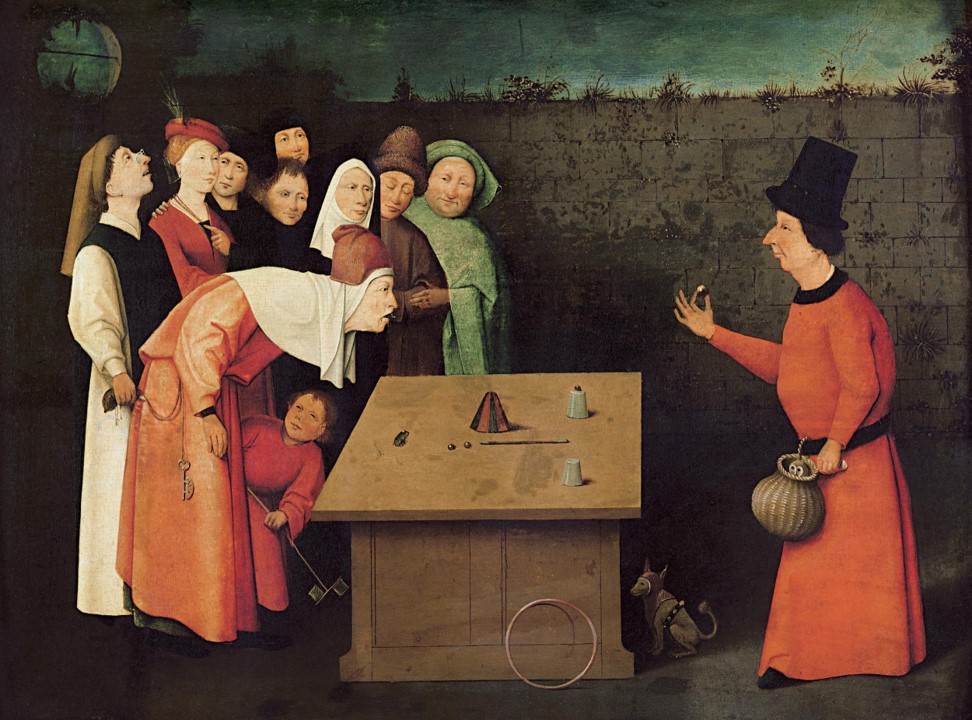
I studied
computer science in university. In programming, if something goes wrong three
quarters of the way through, it’s often because you didn’t set something up
properly at the beginning. In narrative, someone will say a scene is too long.
But shortening the scene will not make the scene better. That’s because the
real problem is earlier, where the game story failed to make you care about the
characters.
Bear in
mind, if you show someone a scene, they won’t have in their head all the scenes
that went before it. You’ll know who the characters are, but they may not. It’s
up to you to interpret the feedback you get.
Assume they are not an idiot
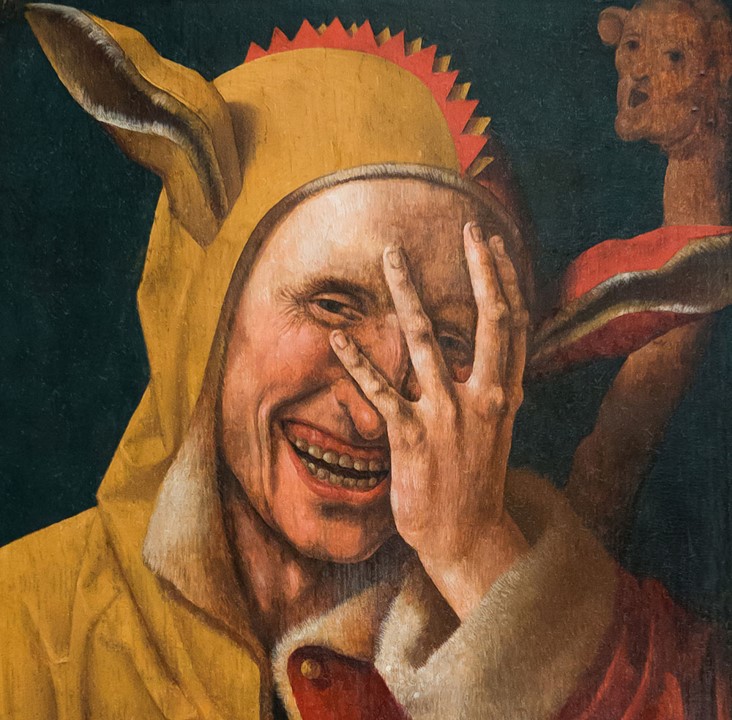
What
often happens is, when someone gives a suggestion, what pops into our mind is
an idiotic version of it. You may think they want a sweeping change. You may
feel like they’re trying to cut the heart out of a scene or a sequence. Why
would they want that? That’s just dumb!
Before
you reject their identification of a problem, try to figure out what a non-idiotic
version of what they’re saying might be. “If this wasn’t dumb, what would it be? Then ask
if the non-idiotic version is what they meant. If it is, bravo! Now you have a
good problem to solve instead of a bad one. Even if they did mean something
dumb, at least they are clearer on what you’re thinking, and you’re clearer on
what they’re thinking; and you have identified a non-idiotic problem your work
might have.
Find the Truth

Search
for what is true rather than what is false. Figure out how the critique is true. Your goal
isn’t to defend your work. Your goal is to find how it is weak. Actively seek
out the criticism, even if it is buried in confusion, contradiction or fluff.
The hard
part of science is not finding evidence that corroborates your theory. The hard
part is thinking up ways to disprove your theory. If you try to
disprove your theory every which way, and it holds up, it’s a solid theory. But
if you only try to support it, you’re leaving it to other people to point out
its flaws.
Actively
dig for
the truth. Sometimes people will point out something that, you agree, is a problem.
But you
also get the feeling that something else is bugging them. They just can’t
crystallize what it is. So they grumble at it, and move on.
This is
often a much more structural, serious problem than the thing they were able to
criticize. It will require more work to fix. The temptation is to avoid the
hint and focus on the surface flaw.
Don’t
ignore it. Interrogate them (nicely). Try to work with them to crystallize what
they’re having problems with. When someone tells you, “Nah, forget it, it’s
fine,” you say, “No, seriously. I can tell you’re bumping on something. Let’s
talk about it.”
If you
don’t, they may come back with the same criticism in three months. Or, play-testers
will have the same problem. Or, God forbid, players.
Don’t
wait for the snippy Let’s Play video. Dig.
What they want you to do about it may be wrong
All
feedback is legitimate. Most criticisms have some truth to them.
Many
solutions proposed to you will be bad. Hopefully a more experienced writer can
give you an approach that will solve the problem. Other people, particularly non-writing
managers and people from other disciplines, will give you suggestions that fix
the problem in front of you and create many more problems elsewhere. Even your
boss may give you a bad idea, if you spent a month thinking through what you
wrote, and they’re skimming it during an online conference call about optimizing
frame rates.
Feel
free to take the good bits of the criticism and ignore the bad solutions.
Unless, of course, where you are, congeniality is prized over creative results.
(That’s called “toxic positivity,” and most senior developers have experienced
it one time or another.)
Find out what problem they are trying to solve
 Surprisingly
often, people forget to give you their critique, or gloss over it. They jump
right to their solution.
Surprisingly
often, people forget to give you their critique, or gloss over it. They jump
right to their solution.It’s
wise to find out what they’re trying to fix before addressing – or rejecting –
their solution. They may be proposing a big, involved solution to a problem you
can fix surgically, in a line or two.
Or, you
may realize that the problem they brought up is actually bigger than their solution,
and is going to require more work. That’s useful to know, too, even if it is
not as cheery news.
“We’ll take a look at that.”
So, you
really worked at understanding the criticism, and you know what their problem
really is. But you’re still convinced that they’re wrong. They’re honing in on
something that’s not the real problem, they want something fixed that isn’t
broken, they want a change that will break things, they didn’t game it out.
You may
find yourself from time to time in a situation where you can already see their
idea won’t work. You can work it out in your head. Or maybe you already tried
it out, like, three months ago. It didn’t work then, and it’s not gonna work
now.
Imagining
how unwritten things are going to turn out, whether they’re going to play nice
together, what they’re going to break – this is a writer’s superpower.
Surprisingly, most non-writers cannot do the math in their heads. They can’t imagine
doing the math in their heads. So when you tell them you already did it, and
that’s not going to work, they won’t believe you. They’ll think you are being
precious. They may feel disrespected.
I have
got in hot water for telling folks about problems I could foresee in a story.
Two years later, sure enough, the story had those problems. (Didn’t help me any,
but I was already at another company.)
 |
Say
“We’ll take a look at that.”
Then
really do take a look at it. Actually. Really truly.
That
gives you time to remember that the person who gave you the note is probably
not an idiot, to find the truth, to find the deeper problem, etc. Time for your
hackles to come down. Time to try out the suggestion, so you can say, “I tried
it, and I couldn’t make it work.” Or “that doesn’t work b
Or, “I
tried your idea and it worked. Thank you!” That generally goes down pretty
well.
(You can
even say this when they didn’t propose anything, but their notes triggered a
good idea on your part. Or when they proposed something only tangential to what
you did. They will often agree that it was their idea.
When I
was a kid, we were told that we should be truthful about everything. But we
were also told that avocado green was a good idea for your kitchen, so we
should have known better.)
Is it a hill to die on?

Sometimes
you have to execute a note you think is wrong. Videogames are a collaborative art.
If you don’t execute the note the way higher-ups want, at some point they will
find someone who will.
Play the
long game. If you were right, at some point it will become clear that the note
did not work. If there’s time and resources, perhaps it will get fixed. And,
you know, maybe you were wrong. There have been times I thought I was right,
and I was wrong, you know?
Is it a
hill to die on? Probably not. I mean, if someone asks you to write something
legit evil, then yeah, kick up a fuss. But if they’re just asking you to write
something dumb, well, it’s a video game. Video games are sometimes dumb. Your
career is more important than a video game.
Obligatory scenes, and dialogue by proxy
There is a lovely scene in The Witcher tv series, Season 3 episode 4, where Geralt and Yennefer get back together after some time. They have an argument, forgive each other, and kiss.
I imagine the writers, Rae Benjamin and Lauren Schmidt Hissrich, wrote a draft of this scene, and got bored. This is an obligatory scene -- you can't really move the plot along without seeing how they feel about each other after being apart. But the viewer can probably guess everything they're going to say. But they have to say it. But it's boring to write, and probably boring to watch.

They hit on a brilliant alternative. We don't hear what Geralt and Yennefer are saying to each other. But the scene isn't silent. Instead, Jaskier and Ciri are watching it... and they begin saying what they think Geralt and Yennefer are probably saying to each other, with Jaskier, of course, voicing Yennefer all girly, and Ciri doing Geralt's deep growl.
So we get all that dialogue out, and get to see Geralt and Yennefer reconcile, but the scene is funny, and we also get to see how well Ciri and Jaskier are attuned to Geralt and Yennefer.
You don't always need the protagonist to voice their feelings. Someone else can do it for them. In To Have and Have Not, Humphrey Bogart's Steve asks Lauren Bacall's Slim to walk around him. "No, Steve," she says. "There are no strings tied to you. Not yet."
That's much richer than having Steve say he doesn't like having attachments, because it communicates that emotion, but also shows that Slim gets it... and mocks him for it.
There are obligatory scenes. In S2 E1 of Rome, Julius Caesar has been murdered, and Antony has to give a speech. The problem there is, someone has already written a very famous version of this speech. You may have run across it. "Friends, Romans, countrymen! I come to bury Caesar, not to praise him," wrote Shakespeare.
Only a fool tries to top Shakespeare. Bruno Heller is no fool. We don't hear Antony's speech. Instead we have a pleb in a bar recount seeing Antony's speech. He describes a bit of business Antony does with Caesar's bloody toga. We don't need to know what Antony said. We already know what he said. "But Brutus says he was ambitious! And Brutus is an honorable man. So are they all, all honorable men." What we get instead is new information: how the speech went down with the crowd.
Dialogue by proxy is a great way to mix it up. It's a great way to communicate what a laconic character is thinking or feeling. Or a character who, in the circumstances, wouldn't want to say what they're thinking or feeling. It's a good way to communicate, as well, what another character thinks about the laconic character.
And it can be an awesome way to dispose of an obligatory scene.
Saturday, September 02, 2023
How to Use AI in your Writing
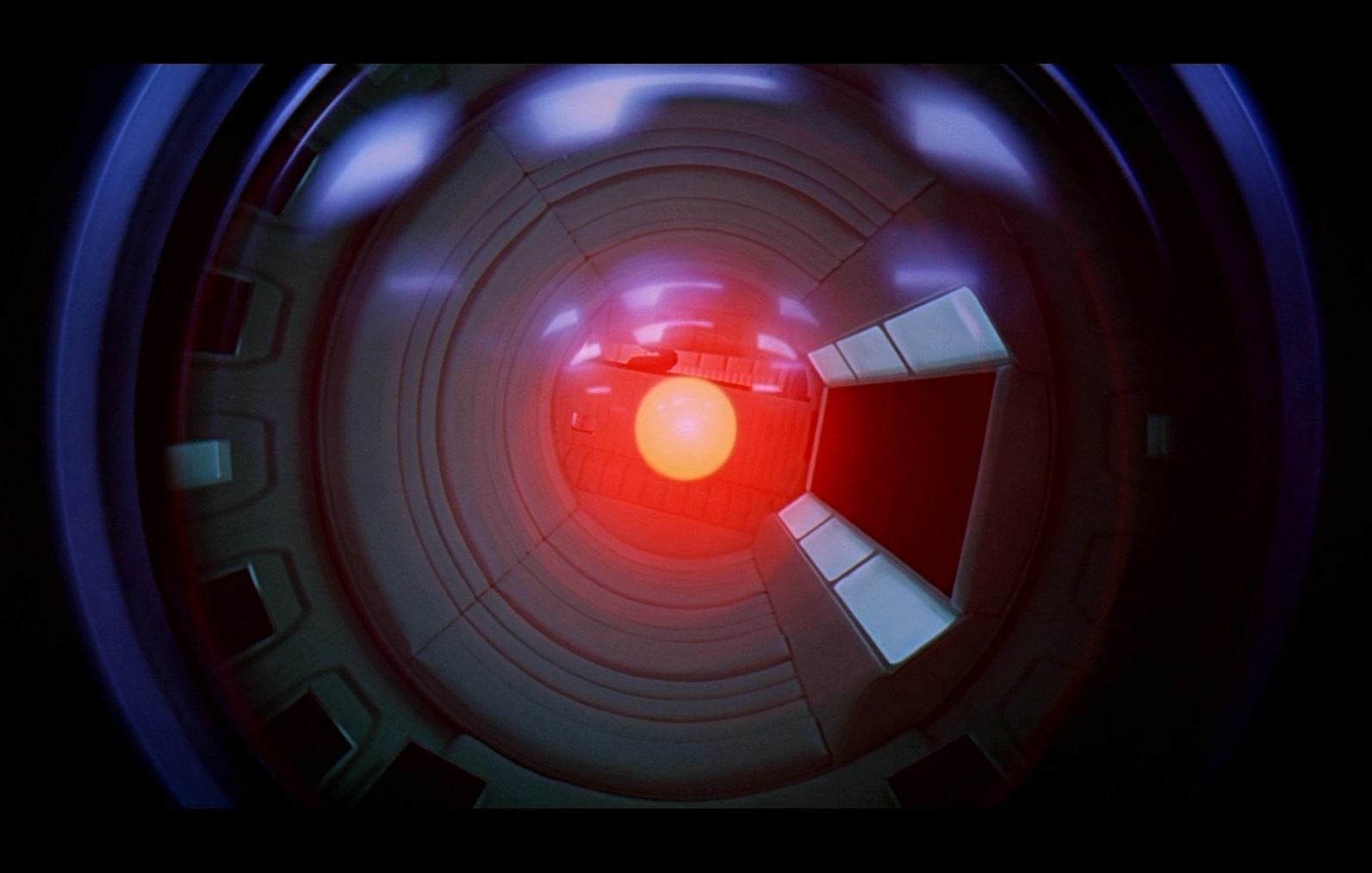
I've been hearing a lot of about the use of AI -- large language models, or LLMs -- like ChatGPT -- in writing. For example, game writing. Couldn't ChatGPT come up with a lot of barks? And quests? And stories? And backstories?
The most important thing to know about ChatGPT is that when you pronounce it in French, it means, "Cat, I farted." ("Chat, j'ai pété.")
Okay, maybe not the most important thing, but surprisingly relevant.
ChatGPT is not "artificial intelligence" in the sense of "the machine is smart and knows stuff." ChatGPT takes a prompt and then searches through an enormous database of writing to figure out what is the most likely answer. Not the smartest or the best answers, just the most likely one.
That means if you ask ChatGPT a question, you are getting the average answer. Don't base your medication on ChatGPT results.
Note that this is *not* how Google answers work. Google's algorithm evaluates the value of a site based on links to other sites -- and rates the links according to the value of those sites. So it is more likely to answer based on what the Encyclopedia Brittanica said than what Joe Rogan said the other day. ChatGPT is more likely to give you Joe Rogan.
What does this mean for writing? ChatGPT will give you a rehash of what everyone else has already done.
Two problems with this:
a. It is a hash. A mashup. ChatGPT does not know which bits of story go with which other bits. It has no sense of story logic. It does not know if it is giving you a good answer or a bad answer. It is not trying to give you a good answer. It is giving you an answer based on how much of one kind of thing or another kind of thing shows up in its database. Its database is probably The Internet.
So, for example, if you asked it what happened at a typical wedding, it might decide that the groom has cheated the night before and the couple broke up -- because people generally do not write on the Internet about happy couples getting hitched without a hitch.
b. It is what everyone else has already done. Good writing comes out of your creativity. Your personality. Your experience of life. It is filtered through who you are. It has your voice. We are not hiring you to give us clams and tired tropes. We are hiring you to come up with something fresh and compelling. Something heartfelt. Something that gets a rise out of you, and therefore might get a rise out of the reader, or the audience, or the player.
If you ask ChatGPT for barks, it will give you the least surprising barks ever. The most average. The more boring.
If you ask it for stories, it will give you stories you've heard before, unless it gives you stories that make no sense that are based on bits and pieces of stories you've heard before.
So, how can you use large language models in your writing?
Simple: it can tell you what to avoid.
Ask it to give you barks. DO NOT USE THE ONES IT SHOWS YOU. Make up other ones.
Ask it to give you plots. DO NOT USE ITS PLOTS. THEY ARE TIRED.
Working with LLMs can teach you to take your writing beyond the expected. It will give you the expected. If you write away from or around what's expected, your writing will become unexpected. Fresh. Original.
Or, you can take its plots and then twist them -- which is what pro writers do all the time. We're not making up plots from scratch all the time. 90% of the time what we write is like something else, but twisted or subverted or redoubled in some way. (This appropriation and adaptation of earlier, better writer's work is called "culture.")
Tl; dr: you can legitimately use ChatGPT and other large language models for writing. But not directly. ChatGPT can only give you (a) nonsense and (b) cheese. But it is useful as a warning. If ChatGPT came up with something, it's probably too tired for you to use it.
PS Another reason not to use LLMs: the content they train on is, generally, whatever they can scrape off the Internet. They can't tell whether the content they train on is human-generated or machine-generated. So, the more LLM content there is out there, the more LLMs are training on LLM output. Initially, you may be getting what a computer thinks a human would say next. But after a while, you are getting what a computer thinks a computer would say next. See the problem?
Monday, July 03, 2023
Malleable backstories
Human beings are perfectly capable of absorbing stories non-linearly. Very often we meet a person and only later find out about their past. Our experience of them grows and changes over time.
That's the best way to present character backstories, too. We need to see the character behave in the present before we care about how they got to be the way they are. We should only learn about their past once we have a sense of them in the present.
Backstories don't need to be set in stone. Some games let you pick the player's character's backstory, and then will adjust dialogue accordingly.
But we can also assign characters -- even the player character -- different backstories depending on what the player does. If the game flags that the player likes to rush into combat (not a difficult metric to measure), we can give that player character a backstory that reveals why they are so impetuous, or anxious to prove their bravery. If the player likes to stealth and avoid combat, we can give that player character a backstory appropriate to someone who avoids confrontations. Hopefully that leads to the player feeling a kinship with the character they're inhabiting.
Sunday, July 02, 2023
A few brief words on backstory
There's backstory that's in the game, and backstory that is in the game bible. I am all for backstory that makes its way into the game, and wary of game bible backstory.
(What I'm writing here also goes for novels and TV shows, but games do a lot more world building, so I'll stick to games here.)
It is easy to write backstory. Backstory, when it is not in the game, costs nothing except the time it takes for the writer to come up with it. People look at The Lord of the Rings and its yards of backstory and think it's not a real fantasy world unless you can trace the hero's lineage back generations, and talk about the wars before the one we're fighting, and so forth. I mean, Tolkien managed to publish an entire book of backstory, The Silmarillion, and it's still in print.
The problem with this sort of backstory is it becomes hard to remember how much of it you have actually put in the game. Writers think that because they've written backstory, they've accomplished something.
But often no one reads backstory documents. Producers and creative directors are fond of asking for backstory documents, but artists are not fond of reading them. People like to be told a story, and most backstory documents are just recitals of things that happened.
Also, backstory documents often fail to focus on the theme of the game. They are just the writer letting their imagination run amok.
Consequently, if an artist or level designer does read the backstory document, and throws something into the game based on it, sometimes they are not reinforcing the main story, but diluting it, or muddying it.
Consequently I am very suspicious of spending time writing game bibles. Instead, I'd rather spend time writing descriptions of things that will actually go in the game. Environmental narrative, for example. What is scratched on the walls of that cave? What is in that basement? What is strange about the ruins on the hilltop? What do the names of things tell you about this world? What folk story does that beer label refer to? Why are those tankards shaped so erotically?
We generally put backstory in a game in order to create a sense of immersion. But what creates a sense of immersion? The recital of historical facts? Or bits and pieces of the environment that hint at a broader world? The real world is full of symptoms of historical events, while the historical events, the causes, are buried in books.
We are used to running into hints of the past; we like speculating about what they mean. In my neighborhood in Montreal, you can see the shadows of centuries: a two story stone wall topped with brick, a diagonal of black pitch running down the side of a building where it used to meet another roof, a bricked up hole that used to be a door, or a window. I love imagining what was there before.
I think that hints of the past are more engaging than pushing history at the player. The player has an imagination; let them exercise it, and they will create a richer, more personal world than you can provide them.
"Show, don't tell" is a screenwriting maxim. "Hint, don't show" might be an environmental narrative maxim. We can only put so many objects into our world, since each has to be lovingly crafted in the computer. But the few that we can afford to build can stand in for thousands of other objects we didn't put into our world. The trick is to leave gaps in the evidence. Don't tell the whole backstory. Leave hints at a backstory -- possibly ambiguous hints.
But all this is not game bible backstory. This is in-game backstory. That's what I think game writers should focus on.
Subscribe to:
Posts (Atom)