Showing posts with label contracts. Show all posts

Wednesday, November 30, 2016

What should I ask for?

Q. I just picked up my first "LA" option for a short story I wrote. I'll be getting 2% net if it gets made. Now I've read articles on net versus gross in the industry and my agent ways I should just be happy at this stage of my career that it was picked up...... so of course I signed. However as a writer moving forward is there anything else I should be aware of or ask for that doesn't normally fall within the option contract?
The standard definition of net profits is "you don't see any profits." So whether you get 2% of nothing or 5% of nothing is unimportant. On the other hand as a newbie you're not going to get gross. It's pretty rare for even a veteran writer to get gross participation. If the movie is a hit, you won't get more cash from the movie, but you will get asked to write other people's movies at a much better salary.

I like to ask for the right of first refusal (ROFR) to write sequels, prequels and spin-offs, as well as TV pilots. Sometimes that turns into ROFR provided that I get a credit on the script. (No one can guarantee I get a credit because it's arbitrated by the Guild.)

If they're optioning your story or novel, you can often ask for ROFR to write the initial script. Very likely they will take it away from you after the first draft, but you'll get a screenwriting credit on the movie because when you adapted the script you brought in the plot and the characters. If you don't write the first draft, the most you'd get would be a "Based on a short story by" credit.

When I'm optioning a script, I like to ask for a production bonus based on the budget of the film. The WGC, but not the WGA, has this in the standard contract. Bear in mind the minimum scale percentage is a floor, not a cap, so you can negotiate more, if they really want the script. The nice thing about a percentage is that the producer can't really plead poverty. "But our budget is tiny." "No problem, then I get 2.5% of tiny."

Bear in mind anything that looks like "Writer will be consulted" bla bla bla is meaningless and unenforceable. "What do you think." "It sucks because this this and this." "Thanks, you've been consulted." Likewise anything that looks like "Writer will be considered." "What do you think about Joe?" "That guy? F*&& him." You've been considered.

Remember, you can insist on any contractual term, so long as you're willing to walk away. I've heard that Sylvester Stallone turned down $200,000 for the script to Rocky, because they wouldn't agree for him to star in it. He was broke at the time. Later, someone else bought the script for scale, but with him to star in it.

You could probably tell that story about a thousand other guys who never sold their script to anyone because they insisted on starring in it.

By the same token, if you're not willing to walk away, it's hard to get anything. You don't get the contract you deserve, you get the contract you negotiate.

99% of the time it's better to have an agent negotiate for you. But you don't want to leave the negotiating to the agent. You want them to be the face of the negotiation, but ultimately you have to tell them what your dealbreakers are and how hard to haggle, and how upset you'll be if they don't make a deal.

Friday, March 23, 2012

Audio and Video of the Contracts Panel

If you missed the WGC Contracts Panel we did at McGill last month, you now have audio and video options. We have the original recording with the Powerpoint I used, and we have an edited, cleaned-up audio recording. (Anyone who wants to edit the video to match the improved audio is welcome!)

Monday, March 19, 2012

What Do I Want In My Contract? The Streaming Audio

In February I moderated a WGC panel discussion on What Do I Want In My Contract? at McGill. It covered contract terms that aren't in the WGC Independent Production Agreement (the equivalent of the WGA's Minimum Basic Agreement).

The streaming audio is now available. We should be posting a downloadable MP3 pretty soon.

Monday, February 06, 2012

Two For the Price of One

The IPA minimums describe two team writers sharing one script fee. Why is that? When a team writer goes to a gas station or store, does he or she fill half a tank of gas? [Snip.]

What about teams with multiple writers?

Producers are getting the benefits of two writers for the price of one. Why not pay each writer a full script fee?

With a team, a producer gets the work of two writers simultaneously, with faster delivery of a script, story editing, etc.

Bottom line, each writer whether single or in a team should have the right to earn a reasonable fee for a decent living, right?
Nobody has the right to earn a living writing. Earning a living by writing is an enormous privilege that you earn through getting results.

So, working in a writing team is the writer's choice. It's not a right. If you can make it work for you, the results can be excellent, but it's not the producer's or the Guild's responsibility to make sure you get paid as much as you would if you were writing on your own. You have to earn it by being better in a writing team than you are on your own.

Writing teams aren't necessarily faster than single writers. They can be. They can also be much, much slower. I worked with another writer who questioned every creative decision. We had to analyze and discuss everything, endlessly. Hopefully the result was better scripts. But they weren't faster. They were slower.

On the other hand, I would guess that Lisa and I write about three times as fast as we would write on our own, because we have the other partner to break creative logjams. I couldn't put a number on how much better the scripts are, but oh, let's suppose that Alex & Lisa are two to three times better than Alex or Lisa. So we get many more jobs than she and I would get on our own. On a series, we could take on more episodes. We also have more flexibility. If one of us is staffing a show, or shooting, the other can take point on a screenplay that must be delivered by a certain deadline.

Typically comedy writers often work in writing teams (or "writhing teams" as they're almost never known) because writing teams are much, much better at generating jokes and evaluating them.

If your writing team really is better, you will get paid, overall, more. But it's not the individual producer's responsibility to pay you more. He's only getting one script. Why should he care how many of you there are? He's only getting one script to shoot.

Realistically, if producers had to pay a writing team $100,000 to write a script instead of $50,000, they would just never, ever hire a writing team (except if the writing team was as good as a 100% overscale writer).

I'm not really sure why writing teams get only one story editing salary, but that's the way it's always been.

As for multiple writer teams -- I've never heard of those. Two's a writing team. Three's a mess.

Saturday, January 07, 2012

Contracts Panel in a Month

I'm moderating a panel discussion on contracts for features and TV in a month. If you've got questions, shoot'em to me, k?

Wednesday, December 21, 2011

Alleged Breach


When you sign a writing or option contract, you're asked to warrant (guarantee) that all your work is original. There is often a clause that says you are responsible for any "breach or alleged breach" of your warranty.

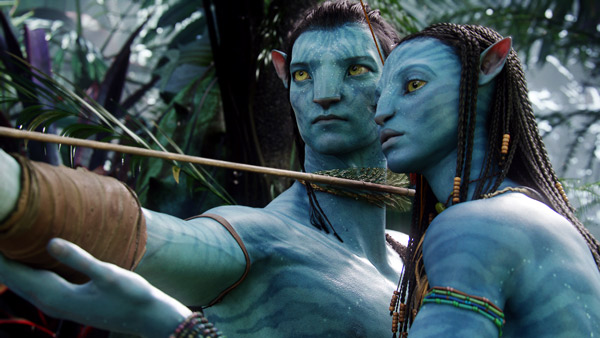
You need to get that "alleged breach" struck from the contract. You can't be responsible every time some idiot thinks you stole his idea. For example, some idiot is suing James Cameron because he thinks Cameron stole his story and made AVATAR:
Moore contends that he first came up with ideas that surfaced in “Avatar” in a pair of his own screenplays, “Aquatica” and “Descendants: The Pollination,” including “bioluminescent flora/plant life, unbreathable atmospheres, matriarch support of hero vs. heroine, spiritual connections to environment and reincarnation, appearance of mist in scene, sunlight to moonlight, crackling from gargantuan foliage, blue skin/green skin and battle scene on limbs/branches,” according to the gossip web site.
This is particularly stupid, as everybody knows that Avatar is heavily inspired by FERN GULLY.

You should be responsible if you actually breach the contract. But you can't be on the hook if somebody takes it into their head that your movie is based on their life, or that they invented Ewoks, or whatever. Even nuisance suits are expensive to get dismissed. Movies have that kind of money. You don't.


Wednesday, December 07, 2011

What Do I Want in My Contract? A WGC Panel Discussion

I'm moderating a panel for the WGC in February at McGill on "What Do I Want In My Contract?"
What should you ask for when you option a feature film or a TV series? The Writers Guild’s basic contract (the Independent Producer Agreement) covers many basic terms, but others aren’t codified, including lots of ways veteran writers get paid on the back end, your right to write new material, and the crucial “Created by” credit in TV. Plus, what’s all this fine print?

We’ve invited an agent who reps writers to talk about what writers can and should ask for; a producer’s lawyer to talk about what’s easy for producers to give and what’s hard; and a representative of the Writers Guild of Canada to talk about what contract terms end up in disputes. The panel will be moderated by Alex Epstein, who’s worked both sides of the table. Audience members will be able to ask questions.

This event is aimed at professional, emerging and aspiring screenwriters, but filmmakers of all kinds may find it illuminating.

Check out the Facebook Event page.

Also, if you have questions you want me to bring up at the panel, please email me.

Saturday, October 01, 2011

Monkey Points

Q. On page 239 you mentioned that writers usually get 5% of the net profits, which is sometimes called “points”, and that points are practically never worth anything, which is why they’re sometimes dubbed monkey points. Can you tell me what you mean by points not being worth anything? Are you saying that most movies don’t make profit at the box office and therefore there’s not extra money to pay the writer this bonus? That most movies made break even at best?
If you get a Net Profits definition in your contract, it is generally formulated so that you will never see a cent. Basically the studio takes a big overhead percentage, and then a big distribution fee, out of the film's revenues, and then set the remaining money against the film's cost, plus the marketing cost. (In other words, thanks to the distribution fee, they get paid twice for marketing the picture.) Many movies that obviously made money for the studio have never gone into net profit.
Q. Then what can I do?
Get something better than a Net Profits definition. We generally ask for an Adjusted Gross, which means the producer recoups the cost of the movie, and then we're entitled to start seeing money.

It's all about what contract language you negotiate, which is a function of how much clout you have (how much they want you), and how clever your agent or lawyer is.

WGC members also get a "distribution royalty" as part of the IPA. I have no idea what it is, but it can add up to a very nice chunk of change if your movie gets some decent play.

Monday, October 11, 2010

Fair Option Price

Q. In today's feature film market, what is considered a "fair" amount for a one year option on a script? Is it based on the projected budget of the production? I've asked around, and even people I know in the business don't seem to know.
There's no such thing as fair. There's only what you negotiate, and what the "standard of the industry" is.

Under the Writer's Guild of American Minimum Basic Agreement, an option can be no less than 10% of the purchase price of the screenplay. If I understand the Schedule of Minimums correctly, the minimum for sale/purchase of an original screenplay is about $35,000 if it's a low budget screenplay, and $75,000 if it's high budget.

If you're dealing with studios or US production companies with studio or network deals, these numbers ought to hold.

Under the Writer's Guild of Canada IPA, an option must also be 10% of the purchase price, which is a minimum of just over $50,000.

In practice, Canadian producers and non-affiliated US producers rarely have any money lying around to option scripts. So people compromise.

In the US, producers often seek to option material for free, if they can get it, or for five hundred or a thousand buck, depending on how badly they want the script, how solvent they are, and how willing the writer is to walk away from the deal.

In Canada, there may be an "option to option." A WGC deal is struck, but not executed. The producer gets a cheap (free-$1500) option to take the script to funding agencies (Telefilm, provincial agencies like SODEC and OMDC), Greenberg and Corus Made With Pay. If the funding agencies cough up money for development, the WGC deal goes into effect and the producer pays the full option price.

This is not kosher by the Guild, of course, but good luck getting a producer to pay you $5,000 to option your script prior to Telefilm giving him the cash.

Likewise, in TV, it's not that common to get the full option payment before a network signs on. Then the network pays for the option.

In related news, Telefilm has taken to asking for an extremely detailed and long pitch before it funds the writing of a script. If a writer is called on to write up such a pitch based on a producer's idea, then he's probably not going to get more than a couple thousand bucks to write it, and the producer will try to get it for free. If Telefilm is willing to provide the dowry, then the producer makes an honest woman of the writer. This is really not kosher, because the writer's essentially writing a treatment at far below scale. This is something that the WGC is discussing with Telefilm.

UPDATE: BeingBrad asks:
Q. Holy crap. So do writers for the Canadian market actually make enough money to live?
Yep. However, nobody lives on option payments. The payday on features is when you get paid to rewrite your optioned script (about $20,000-$30,000). Telefilm puts a fair amount of money into developing scripts, so if you have a few good projects that the funding agencies spark to, you can put together a good year. You just won't get rich. The jackpot is if your feature actually gets made, and you get a production fee that can run into the low six figures on a decently budgeted film.

In practice, though, most pro feature writers also write TV, or they also direct.

Likewise in TV the options are small, but if the network picks up your show for development, they'll commission a pilot and perhaps a bible. Then you ought to be getting a few tens of thousands of bucks. And if your show goes into production, you ought to make a couple hundred thousand in the first year.

Comparable numbers in the US are, of course, much higher, and in revenge, everyone in LA considers themselves humiliatingly underpaid.

Saturday, July 24, 2010

Key Man Clause?

Does anyone have a "key man" clause in their agency contract? I'd like to see one. Thx.

Sunday, August 09, 2009

It's Not All 50-50

Q. Recently, a friend of mine came to me with a draft of her indie feature screenplay. I told her I was gonna rewrite it and she agreed to it. I basically had to re-type the entire thing into final draft because she only had a pdf copy of the screenplay and it was a picture image. Anyway, I retyped the screenplay, edited action lines, and changed a bit of the dialogue to give the characters a better sense of who they are. I basically rewrote the screenplay.

Originally, I was thinking this would be a co-writing 50/50 endeavor. But she's now thinking more like her 70 and me 30. I know we should've laid out a contract before we started. Grant it, she came up with the story, the characters and the concept. But I came in and rewrote it, edited it and punched up dialogue quite a bit.

Basically I just need help in understanding what is the correct percentage on ownership for this sorta situation.
What you've done isn't considered a "rewrite" under WGA or WGC rules. What you've done would be considered a "polish." "Rewrite" and "polish" are both terms of art under the Guild agreements. To do a "rewrite" would entail introducing new characters and new plot elements. You'd have to write completely new scenes or at least move scenes around a lot. Under WGA rules, I believe you could replace every single bit of dialog and not be entitled to an onscreen credit.

I think 70-30 might be appropriate where you're actually doing a rewrite. 50-50 might apply where you're talking about a page one rewrite -- throwing out virtually everything and starting from scratch. But if you're only doing a polish, I think you ought to be happy with 10%. Maybe, maybe 12.5%.

It takes me about a month to come up with a coherent beat sheet for a script and another month to come up with a first draft from that. I can do it a lot faster if I have to, but that's how long I spend on a typical spec. If you brought me a feature and all you wanted was snappier dialog and action lines, I would probably spend about a week on that. (More and it wouldn't be a polish any more.) Suggesting about 10%.

Basically, there is a strong presumption in favor of the original writer. It's easy to come in and tweak dialog and edit action lines. It's hard to come up with something out of nothing. Just ask God.

But next time, definitely specify who's getting what before anyone does any work.

Thursday, January 24, 2008

A Revised First Draft Walks Into a Bar

You turn in your draft. The producer gives you notes. You turn in a revised draft.

From time to time, a producer will assert that the second draft you turned in is a "revised first draft," not a second draft. Your producer may truly believe himself. But his belief, not inconsequentially, means he doesn't owe you a second draft payment.

Here's the reality:
Q. A revised first draft, a devout Muslim and the Easter Bunny walk into a bar. One of them orders a drink. Who is it?
A. The devout Muslim. The other two don't exist.
Which is how the WGA and WGC contracts work. If the producer (or the director, or the producer's development assistant, on his orders) gives you notes and you revise, that's a second draft.

That doesn't mean I only revise things once. I'm a team player. I can't tell you how many times I've revised the pilot of the show I'm developing. And if I send in a draft and then fool around with it without producer or network notes, and send it in again, I never consider that a new draft.

But I expect to be paid for the two drafts that are in my contract before I do any free tinkering. Otherwise who's to say when you finally get to a second draft? Principal photography? Whenever the producer is in a jolly mood? Whenever he has some spare money burning a hole in his pocket?

This is one of the reasons I stick closely to my union. The first time a producer pulled this on me, I wasn't in the union, and I was out 20% of the contract. Which was for $1000. Yes, they stiffed me for $200! Since joining the Guild, God bless them, I've had admirable help 'splainin' the nature of a second draft.

Producers will sometimes tell you, "That may be what's in the contract but everyone revises their drafts for free." My impression is that the standard of the industry is this: you are paid for a draft and a set, meaning a draft and a set of revisions. Many writers will rewrite the draft quite a bit beyond the set, without asking for additional payments, unless they're on a weekly. But there are no free revisions until the paid revisions are exhausted. The paid revisions come first.

How can you avoid this awkward situation cropping up? Make sure there's a "paper" trail.

When you start writing a treatment, send your producer an email saying "I'm really excited to be starting the treatment for GO POSTAL." When you email in your treatment, make sure the subject line says "GO POSTAL treatment" and that the text says "here's my treatment for GO POSTAL." Don't use writer terms like beat sheet or step outline or synopsis. An outline does not trigger a payment. Use the term in your contract, which in a Guild contract is "treatment."

When you start writing your first draft, send an email saying, "Okay, I'm starting my first draft, wish me luck!" If you don't get a positive answer right away, you might want to send an email saying: "Um, should I start now?" and make sure you get a positive answer.

And when you turn in your first draft, write, "Here's my first draft of GO POSTAL!"

Don't say ANYTHING in that email about how there might be further work to do, or it's not perfect, or apologize in any way for your first draft. You might cause your producer to expect you to revise your first draft for free. Keep your own notes to yourself, if you have them; let your producer bring his notes. I always make more revisions than the producer's notes, trying to improve things even if he thought they were good enough.

When you start the second draft, send in an email saying, "Great notes, thank you. I am starting my second draft now." Make sure you get a positive response.

While none of this will protect you from a truly unscrupulous producer, there are far fewer of those than there are producers with a slightly self-serving point of view. Clear communication and a paper trail will help eliminate any confusion that might exist in your producer's mind. It is very hard later on for a producer to maintain he didn't know you were writing a second draft when you have a copy of your email to him that says "I'm starting my second draft." If you're clear, the question may never come up at all. And then everyone's happy.

In both stories and contracts, clarity makes for a smoother ride for everyone.

Thursday, November 29, 2007

Le Manif Hier

Here's a nice little article in LA PRESSE on our march yesterday. Attention, c'est en français. The writer put me a bit on the spot as the writer of Bon Cop:
Le principe est le suivant: quand il y a un grand succès, il faut que les créatifs en aient une partie, croit Alex Epstein, l'un des scénaristes de Bon Cop, Bad Cop. Je ne me plains pas, mais le succès de Bon Cop, Bad Cop arrive aussi après les autres boulots que je fais.
When you've had a success, it's awkward to complain that you haven't been adequately rewarded. And I have no complaints -- Bon Cop has been good to me.

But not directly. I don't share in the DVD sales of the film. My payoff is that more people want to hire me to write stuff, for higher pay. I got paid on BON COP based on its budget.

Moral issues aside, this is inefficient. The next thing I write almost certainly won't do as well as BON COP, but I'll get paid more for writing it. There are lots of screenwriters whose quote depends on one hit; am I necessarily better than another guy who didn't luck into a writing gig on a movie with a great concept, great star package, brilliant director, hardy producer, etc.?

Who's heard of the BLAIR WITCH creators since? They haven't done anything outstanding; people keep hiring them hoping lightning will strike.

It just makes more economic sense to pay people for their successes rather than for the things they do after their successes.

(The Blair Witch guys did clean up economically, but that's because they also produced their movie.)

Which is where residuals come in. If your show runs endlessly on TV or the Internet, if it sells more DVDs than tickets, you should get a real piece of that success. Then you'll write not only for the theatrical release; you'll write for the DVD. You'll make your stories richer because it'll put money in your pocket to do it. Or you'll take more risks because Internet is all about niche marketing.

If your show drops out of sight after opening weekend, you should get a cup of that oblivion. Just like the studio and the producer.

N'est-ce pas?

Saturday, June 16, 2007

How Much?

Q. I was wondering how much a producer / creator / writer of a series makes when he sells a 10 part series to the sundance channel - like slings and arrows for example. I imagine everyone gets a piece of the pie, the production company, his agent, etc...
How long is a piece of string?

SLINGS & ARROWS is a Canadian series created for The Movie Network (which I'm creating a show for); it later aired on Showcase. How much the creators might have made for a US sale depends on their contract. Their deal might provide a bump in compensation if there's a US sale, or they might only have a share in net profits (aka "monkey points"). Or, if Mark McKinney and Co. are very clever indeed, they held onto a piece of the show, and are now frolicking in a field of mink.

... Though the Sundance Channel probably does not pay very much for a license fee.

What you get depends on how badly they want the series, how much they want you, how much you've been paid before, and the budget of the series -- which in turn depends on the network it's on and how many territories are presold.

To get a bit more specific, on a show with a budget of $1M an episode, the writer of record of an individual episode might see around $30K as a script fee. The creator gets a small percentage royalty on each episode's budget; and the showrunner gets a weekly salary in the middle to high four digits, or a flat fee per episode that amounts to the same thing. If you are all three, it can add up to very nice, put-a-down-on-a-condo numbers, though probably not enough to be considered rich in LA.

I have no idea what US showrunners and creators get, but it's probably on the order of three to five times more, that is, put-a-down-on-a-house-on-Laurel Canyon type numbers. (Though if you're smart, you'll buy a condo in West LA instead, and stay solvent for the next five years even when you're cancelled.)
I saw a chart that gives an idea how much a cable network like sundance pays per ep.
You did? Where? What do they pay?

Wednesday, April 25, 2007

Poker Face

Today, I had a negotation and a poker game. Both went well. I won $17.50 at poker! I won't tell you what I got in the negotiation, but everyone went away happy, I think.

Kids, anyone working in show business ought to learn poker. Nothing will better prepare you for the bluffs and stakes-raisings of negotiation than a few thousand hands of poker. Seriously. Consider it part of your education.

And, poker with drunken writers is hi-larious. Just ask Adam Barken, or as he is now known, "Man-Boobs."