Showing posts with label spec features. Show all posts

Thursday, June 25, 2009

How Do I Get Scripts?

Every now and then I get a question whose answer seems obvious, but since someone's asking, there are obviously people out there who don't know it.
I'm an independent producer interested in producing a crafty screenplay. What are your tips on how to find the script I have been looking for? Is there a service out there benefitting unknown screenwriters similar to what www.taxi.com is doing for as-yet-unknown songwriters? As an independent film producer, I’m constantly on the lookout for a great story crafted into a financially producible script, but I don’t have a resource through which I can read enough or at least sort through enough of them to find the proverbial needle in the haystack. If you know of anything, please let me know.
Producers get scripts by asking agents to send them. Simple as that. A producer is a potential buyer, so any agent ought to want his clients read.

If you call any literary agency, such as CAA, William Morris, ICM, UTA, APA, Gersh or Endeavor, and say, "I'm a producer, I'm looking for some scripts to read," you'll get sent to a junior agent who can ask what sort of stuff you're looking for, and send you a whack of PDFs.

The reason you go to an agency rather than a "service" is that the agency has already winnowed out 9 out of 10 bad scripts and bad screenwriters. Not to say you won't have to read through a hunk of junk, just that the needle to haystack ratio is higher.

Also, the agent can, over time, get a sense of what you like and send you stuff as he comes across it. Services can't do that.

There's no reason to look for "unknown" screenwriters. Known screenwriters also want to sell their scripts, and most of us have a bunch of scripts we haven't managed to sell for whatever reason. Some of them might be what you're looking for.

Tuesday, June 23, 2009

Querying TV Specs?

Q. In your book you talk about querying before actually writing the screenplay to test the value of the hookCan you do the same thing for TV specs, to see if you should even bother writing it?
Er, no. You might query producers or agents about your spec feature to see if anyone's interested in the hook. But you're not writing a spec TV script in order to sell it. You're writing it to show you can write TV. A clever hook is a good idea, but producers and agents really need to see your writing chops.

On the other hand if you're talking about a spec pilot that you hope to sell, you can certainly pitch your TV show concept to people in the biz, to see if they warm to it, before investing in writing a spec pilot. You'll want to do this in person, so you see their reaction up front; also they'll be less likely to steal your idea; also, your concept will improve itself as you pitch it. I spent four days in the Rocky Mountains the week before last, pitching a couple of series ideas to producers. We've since had offers and we'll be optioning them shortly. Then we'll take the pitches to networks to see if they'll pay Lisa and me to write a pilot. So in that sense, you can query a TV spec pilot. But it's really a different thing.

Monday, November 24, 2008

Equerries, or, Bot me no Bots


Q. Is there a reputable service you could recommend for sending queries (e.g., equerydirect, etc.)
Gosh, you kids just want everything done for you, don't you?

I can't recommend a service; though readers are welcome to chime in with their experiences. I was assuming that people would glean email addresses from the Hollywood Representation Directory (or the WGA website) or the Hollywood Creative Directory. (In Canada, the WGC website for agents, and the Telefilm site for producers.) Then they would send off individual, personalized queries to individual agents or producers.

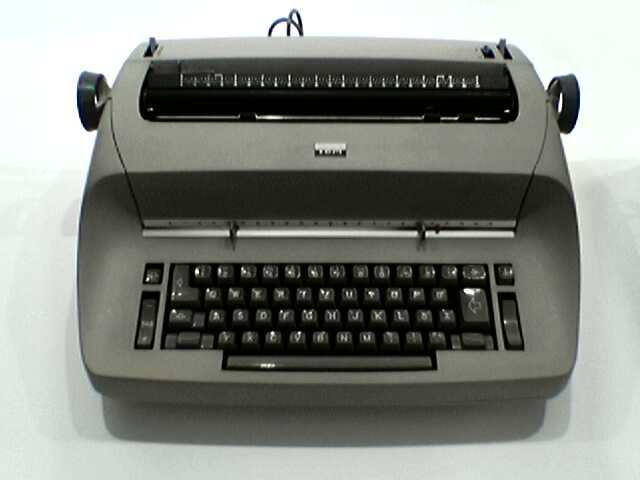
That might be a small bit of work. I realize that a bot could do it faster. But back in my day, we had no bots. We had to master Mail Merge in Word Perfect 3.0. And let us not even speak of the prior generation, who had to use typewriters to write letters one by one. (For those of you unfamiliar with the technology, I am including a small picture of a typewriter. I have actually used them.)

Okay, I am being a little snippy here. I am a little ways into a bottle of Big House Red, having turned in everything I need to turn in on my pay cable series. (I'm hoping that the resveratrol will keep me young. Or something.) But seriously ... I can't imagine anyone responding to a query if it's not personalized. That tends to rule out a service right there, I think. Doesn't it?

Saturday, November 01, 2008

Never Bet on the Future

Q. How would one go about writing a spec script for a show that's only in the works? E.g. "The Greysons" which the CW is putting together about Robin in the vein of "Smallville". Or would I be better to write a Smallville spec?
The rule of thumb is never to spec a show that hasn't got a full season under its belt. Sometimes adventurous writers will spec a first year phenomenon that is obviously going to get picked up. For example, many people specced DESPERATE HOUSEWIVES before the order came in for Season 2.

So I would not spec THE GREYSONS. The production could fall apart. The show could flop and get pulled after four episodes. Most new shows don't make it. You're better off with SMALLVILLE.

The thing to do before you write a spec is: call three agents' assistants. Ask what shows their clients are speccing. Pick one of those shows. The list of what people are speccing changes all the time. I haven't had to write a spec in some time, so I just don't know. (I have a really fun I LOVE LUCY stunt spec in mind, actually, if I should have the time.)

Thursday, October 16, 2008

Do Writers Get Typecast?

Q. An agent is now going to be representing a script of mine, and therefore, in some fashion, me.

1. AGENT is not a fan of going out wide to 40 companies at once, because he thinks all the development execs will just post their thoughts on the script to the hive mind bulletin boards. I get the impression he's been burnt by this before. He prefers to try to identify, through conversation and relationship, the 12ish companies who would be the best fit for the script. Is this normal/a good idea, in your opinion?
I don't buy the argument about bulletin boards. They're going to make comments about your script on the trackers whether you go out to 12 or 40. But he may feel that the script has niche appeal of some sort, and therefore he's picking the 12 most likely prodcos.

He's the expert, and in any case you have to rely on his expertise.
2. I ran a couple ideas by AGENT as to what my next script should be.
Good on you!
He didn't take to them, so they probably aren't commercial enough to bother with for now. But CURRENT SPEC is a broad comedy, so he wants me to write another comedy. This way, when I get meetings based on CURRENT SPEC, I have something similar to pitch. How do I go along with this plan (which seems smart) without getting pigeonholed as a comedy writer? I was thinking of writing a comedy hybrid as a means of transiting to other genres.
I don't think writers get pigeonholed the way actors do. You could sell 5 comedy scripts and then come out with a drama. If it's a good drama, it will sell. A comedy actor may have trouble convincing people he can play drama. But a comedy writer can simply write a drama, and there's your proof that he's capable of it. The proof is in the writing.

If you have a rep as a one flavor of writer, you might have a little trouble getting commissioned to write something out of your perceived drama, but all that means is you'll have to spec something in the other genre first.

I might have been seen for a time as a comedy writer because of BON COP BAD COP and NAKED JOSH. But currently I'm working on a metaphysical drama for pay cable. So as the pilot for that circulates, or word of it does, I've been getting more spec fiction offers.

Frankly, it wouldn't kill you to be typecast in the beginning. You're more likely to get comedy gigs if you're seen as a comedy writer. Whereas if you have an action script, a horror movie, a comedy and a drama, they may not know what to make of you and they may not put you on any lists.

Don't be one of these comedy people who feels they're not a success unless they can make the audience cry. Writing great comedy is just as hard as, if not harder than, writing great drama. And the audience is always dying for something to laugh at.

I would say, write the funniest comedy you possibly can.
3. I have a book adaptation and an indie drama in my arsenal. Neither are commercial, but might be good writing samples for possible future gigs. AGENT has not expressed any interest in other existing works I might have. Maybe he thinks I would have told him by now. Should I?
What are you, a teenage girl at a sock hop in the 1950's? Of course you should pitch him your other material.

If he reads your other stuff and doesn't like it, then it probably isn't commercial. Maybe best to write some more scripts, and get back to your old projects later. You probably will see what's wrong with them. You can fix them, if you have the time, or consider that a lesson.

If he doesn't offer to read your other material, or offers but doesn't actually read it, then you have a bit of a problem. You need an agent to rep you, not just a script. If this script sells, then he probably will get more enthused about your other material. If he doesn't, then you might consider quietly searching for a permanent agent, while continuing to work with him. (Never leave an agent until you have another agent lined up.)

Saturday, September 20, 2008

Spec What You Love

Q. The material I like to write is mainly sci-fi/fantasy stuff. I've written one screenplay about vampires, and I'm working on two others - one set in space and one based around magic. If I'm thinking about getting an agent, should I be writing various things, apart from my preferred (and my strength) sci-fi? Should I write a very down-to-earth drama to display what else I can do? (Although as of yet, I have no idea whether I can do that sort of thing.)
In features, spec what you love. That's what you'll do the best job on. When someone is writing something they don't love, the script always seems half-hearted.

After you've written a handful of speculative fiction stuff, then consider stretching out into new territory. Identify your weaknesses. Are your plots flimsy? Write a tightly plotted thriller. Characters weak? Write a straight drama. Scripts too talky? Write an action movie with great action.

But always find a story in those genres that you can love.

Personally, I find I can fall in love with a lot of different sorts of stories. I'm a speculative fiction fan, and I consider myself blessed that the series I have in development is spec fiction. But the show I co-created (NAKED JOSH) was a comic drama, and I'm known best for my work on a buddy cop comedy feature, BON COP BAD COP.

You may find after you've written a few speculative fiction feature specs that you have a hankering to write something new. Follow that hankering. Your speculative fiction scripts will presumably have elements of drama in them; if you can write drama in space, there's no reason you can't write drama here on Earth.