Saturday, August 06, 2016

I Celebrate and Cite Myself

I got into an interesting disagreement with a Wikipedia editor on the page for We Happy Few. The page asserted that, in the game's lore, Nazi Germany invaded England, but the English did a "Very Bad Thing" to get their freedom.

This is not quite right. In our game, it's the "German Empire" that invaded. We didn't want to deal with Nazis or the Holocaust. In Germany, you can't even release a game with swastikas in it. So, in our game, Hitler was deposed shortly after attacking Russia. Rommel is Führer. Also, the Very Bad Thing happened during the German occupation, and the Germans left some time later.

Some time in the future, you should eventually see an Iron Cross flag somewhere, and maybe a portrait of Erwin Rommel.

So I fixed the entry.

The editor reverted to his original entry.

I pointed out that I'm the writer of the story.

The editor insisted I provide citations to prove that my edits were correct.

Wikipedia, it seems, does not allow primary sources. You can't read War and Peace and say it's set in Russia during the Napoleonic invasion. You have to go find an article somewhere that says it is, and then cite that.

This makes sense. You can't have people rewriting articles based on their own interpretations. Suppose I think Annie Hall is a depressing, nihilistic movie about the futility of love. What's stopping me from editing the entry on Annie Hall accordingly? Only this rule.

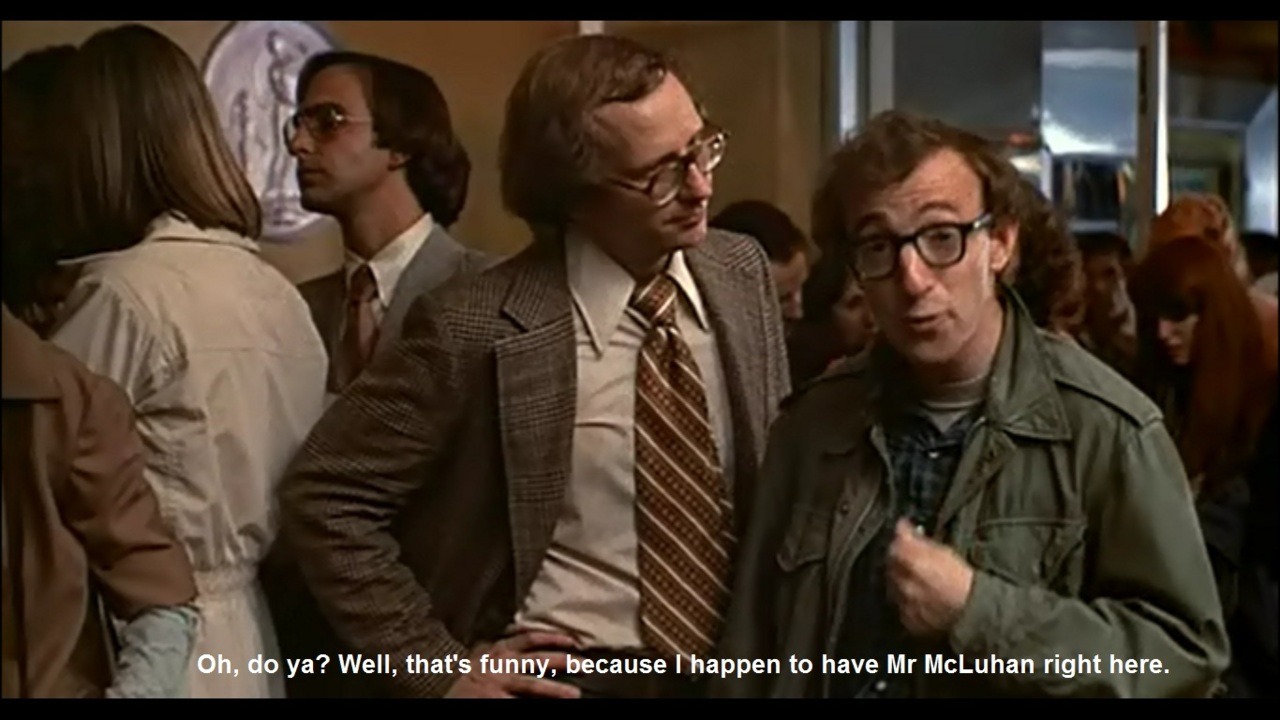
So you can not, for example, pull Marshall McLuhan out from behind the poster and have him contradict someone. You have to cite an article in which someone quotes Marshall McLuhan.

That puts a writer in an odd bind. I happen to know that it was not Nazi Germany that invaded England in We Happy Few, because I wrote the timeline and all the lore to go with it. But that's not proof enough. I have to tell someone else, and they have to write it somewhere, and then I can cite their article, which quotes me.

So, hopefully, someone will quote this blog post in their blog, and then I can cite myself.

Friday, August 05, 2016

Compulsion Games is Hiring

We are looking for: A senior animator; a senior level designer; a gameplay programmer; a senior QA person; and an AI programmer. Check us out on LinkedIn. You do not have to live in Montreal; about 20% of the company works remotely.

Monday, August 01, 2016

We Happy Few Update -- Steam Early Access / Xbox Preview Launch!

I spent the first part of last week beating the game! As the narrative director, I don’t always get the luxury of time to sit down and go through a full playthrough. This week I did, and it took me about twelve hours! It was nice to finally get Arthur to the hatch on Apple Holm.

... which also meant writing a score of bug reports for issues that only I’m going to catch. I’m the guy whose responsibility is making sure that the world makes sense and that all the characters have in-game reasons to do the things they’re doing, and so I found a bunch of things I’d like to improve.

Of course after Tuesday morning’s launch, we’ve all been absorbing players’ reports of bugs. Some of them are bugs we know about. Some of them are not bugs at all. Some of them are new issues. For example, some people have complained that the NPCs can get a bit repetitious. Partly this is a bug in when they tell you to back off. Partly this is because we haven’t yet implemented the systems for atmosphere and showcased conversations. You should be hearing them talk lots more in our second update.

But, issue heard, I’m going to be writing and recording many more things for Arthur and the NPCs to say.


Of course, like Whitney, I’m sort of at the beginning of the pipeline – a lot of the things I do hit the game in weeks or months, rather than tomorrow. So I have to keep putting things in that pipeline.

Last week I recorded two voice actors for a series of audio flashbacks for Arthur. I've just finished editing them. You’re going to know a lot more about what exactly Arthur’s remembering.

And, I’m just starting on a similar system for another playable character, the Girl in White, or as Sam thinks of her, She Who Must Not Be Named. She’s going to have some surprising things to say for herself. You won’t hear this stuff for some time, but you will.

Thursday, July 28, 2016

I'm a Mocker.


So, I was interviewed about the inspirations for the world of We Happy Few... check it out.
Twiggy

Monday, July 25, 2016

How is game storytelling different?

On our Reddit AMA today, greyandbluestatic asked, "how do you approach storytelling in games versus cinema and literature?"

Here's my answer:

The short answer is, there’s no difference. A story is a story. Specifically, in my books, a story is:

a. a fictional person we care about
b. who has an opportunity, problem or goal
c. who faces obstacles and/or an antagonist and/or his or her personal flaws
d. who has something to lose (jeopardy)
e. and something to gain (stakes)

Moreover, a story is told to
f. an audience.

You can see how these apply equally to movies and books and games. If one of these elements of story is weak, the story is usually weak. When I say “weak,” I mean it doesn’t leave us with a powerful feeling.
That’s what story exists in games for. The gameplay is “How?” The story is “How do I feel?” Ultimately, it’s “Why do I care?”

The key difference, of course, is that storytelling is all about “I make choices for you,” while gameplay is “You make the choices.” So delivering a great story in a game has to take that into account.
On the top level of the game, we have a series of cinematics that tell each playable character’s story. The gameplay aspect is that you have to complete story missions to get to the next cinematic. That’s pretty familiar.

The other levels are environmental storytelling. There are things you see and things you hear as you run around trying to stay alive long enough to craft your way out of the predicament you’re in.
So, these are things that the Wellies and the Wastrels say to each other and to you. They show you the world you’re living in, and how they feel about it.
These are the things Arthur says to them and to himself. These show you how he feels about things. They show you who he is.

For example, you may feel good about killing a Wastrel, but he usually doesn’t. That’s unusual, in a game hero.

There’s dear old Uncle Jack. He’s always happy and upbeat, but you can listen between the lines. Why is he telling people how to identify cholera? Why is he talking about flour substitutes?
You’ll see posters that tell you what the rules of the world are, and what the history of this world is. You learn that Britain lost the war. You start to get a sense of what it is exactly that everyone is trying so hard not to remember.

You might find letters in the mailboxes that tell you more about the people around you, and what their stories might be.

I’m trying hard to create a sense that the NPCs are not software agents that are there to give you things if you poke at them in the right way. They’re people in a fictional world, that have their own stories – their own goals, and their own obstacles – that would be doing something even if you weren’t looking.

The key to everything in the game is that what’s not said is as important as what’s said. The game’s story is a puzzle you can put together through repeated playthroughs. (You won’t get the whole puzzle in any one playthrough.)

Tl;dr: the cinematics are straightforward, linear narrative. Everything else is a puzzle.

And, eventually, once the story comes out, you may discover that the cinematics don’t tell you everything either, and there may be a bit of a puzzle there, too.

Rest of the AMA here.

Saturday, July 16, 2016

Such Bechdel!

On the IMDB, 22.5% of voters give GHOSTBUSTERS a 10; 42.5% of them give it a 1. Among women, the movie gets a 7.8; among men, it gets a 4.1.

I'm willing to bet that the vast majority of the guys giving the movie a 1 have not seen the movie. If you had, it would be very hard to give it a 1. It has a plot that makes sense. It has state of the art special effects. It has a finale which destroys dozens of buildings.  It is a fine piece of cheese.

I mean, only 24.4% of the voters gave CATWOMAN a 1, and that won multiple Razzies (one of which Halle Berry rather memorably accepted on stage).

So it turns out there is an explicit campaign to kill the movie by the usual suspects. They're mad because the movie wasn't made for them, and how dare anybody make a big special effects movie that isn't made for frat boys. I mean, these guys liked the previous movie, so they own the franchise, right?

What's interesting to me is how much the movie wasn't made for them. It's an action movie with female stars. But it's not a female-led action movie in the Resident Evil/Tomb Raider vein, about a hot chick who does man things. It's not about the male gaze. I mean, the only really hot chick in the movie is Kate McKinnon. She's on fire, but she's not interested in the male gaze, is she?

Which one is Leeloo Dallas Multipass?

Nope, the movie stars four women who spend most of their time talking (pseudo) science. Their emotional drama is not about men, either. It's about female friendship. Every single reel of the movie passes the Bechdel test.

In other words, the movie is not only not made for internet fanboys, it's actually made for women.

I had a great time. It was fine a piece of summer fluff as I'll probably see this year. But I'm the secondary audience, the way women are the secondary audience in every other summer action movie.

Literally the secondary audience -- Lisa wanted to go, and our friend Jackie wanted to go, and I said, oh, okay, I'll come along.

The picture does a fine job subverting the genre, actually. The only parts of the movie that are about a guy are (a) the villain and (b) Chris Hemsworth, playing the dumbest imaginable receptionist. Kristen Wiig hires him because he's cute.

I'm probably preaching to the converted here, but I'm disappointed in the fanboys. You're mad that one out of ten summer blockbusters was not made for you? You're mad that someone rebooted a movie from 1984 and didn't make it exactly the same as 32 years ago? You actually are going to the trouble to ruin a movie for the people who want to see it, so that you can have All Teh Screenz?

There's a lot of entitlement going around. There's right wingers who feel their marriages have been taken away from them because gay people can also have them; or feel their bathrooms have been taken away from them because trans people might also use them. There are the Trump voters, who feel their country has been taken away from them because we're not in the 1980s any more (I think).

The best way to criticize the arts is to make your own. That's what Paul Feig has done. He's not saying comedies have to have better roles for women. He just went ahead and made a ('nother) comedy with good roles for women.

I hope we see more of them.

Saturday, July 09, 2016

We Happy Few Update

Art by Whitney Clayton
This week I’ve been playing the game a lot. Hey, this is a fun game!

Playing it, of course, I’m discovering various ways in which the world does not entirely make sense. For example, who is putting rotting meat in mailboxes? When that happens, I generally consult with the designers. Either I need to come up with a sensible reason for what’s going on, or we need to change what’s going on.

It’s very important to me that everything in the game makes sense. It doesn’t have to make logical sense. Wastrels aren’t logical. Wellies aren’t logical. Human beings are rarely logical. But there is always a reason why people do things. Wastrels aren’t randomly crazy; they’re driven mad by guilt and sorrow, and whatever Joy has done to their memories. Wellies live in denial; their happiness is a veneer over the things they are trying so hard not to remember. Things they do should be revelatory of these themes.

I’ve also been rewriting journal entries. If you go into Arthur’s journal, you will now find many things he has to say about what’s going on. Some of these things may be actually useful to solving the your problems in the game. Some of them will fill you in on Arthur’s past. Take the time to read them, when you’re in a quiet, safe place!

Oh, and, letters. I’m not entirely clear who’s delivering the mail, but someone seems to be. At any rate, Wastrels and Wellies are writing to each other. Some of these letters will tell you about the people around you. Some of them will warn you about things you’re going to run into. Worth a read, I think.