Showing posts with label We Happy Few. Show all posts

Sunday, December 09, 2018

Small Story Choices in WHF?

michael4771 has an interesting question on the Compulsion Games forum for We Happy Few:
WHF is often compared to Bioshock Infinite with good reason, and while WHF has a LOT more features than Bioshock, there is one aspect that WHF lacks: story choice. Bioshock Infinite is a completely linear game but the story does include choices that doesn't affect the overall story beyond a small aesthetic change or getting/missing a powerup, and yet it's very significant.
Image result for bioshock infinite raffle sceneFor example, one of the first choices the player is presented within Bioshock Infinite is whether or not to harm an interracial couple which is being accosted by the crowd. You can choose to throw a baseball at the couple, throw it at the @sshole announcer, or do nothing. That's 3 choices that don't affect the overall story in any way but give the player the feeling of choice. What you decide will radically define who you are no matter what else happens
I guess what I'm asking is, can the development team please let me not be a jerk to Sally, Ollie, etc? It doesn't have to affect the storyline, just let me decide what type of person Arthur (and his friends) will become. It would make it so much easier to connect with him and the other two characters. If 3 options is too many, at least please give me a total of 2, a positive and negative. It would be massively appreciated. Arthur and his friends will still be mildly terrible people even if they treat each other fairly.
So. The lack of story choice - with the exception of Arthur's two big choices - was partly a result of bandwidth. We just didn't have enough level designers and animators to make small story choices.

However, it is crucial to the story that certain characters are terrible to certain other characters. Everyone in our world has been broken by the experiences they've had. If we let the player play these characters as less terrible, then that might come through as an idea, but it wouldn't punch you in the gut.

Bioshock Infinite kind of lets you off the hook, doesn't it? You can throw the baseball at the announcer because you're a decent non-racist person. But the truth of the situation is that lots of decent non-racist people would throw the ball at the interracial couple, because they're in the middle of a scary mob, and then feel horrible about it, and then attempt to justify their actions to themselves for the next thirty years.

Our story is about memory and denial. Those have a terrible cost. If you felt uncomfortable, well, then you entered into our story, and believed it at some level. Which is awesome, and thank you.

Sunday, November 25, 2018

Another WHF Update


This one dates to November 25, but I forgot to put it up on the blog.

Three recording sessions this week.

I brought back the Voice of the Honey Bandit, Jay Simon, for a slew of new barks about, among other things, the Plague. A big Marvel no-prize to whoever figures out what the Plague Wastrels are saying, once they start saying things in the game.

Lisa (new writer) and I finished our rewrite of the playthrough of She Who Must Not Be Named, which meant I was able to call back the actor who plays One of Her Many Fans. And I brought back the utterly charming Alex Wyndham (Arthur) for a slew of new barks – plague, again – and to pick up revised lines for many of the cinematics. There’s been a fair amount of carnage in the cinematics; it’s a sign of how healthily we’ve staffed up that we can afford to burn some old work in order to do even better work.

We are starting to design a slew of new encounters, particularly in the Village. It’s always challenging to write dialog for an encounter that hasn’t been built yet, because I have to guess what the events will be that will trigger the dialog I’ll write. On the other hand, I get to shape the encounters so that they are revelatory of our world and its people.

A little while we all went to MIGS. I blogged a bit about what I heard about dynamic stories in Richard Rouse III’s talk.

Two more recording sessions next week, one with She Who Must Not Be Named, and one with an evil Hammer-movie-villain scientist named…


Tuesday, October 09, 2018

Gamesutra Interviews Yours Truly

“We started with a few mandates: an isolated town that takes drugs and wears masks; Britain in the early '60s; no kids. From there, we retro-engineered the story. Why are they taking drugs and wearing masks? Probably to deal with a trauma. What sort of trauma? Why not something to do with the kids? If it’s Britain 1964, it probably is a trauma associated with World War II.”

Each piece led to others. After roughing out some ideas about the setting and the time period, more details started to fit naturally into place. “Given the drugs, it made sense that the characters all have individual traumas in their past, in addition to the overall ‘original sin’ of the town.”

Alan Bradley asked me a few questions about how Early Access shaped (or didn't shape) the narrative in We Happy Few. Check out the interview.

Monday, October 01, 2018

Q. How do I be a voice actor

A. Get a demo reel together, get an agent, audition for roles, get a better reel.

This is my current casting proecess

  1. Post a breakdown on Breakdown Services (North America) or Spotlight (UK). Generally I will only send it to agents, because those actors are already “curated.”
  2. They send me submissions of people with demo reels.
  3. I listen to the demo reel. My #1 criterion is “do I believe this performance?” Does the actor sound like they’re reading lines, or do they sound like a person in a situation.
  4. My #2 criterion is vocal charisma. Does their voice “pop”? Some actors sound a bit generic. Some have a distinct voice I want to hear more.
  5. I ask some of the submitted actors, through their agents, for an MP3 of them performing sides - a scene I’ve written for the audition. Here’s where having a home studio is better than just having a phone to record the audition, but so long as I can clearly hear the performance I don’t care about sound quality.
  6. I listen to those. Same criterion. Obviously, are they right for the part? Do I believe the performance? Do they have charisma?
  7. I direct (and record) an audition over Skype / Facetime / Google Meet. I see how well they take direction.
  8. I pick an actor.
To give you a sense of the scope, I just got 200 submissions for a role, listened to maybe 50 demo reels (I was pressed for time), asked 8-10 people for MP3's, and called back about 4. I have no idea what other people do, but I think I spend more time on casting than other voice directors.

Wednesday, July 25, 2018

I've been in the news!

With WE HAPPY FEW coming out in three weeks, I've had some lovely chats with journalists about the game. Here are some of them:

  • WCCFTECH's Nathan Birch, We Happy Few Interview: Alternate History, Early Access, Retail Discs as Coasters, More
    I do think our world is grounded in some sort of honesty and reality. I think the best science fiction takes the real and pushes it further, until it can make its point. But if there’s no reality to begin with, it’s not grounded and there’s no emotional meaning. If it is grounded, it becomes clearer what you’re trying to talk about.
  • VARIETY's Giancarlo Valdes, The Evolution of ‘We Happy Few’ From Survival Sim to Story-Driven Adventure
    “What the community told us is that they liked these goofy encounters with these crazy people more than they liked the systemic situations. We said, ‘OK, we’ll write more goofy encounters then,’” said Epstein.
  • Xbox Achievements's Richard Walker, How Compulsion Pulled Back on Survival Gameplay and Put Narrative (and Puke) Up-Front
    I think we have an organic process, so I can't speak for Guillaume (Provost), who's the studio head and the Creative Director, [but] we're a studio that has kind of a flat structure, so Guillaume hires immensely talented people like Whitney Clayton (Art Director), David Sears who did SOCOM, who is our Design Director on this game, and then, y'know, lets them rip. And it's an iterative process, so you don't want to draw up a design document and then just make that design document, you know?
  • READY:SET, We Happy Few built a dystopia with Mod culture, psychedelia, and Facebook
    “There’s a proverb that you shouldn't copy the masters — you go after what they went after,” says Alex Epstein, the Narrative Director for We Happy Few.
  • PC Games Insider's Alex Calvin How Compulsion developed We Happy Few on Early Access
    "On our forums, people were asking over and over whether there was going to be a story. We were like: "Yes, there's going to be a story. We're making the story; we're making three stories". But there's been so much vapourware in this business that people are like: 'Pull the other one'."

Friday, June 15, 2018

In which Alex is interviewed at E3

So at E3 I had a super fun interview with the brilliant Julia Alexander of Polygon about We Happy Few. Did I mention it's coming out August 10th?

Can't wait to see what she thinks of Sally.

Sunday, November 12, 2017

Director's Review Week

This week I’ve been mostly reviewing the game. I’ve been playing as Arthur. Anyone who’s wondering if there will be enough game, well, I’ve logged about 550 hours in the game, I know how the game works, and it’s still taking me the better part of the week to play through Arthur. That’s not blockers, although there are some places where progression is blocked; that’s stuff to do and places to go and weirdos to talk to and things to find out.

Probably the most fun part was when an elaborate, phantasmagorical encounter we’ve been working on for three years came to full fruition. It was hilarious. And weird. And yet, I think, at some level true.

“It never happened; yet it is still ture. What magic art is this?” says the Puck in Sandman 34, “A Midsummer Night’s Dream.” That’s the writing I aspire to.

We also spent a good bit of the week rejiggering the opening island, so that when the player comes out of the shelter for the first time, he is “onboarded” through a curated experience. Some new players were getting lost when they hit the open world – what do I do? how do I play? where am I supposed to go – and we’re hoping to fix that.

Saturday, October 28, 2017

When Lisa and I were taking Kenneth Koch’s writing class at Columbia a long time ago, we learned two things: (a) develop a writing style by writing in other people’s styles (b) you will never run out of words. Writing a game is a master class; I’ve got to write in different voices and different media.

Originally we were just going to have audio flashbacks for Arthur, because Arthur’s main issue is someone who never comes on stage in the present, while Miss Thigh High’s issue is clear and present, and the Mad Scotsman has a special friend to talk to. But Sam asked for audio flashbacks for them, too, so I wrote the Mad Scotsman’s memories this week. They’ll have to go into the game in robospeech or temp voice or something, as the fellow who voices the Mad Scotsmen disappears Monday to the wilds of Alberta till just before Christmas; apparently where he is, there are not high quality sound studios. (Everyone now carries a pretty decent microphone in their pocket; but you still need a professional quality sound studio to get clean audio without a “boxy,” “roomy” quality of reverb.)

Other work: figuring out how to bring the player up to speed on the Garden District faster; writing clever journal entries and objectives in the game’s voice for about half the game; and editing Arthur’s nightmares. Oh, he will have nightmares. He was going to have cinematic nightmares, but with our animators working their fingers to the bone and Clara frantically editing Uncle Jack, now it’s audio nightmares.

Sunday, October 22, 2017

Mo cap?

Wednesday I flew down to Texas for a motion capture shoot for a key scene in the Mad Scotsman’s story, that will also be the backbone of the story trailer!

This is the first time I’ve ever directed mo-cap. As with most motion capture shoots, we already had edited audio — I recorded one actor in London, and another in Toronto. Now we needed to give arms and legs to those voices.

So motion capture is a bit like dance. My job was choreographing the movements and gestures that are supposed to sell the emotions in the voices. I had a general idea of where the actors could move in the imaginary space we’d already built. On the mo-cap stage, I worked with the actors to express the characters they were there to inhabit. The mad Scotsman is big in all senses of the word. The other person in the scene is a British aristocrat who measures her every move.

But it’s not just gestures. As I was working with the actors, at a couple of points we’d rehearsed a scene to the point where the two actors were getting everything right; but I wasn’t feeling it yet.

In one case I realized that the other party was just sort of hanging out with our mad Scotsman; I needed to tell the actress playing her that she had something urgent she needed to do elsewhere. Suddenly the scene woke up. It’s funny, because exactly none of her gestures changed. But now, I felt it.

In the other case, I hadn’t given the actress her intention. She was saying stuff to the mad Scotsman; but she wasn’t trying to convince him. The actress didn’t know the character’s “verb”. And again, not a gesture changed, but as soon as I gave her an intention for her character, the whole scene came alive.

I find the two most powerful questions I can ask about a scene, whether it’s written, or recorded, or edited, or mo-capped are: do I believe it? And, do I care? If I can get both answers to yes, I think we end up with something pretty neat.

Rest of the team's reporthere

Saturday, October 07, 2017

Lists Planned and Unplanned

It's fun to write lists in dialog. A good list has power. In Henry V, the English soldiers charge "For God, for Harry, and St. George!" Somewhere I have a felt banner that says, "For God, for Country and for Yale." (This motto is listed in a dictionary as an example of "anticlimax," no doubt by a lexicographer from Harvard.)

This is the planned list, a list that has solidified in the speaker's mind. I had fun this morning writing the sentence, "No one's going to go to war for the sake of an island of rubble, subsistence farmers, and terribly large badgers," describing our alternative history England. The speaker clearly has said that before, even if only to himself.

Then there is the unplanned list. After Agincourt, Shakespeare has King Henry V read a herald's note detailing the dead among his enemies, the French:

King Henry: This note doth tell me of ten thousand French
That in the field lie slain. [...]
The names of those their nobles that lie dead:
Charles Delabreth, high constable of France;
Jacques of Châtillon, admiral of France;
The Master of the Crossbows, Lord Rambures;
Great Master of France, the brave Sir Guichard Dauphin;
John, duke of Alençon; Anthony, duke of Brabant,
The brother of the duke of Burgundy,
And Edward, duke of Bar. Of lusty earls:
Grandpré and Roussi, Faulconbridge and Foix,
Beaumont and Marle, Vaudemont and Lestrale.
Here was a royal fellowship of death.

When most actors get a list, they tend to read it like a grocery list. They know they're reading a list. Each word they speak is part of a list. It becomes singsong. If you perform Henry's speech like that, it has little power.

Take a moment, and read the above like a list.

Now, read the list, but each time you come to a name, pause for a moment, and imagine someone you know. Now imagine them dead. Only then move on to the next name.

Seriously, do that.

See what that does?

It becomes an unplanned list. Short planned lists have power. Long planned lists are tedious. Long, unplanned lists have power.

It is a challenge to get actors to perform unplanned lists, because they can see the damn list right in front of their eyes. They know how many names are coming up. Yet you have to knock them off that, derail that train, or it sounds like a planned list. You have to remind them that their character doesn't know what they're about to say until a fraction of a second before they say it.

(In Meisner technique we were taught to practice lines at the highest possible speed, without affect: "Whatapieceofworkisman hownobleinreasonhowexcellentinfaculty etc.". That way the words would be there when I needed to say them, but wouldn't be associated with an emotion. So the emotion would come fresh and surprising, even though the line was memorized.)

(The ability to let go of what you know is critical to many artists. An editor has to be able to say, "Who the hell is this character that just showed up?" even though in the 22 previous cuts of the film, that character was properly introduced, so of course she knows who it is. Same thing for a writer.)

One of our characters in We Happy Few has a problem:

"Beatrice says she loves me. But she loves everything! Me... long walks... sunsets and rainbows of course. Simon Says… big wristwatches on a man… wrapping paper… dandelions… a good night’s sleep… ribbons… Uncle Jack’s bedtime stories… six o’clock … commemorative spoons. I have to know if it’s real!"

What's funny about this list, I hope, is that it is (a) unexpectedly long (b) terribly specific (c) weirdly diverse. "Unexpectedly long" is only funny if the actor performs the list as if he does not know how long the list is. If the list becomes sing-song, it's not funny. He has to perform it as if he is searching his memory for everything Beatrice loves. It's funnier if it sounds like he's done, and then he thinks of some more things. Ideally, to make it more comically upsetting, the actor should do homework: create a different imaginary circumstance in which Beatrice liked each distinct item on the list. Then each item comes with its own distinct emotion, and it will come out of his creative instrument sounding distinctly different.

By the way, giving the actor a distinct imaginary circumstance is almost always helpful, not just with lists. With good actors -- and this deep into development we've got an amazing repertory of voice actors -- if you simply tell them something about their imaginary circumstance, the line comes out more distinctly. Even if they've said the line the way I intended it the first time, I'll still tell them something about it sometimes, to see how that informs their delivery. They usually deliver the line sharper. Remember this is in a voice session where we're doing a new line, on average, every 30 seconds. Our guys are Teslas: they go from 0 to 60 at ludicrous speed. Their ability to interpolate the imaginary circumstance I just gave them and deliver the line fresh is what makes us bring them back.

Saturday, September 16, 2017

Plotholes, and Forward In All Directions!

A friend has been pestering me to blog a bit more. I blog whenever I have something new to say, but after so many years, that's not that much new to say!

And I've been busy. As the Level Designers rush towards content lock, they are finally spitting out the heaps of encounter lines they need, which I am turning into dialog, and then recording. So that’s a lot of writing and a lot of recording. Yesterday, I recorded 208 lines in 90 minutes with one of our key actors.

Writing and recording is a full time job. Another full time job I have is testing the story play throughs. They are still not complete, but they are complete enough that a fellow can play through them... and make copious notes on all the things that are missing, or scrambled. It took three days for me to play through Arthur, even cheating to give myself lock picks and power cells and such, even not doing side quests. When we started out, the idea was a play through was four hours. Hah.

Odd writing note: sometimes you come across illogical things in the game. For example, for design reasons, Miss Thigh Highs currently can’t go out her back door, even though Arthur, in his play through, goes in that way.

However, I have learned, you do not need to close every plothole. Sometimes it works just to “hang a lantern” on it If Miss Thigh Highs says, “What is wrong with this door, it’s always jamming on me!” then it feels like there is an in-world reason why she can’t use that door, even if we don’t get an explanation for it. By addressing the problem, it doesn’t feel as much like a logical inconsistency.

Back to it!


Sunday, August 06, 2017

Taking the Curse Off Quest-Giving in We Happy Few

One of my ongoing efforts is to make quest givers not feel like quest givers.

Your typical quest giver is a guy standing around outside a dungeon waiting for an adventurer such as yourself. He can tell you all about a great treasure in the dungeon! Or he will give you a nice sword if you obtain some item from within, like his wallet, or maybe his car keys.

Leading me to wonder why he didn’t go himself. And how long he’s been standing around. Does he sleep? Does he ever go for a pee? Is there a sandwich cart that comes around?

In real life, of course, people rarely offer you jobs out of the blue. (And then it’s in Malmö or Singapore or something.) Generally it works the other way around: you find out that someone has a sword for sale, and you go and ask what they want for it.

The Witcher finessed this nicely. People in that world post “Witcher Wanted” ads near pubs. They are waiting for someone to come to their home to offer them Witcher services, for which they’re prepared to pay.

Fortunately, we have something rare in video games: our characters did not just wake up with full blown amnesia, living in a populated world, where they grew up. They know their fellow Wellies and their fellow Wellies know them.

So we can take the curse off quest giving.

For example, in the Miss Thigh Highs playthrough, you need to learn something about, let us say, washing machines. You know the washing machine repairman, Alfonso Maytag; he has fixed your washing machine, after all. At the pub they say he’s out by the Tor, a local hill.

In a regular video game, you’d meet him out by the Tor, and he’d say, “My friend Freddie has been captured by cultists. Please rescue him and I shall give you this book on Washing Machine Maintenance!”

In our game, he’d say, “My friend Freddie has been captured by cultists!” and your player character, who was in primary school with Freddie, will say, “Oh, my God! Can I help?” Obviously you’re not going to waste time chatting about washing machines while poor Freddie is in danger. After you complete the quest, though, equally obviously, Mr. Maytag will happily let you xerox the manual to your Hi-Capacity 27” Front Load Washer.

From a gameplay point of view, these two setups are exactly the same. Find the quest giver. Learn of the adventure. Complete the quest. Get the payoff.

But from a narrative point of view, one feels more natural and human. That’s important to me. The more real our people feel, the more the player engages with them emotionally.

Video game worlds contain a tiny number of salient objects. Stories allow our minds to weave a whole world in the spaces between them. But we'll only do it if we're engaged emotionally.

Figuring out what makes the quest feel natural instead of gamey is a lot of the effort I put into writing encounters. By comparison, character dialog is easy once I know what relationship the characters have to each other.

Rest of the update here.

Friday, March 03, 2017

We Happy Few - Update - Meat Boy

We have now, finally, at the last minute, got everything recorded for this sprint, including at least seven little old ladies for Hoard House. Guess how many actors? Have a listen when the update comes and tell me how many you think there are.

As I mentioned last week, I did a massive casting session for a character named Ed MacMillan, affectionately known around the office as Meat Boy. (Obviously he is in no way an homage to anyone associated with the game Super Meat Boy.)

I found an amazing actor, Joe Sims, who has won all sorts of awards for his radio work.

(I didn’t know he’d won awards until we cast him. I generally ignore CVs when I’m casting voices. It takes much less time to listen to a voice reel and decide whether the actor is inhabiting the roles he plays.)

Joe will break your heart, I hope, as Meat Boy. He’s also assorted bookies, bobbies, lads and soldiers. We had fun.

In other news, affordances.

Affordances is a fancy word for “things look like you’re supposed to use them a certain way.” I read a great book by Don Norman called The Design of Everyday Things. It’s about doors that you can’t figure out whether to push or pull on them, and how to design things so they’re intuitive. It’s actually super helpful for game design. You might dig it.

Well, we put some phone booths in the game, because, you know, iconic. Can’t have Britain without red telephone boxes.

But then you guys said, “We want to pick up the phones and hear something.”

So we put some voices on the phone. And a baseball game between the Dublin Dukes and the New York Yankees.

But then you guys said, “There’s voices, but there’s no gameplay.” Gosh, you people are demanding.

So Lisa and I came up with a story and some gameplay for the phone booths. It won’t be in this update, but maybe it will be in the next. So I hope y’all feel the love.

Friday, February 24, 2017

We Happy Few Update - Casting Challenges

I was not satisfied with what we were able to do with one particular character in a recording session with an otherwise wonderful voice actor. Our voice actor is very good at accents, but this is a fairly hard role — a developmentally disabled adult who has to break your heart.

So I fired off a casting call to the UK.

Saying “developmentally disabled character” to the entire pool of agents in the UK is a little bit of waving a red flag in front of the Running of the Bulls. Playing disabled is an artistic challenge, so it shows your acting chops. The clip will almost certainly go on your reel. I got 80 submissions in about three hours late on a Thursday afternoon.

So I got to wade through 80 submissions. One weird thing about voice character submissions is the headshots. They send me headshots. Why would I care about headshots? I don’t care what the actor looks like. All right, it’s nice that Alex Wyndham could actually pass for Arthur if we did the movie, but he could look like Shirley Temple for all I care. When we do the recording sessions, we don’t have the camera on, so I literally do not know what half of my actors look like.

I winnow those 80 submissions to 9 I’d like to hear from; plus I go through my last casting call and ping the agents whose clients were great but not right for those roles. The actors will record an MP3, and a dozen actors will come down to three or four. I’ll audition those guys on the phone.

The lucky actor — by “lucky” I mean “probably spent a decade or two painstakingly learning how to turn his talent into craft” — then gets to record this one particular part for about fifteen minutes, plus a bunch of other stuff for forty-five minutes. And the scene will play for about a minute and a half in the game.

It is a ridiculous amount of work for a role you’re going to see on screen in the first playthrough for 90 seconds. This is why recording voice actors is expensive even for short recordings - you’re not paying for 15 minutes of work, you’re paying for the lifetime of experience that is needed to deliver a great 15 minutes of work.

But if those two minutes break your heart, then they add meaning to the hour or two of gameplay following that encounter. They show us a side of Arthur we wouldn’t know without them. So you care.

I mean, that’s the point of the narrative, after all: to make you care.

So that’s why I was up till midnight on a Thursday.

The rest of the team's update here.

Friday, January 27, 2017

We Happy Few Update

This past two weeks, I wrote a pirate into the pub, singing a sea shanty. I’ve always wanted to put “The Eddystone Light” into something or other. Yo ho ho, the wind blows free! O for the life of the rolling sea.

Oddly, some otherwise brilliant actors cannot sing a lick. Fortunately, Jay Simon, who voiced the Honey Troll and Johnny Bolton, Special Agent, can.

I also recorded our Arthur, Alex Wyndham, and She Who Must Not Be Named, and I’ve edited most of the new lines into the cinematic audio.

It’s an interesting challenge rewriting the scenes so they convey the new information without requiring new choreography. In a movie, where the camera is third person, it’s easy to expand a scene, because the camera keeps cutting. In first person cinematics, you would have to create animation that would take the characters from position A, to do new things, and then back to exactly position A. So I try to avoid changing the timing of the scene – I try to make the new words fit as closely as possible to where the old words lived, or at least take up the same amount of time, so I don’t bump other lines that are still working.

Shouldn’t we have made these changes before the animators went to work? Sure. But it’s very hard to read a script, and still fairly hard to evaluate an audio track. Sometimes people don’t spot things until they actually see them.

More importantly, when you spend three years working on a story, you spot weaknesses in it that were not immediately apparent. Hopefully, you’ve left some room in the budget for fixing them.

On the other hand, because it’s not a movie, it’s a game, we can keep making improvements. A while ago we added an epilog for the first few characters. This week G asked us to find a way to tie all the stories together thematically at the end, which makes the game more coherent narratively. It also gives a new mandate to the epilog. So, we are rewriting the epilog to incorporate some ideas.

Also, we continue to improve the ending of the playthrough for SWMNBN. I think we’re on version 5 or 6. The first one was good, but too short to convey the catharsis we need. So each time we’ve been going deeper while, I hope, keeping to the essentials of the story.

And ... I’ve just about got all the dialog written for this sprint, which leaves me some time to play the game! So yay for that.

Friday, January 20, 2017

We Happy Few Update - The Tension between Story and Design

I have an interesting relationship with the designers. They are instinctively concerned with “what does the player want to do?” As the narrative guy, however, it’s my job to ask, “Why does Arthur want to do this?”

For example, let’s suppose Arthur discovers that a delivery boy is late. The player gets an objective to find out why he is late.

However, why should Arthur care whether a delivery boy is late? “Because the player got an objective” is not an answer. Nor is “because it is going to set him off on an adventure”; he doesn’t know that. Most people Arthur knows are forgetful; aren’t people late all the time?

So, I’m the pain in the ass guy who complicates the job of designing levels by asking why the player character wants to do what the player wants to do.

So, first, I thought, maybe this delivery boy is never late. Okay, that’s helpful. But still, why should Arthur care?

I asked David. David said, “Maybe he knows him.”

So I thought, of course. The delivery boy was Arthur’s brother’s only real friend in school. Arthur’s goal in the game is to find Percy because he promised he’d take care of him. If he can help the delivery boy, he can accomplish a shadow of that goal.

Now the mission is personal. Note that it has not changed at all in design, only in meaning. And that changed meaning gave us an interesting way to resolve the encounter, which helps make the encounter even deeper and more personal. But you’ll have to play the encounter to find out how.

When I wrote sonnets back in university, I noticed that fitting a meter and rhyme scheme forced me to be more inventive with my language than writing in free verse did. Necessity is the mother of invention. Because our designers believe in our narrative, they don’t have total freedom. But in return, we discover new things about our world every time design crashes into narrative.

Or, as the old Reese’s Peanut Butter Cup ad went, only not exactly:

“Hey, you got narrative on my design!” “Hey, you got design on my narrative!” “Hmmm, tastes pretty good.”

Monday, November 07, 2016

We Happy Few Update - Trumpocalypse Edition

What I did in the past week, in between frantically checking and rechecking fivethirtyeight.com, was write up the playthrough for She Who Must Not Be Named. Last week was the rethink. This week I wrote it up, and I’ve started in on the scenes, including one with our Hammer [Films] Villain. There’s a fair amount of carnage; we’ll have to redo some minutes of animation. But the story will be better for it – more jeopardy, and more aligning of player objective with player character objective.

Also did the same for our Mad Scotsman, although his story is holding up a bit better. We can probably keep most of our animation, but some of the dialog in those cutscenes will change.

Meanwhile, Lisa is creating gobs of environmental narrative for all sorts of places. Environmental narrative comprises the letters and diaries and signs and objects that you might find here and there that tells you what has been happening in the place you're lurking about. It creates the worldiness of the world.

All of which means more recording sessions, of course. I’m looking forward to it!

Friday, October 28, 2016

We Happy Few - Update

I needed eleven lines from our Mad Scotsman for some revisions we’re making to a scene in the Train Station. But an actor’s minimum call is an hour. So I’ve been writing barks for him – 225 of them. That should round out the hour, eh?

I’ve been working on rethinking the playthrough for She Who Must Not Be Named. G had an issue that she did not seem to be in enough jeopardy; and that the player character’s motivations didn’t line up enough with the player’s own motivations. So I’ve been reworking the story logic and the characters involved. This will involved a fair amount of carnage – animations we have to throw out – but it will result in a more powerful story and better integration between gameplay and story.

And, I’ve done a pass on the journal text. You are reading your journal, right?

Rest of the team posted here...

Sunday, August 21, 2016

In which a magazine called Vice asks me about drugs...

Steven T. Wright (not the one-liner comedian) was kind enough to ask my thoughts for his article about drugs in games.

Drugs are part of our game because, well, drugs are part of our world. There's a lot of people who would be much less happy (or even functional) without anti-depressants. Drugs are part of our history. People have been tampering with their body chemistry for thousands of years. I have a pet theory that human beings didn't become farmers for the sake of food. It's well established that hunter-gatherers work less and eat better than primitive farmers. But alcohol! Ah, once people discover that grains ferment, and they can get blasted, then they settle down.

(This isn't purely a just-so story. There's some evidence that the very first settled site in Europe was a religious site, not a city. Religion and pharmacology go together like bread and wine.)

Drugs raise interesting philosophical questions. Conventionally, if you are stoned or drunk, that's not the "real you." The real you is the sober you. But if someone is depressive, we tell them that the depression is an illness, a departure from normal. A lot of people with depression feel that they're only "the real me" when they take their meds.

Is there a "real you"? Or is the you that you think you are just a function of your body chemistry, and if that chemistry changes, then who you are changes, for good or bad?

So that's a philosophical question our game highlights. I don't think we're making the game in order to make a case for or against drugs. I think we're using fictional drugs to talk about who we are.


Saturday, August 06, 2016

I Celebrate and Cite Myself

I got into an interesting disagreement with a Wikipedia editor on the page for We Happy Few. The page asserted that, in the game's lore, Nazi Germany invaded England, but the English did a "Very Bad Thing" to get their freedom.

This is not quite right. In our game, it's the "German Empire" that invaded. We didn't want to deal with Nazis or the Holocaust. In Germany, you can't even release a game with swastikas in it. So, in our game, Hitler was deposed shortly after attacking Russia. Rommel is Führer. Also, the Very Bad Thing happened during the German occupation, and the Germans left some time later.

Some time in the future, you should eventually see an Iron Cross flag somewhere, and maybe a portrait of Erwin Rommel.

So I fixed the entry.

The editor reverted to his original entry.

I pointed out that I'm the writer of the story.

The editor insisted I provide citations to prove that my edits were correct.

Wikipedia, it seems, does not allow primary sources. You can't read War and Peace and say it's set in Russia during the Napoleonic invasion. You have to go find an article somewhere that says it is, and then cite that.

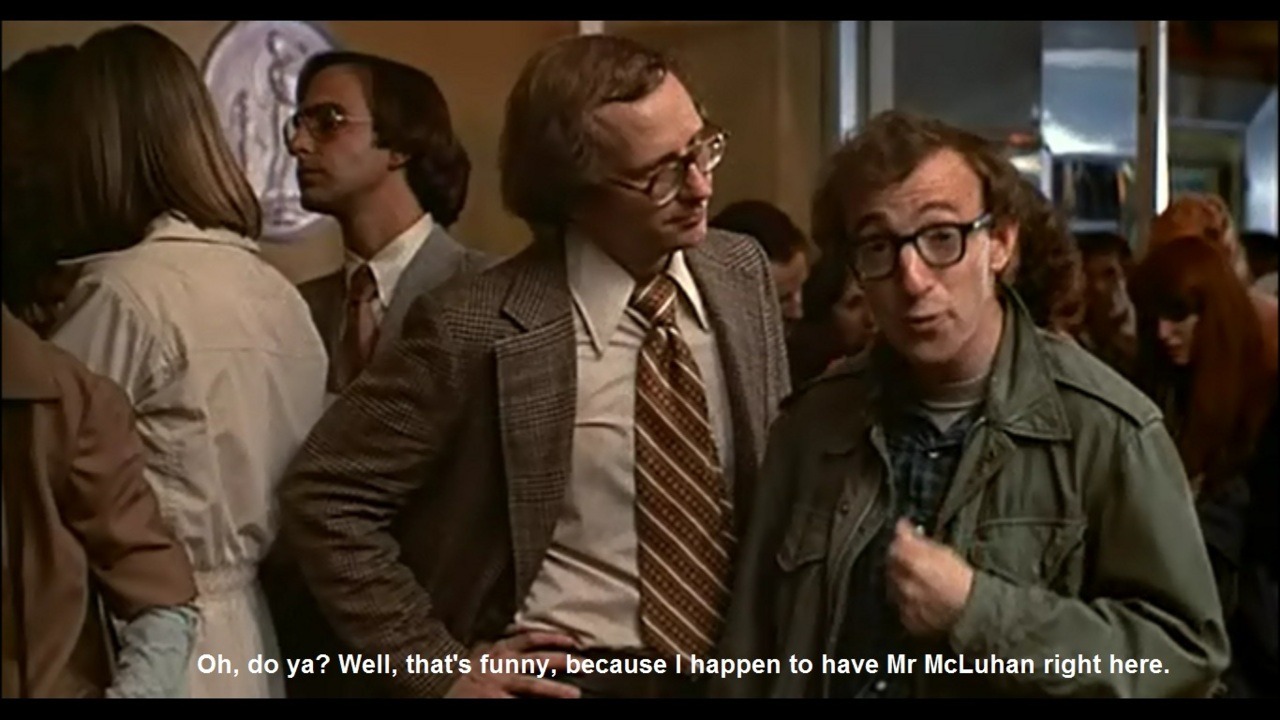
This makes sense. You can't have people rewriting articles based on their own interpretations. Suppose I think Annie Hall is a depressing, nihilistic movie about the futility of love. What's stopping me from editing the entry on Annie Hall accordingly? Only this rule.

So you can not, for example, pull Marshall McLuhan out from behind the poster and have him contradict someone. You have to cite an article in which someone quotes Marshall McLuhan.


That puts a writer in an odd bind. I happen to know that it was not Nazi Germany that invaded England in We Happy Few, because I wrote the timeline and all the lore to go with it. But that's not proof enough. I have to tell someone else, and they have to write it somewhere, and then I can cite their article, which quotes me.

So, hopefully, someone will quote this blog post in their blog, and then I can cite myself.