Saturday, February 27, 2021

The Pig Witch is Everything That's Wrong with Game Characters

I played God of War a while ago. I freed a dragon and got to Alfheim. Maybe about 6-8 hours of it.

If you loved Zelda: BOTW, you will love this game. It has spectacular environments and lots of game mechanics for you to master. The world is neatly arranged so you can go around killing things and upgrading your gear. And, like Zelda, it does not have much of a story.

A story, in my book(s), is:

a. a character we care about
b. who has an opportunity, problem or goal
c. who faces obstacles and/or antagonists and/or their own flaws
d. who has something to lose (jeopardy)
e. and something to gain (stakes)

The player character, Kratos, is a monosyllabic father who seems terribly angry about something. What? I dunno. But if I had to guess, it's that he's angry at his wife for dying, or that he doesn't like being a father terribly much.

But I suspect he is just an angry person.

There's nothing wrong with that. It's "care about" not "like." We can care about an angry person.

But what's his goal? He wants to put his wife's ashes at the top of a mountain, because she asked him to. What happens if he doesn't? I dunno. What does he get if he does? I dunno. So we're missing jeopardy and stakes.

But it's the pig witch who really pissed me off. She is a warm, sweet, kind magical woman with powers, whose best friend is a pig. Atreus, Kratos's son, nearly kills it with an arrow. She enlists your help healing it.

Is she mad about that? No, she blames herself.

From then on, the pig witch does all sorts of big magic to help you get to the top of the mountain. Why? Because (a) Atreus reminds her of when she was young and (b) because she likes him. Or him and Kratos. Hard to say.

Atreus doesn't really have enough of a character for him to remind a witch of her when she was young, and it seems very unlikely that someone who became a powerful witch was anything like the arrow-happy hunter Atreus is. Certainly there's no reason for the pig witch to like these two manly men who tried to kill her friend. But these aren't real reasons. These are excuses chosen because they don't require any narrative work: they don't affect the story in any way.

The pig witch does not seem to have any agency of her own. She is really just there to explain things and to help. She is a mashup of those two well-worn tropes, Moishe the Explainer (who needs no explaining) and the "Magical Negro," the person of color who is only in the movie to help the white dude achieve his full potential.

What frustrates me is that she could have been so much more. She could have been part of the story.

She could have been the person who derails your quest because she's powerful and furious you tried to kill her pig, and now you have to do X, Y and Z or she'll kick your ass.

Or, better, she could have been an angry woman herself, with an agenda. "Why are you helping us?" "Because there is a god I want you to kill."

She could have had a personality. A sorceress who lives in the woods, whose best friend is a pig, is probably not a warm, affectionate, understanding person. She is probably an introvert. She probably does not like people. She is maybe not very good around people. Maybe she tends to say the wrong thing. Possibly somewhere on the autism spectrum.

What's wrong about game characters is usually that they are only to service the playthrough. They do not have any reason to be where they are other than to help or hinder the player. They were doing nothing yesterday, and tomorrow, if you haven't already killed them, they will be doing nothing.

The ones who fight you often have no particular reason to fight you except you crossed an invisible boundary that triggers them. The ones who help you have no particular reason to like you, except that the game is sucking up to you, the gamer.

By contrast, look at WITCHER 3. Everyone you meet has a life. They had problems before you showed up. After you leave, they might have one less problem, if their problem was a monster and you killed it. But the odds are they still have all the other problems.

If they help you, it's because you serve their goals in some way.

Or look at HORIZON ZERO DAWN. Before the Big Bad came along threatening all life, your world had multiple nations, some of which were recently at war, some of which are still at war. Even the robot dinosaurs you're hunting were doing something you came along, and the survivors will be doing something after you leave.

In real life, everyone is the hero of their own story. In a game, that should be true as much as possible.

Sure, we have quest givers and helpers in We Happy Few. I try to make sure that they are not only there to give you a quest or some help. The nice lady who saves you from the mob at the beginning of the Garden District is not doing it because you remind her of someone. She is doing it because she wants your socks.

It is always a bit of a struggle to maintain this. It would have been less work for the animators if the lady didn't expect payment. The LD think in game terms -- we need someone to tell the player the rules of the Garden District -- not, usually, in narrative terms. So they are not always happy when I nix an elegant gameplay solution because it makes no sense within the game world.

I can't even guarantee that you'll sell more copies if you do. God of War has great reviews and ratings. So did Zelda.

But if you want to make an immersive game that gives people emotions (other than "flow"), then why not create characters who have human drives? Who want things from the player? Who don't start off liking you, especially if you shoot an arrow into their friend?




Thursday, February 25, 2021

Yes, But Also Never, Part Two of my chat with Mikko Rautalahti

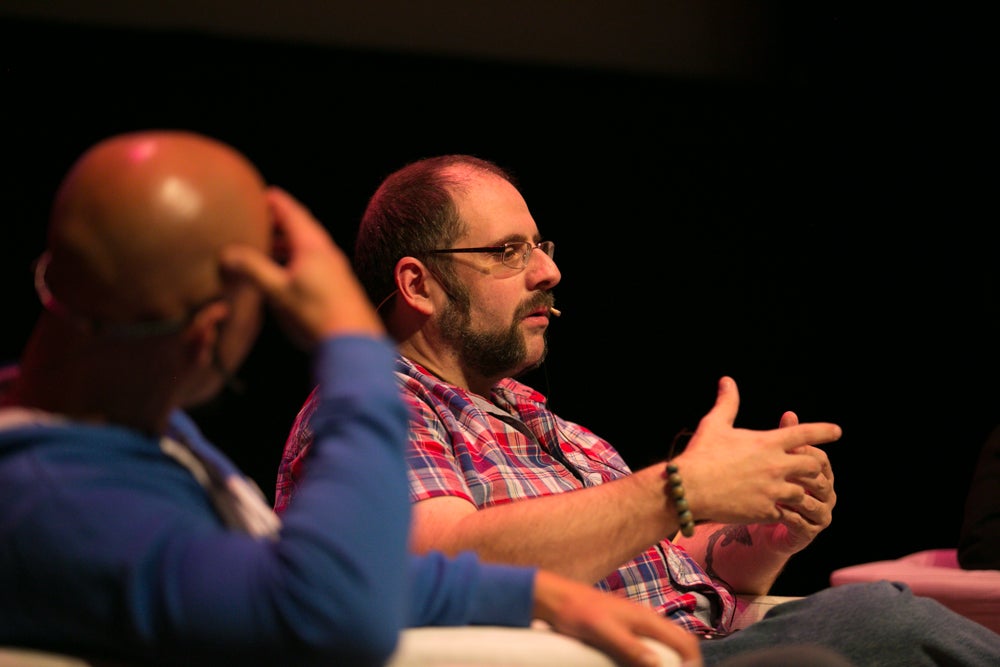
Mikko Rautalahti with nerf pistols

Alex: What are some valuable lessons that you've learned from things that are not games? What are some surprising things that you didn't expect them to teach you?

Mikko: Classics like pen and paper roleplaying games have been enormously useful. If you are a game writer who has never played a roleplaying game, you're missing something really core.

Alex: What's a lesson from roleplaying games?

Mikko: I think one of them is assuming that players will do the obvious thing. That may be the single most useful lesson, where you set up a scenario in a certain way and then it doesn’t play out how you expected.

That also applies to video games. If the players have the option of approaching something from another angle, you have to be prepared for that, but at the same time, there is a limit to how much you can cater to all the different approaches. So the maybe the reasonable expectation is that player walks down this corridor and then does a thing, because that's the only thing they can do. But can they walk out of the corridor, or can they suddenly just leave the place and do something else? Do they break the game if they do? Or can something interesting happen in response to that?

Alex: If they can do the wrong thing, they will. And if they can’t do the wrong thing, they’ll feel led by the nose.

Mikko: Yeah. What happens if they just stay there? There's a lot of stuff that works really well in non-interactive fiction, like the classic thing where there's a bomb that's about to explode and the timer is counting down and somebody's trying to defuse the bomb. And it's very dramatic. And it's like, oh, no are they going to make it on time? And it's fun! But in a video game, what happens if the player doesn't do it? What if they simply fail?

Of course, you can always say, boom, you died, reload. But is that fun or interesting? Can you have a situation that has a more interesting consequence if you fail? And if you don't have a great way of handling failure, do you want to have that situation in the first place?

Alex: It's interesting that you bring up roleplaying games because they're the antithesis of a video game in the sense that they have no budget. You can say, the world splits into sections like an orange. An angel comes down and he has a thousand eyes and he speaks to you in Yiddish and he wants you to go get his pants pressed.

Mikko: It's so different. A really great roleplaying tabletop experience is not killing orcs with bows and knives, it's what happens when the players say, “well I recognize this orc from back in high school where he was the bully. And I start to talk to him about that.” And then you riff off that and say that the orc breaks down and goes, “well I have a sandwich and we can share our sandwich.” And you can see so many ways things can go from there.

Alex: And now the Game Master is going, oh, God, I planned this whole thing based on fighting the orcs.

Mikko: Not to get too deep into this topic, but that's the sign of an inexperienced GM. If you walk out assuming that's going to happen, you're already on the wrong path. An experienced Game Master or Dungeon Master is like, I'm going to set this up, and I have a good understanding of what's going to happen if they do this. But I'm not counting on them doing it. If they approach it in a totally different way, then I understand this environment and the situation well enough that I can spin it a hundred different ways. And that's the joy of these games. For a player, the knowledge that your actions are not constrained, that you can do whatever, and it's hopefully going to have interesting consequences. And as a game master myself, what I really enjoy is those moments when players do something that I really didn't see coming. And I don't know how it's going to play out, but I know that I can handle it. But the next few minutes are going to be me working it out in real time. I have to handle it in a way that makes sense for the world and for the players. It’s leaping out of an airplane and figuring out how to make an umbrella before you hit the ground, every time. It’s great.

And obviously, that's not really something you can do in a video game. There are hard limits. Or sometimes it's more about the systems interacting and you get the emergent content, which is super interesting. But still, at the end of the day, there’s a technological framework. I know that the player has these tools at their disposal, they could be approaching these situations guns blazing or socially, and I have to prepare for that. You just have make sure that you have the kind of mechanics and technology for the NPCs to react to all of these approaches in different and interesting ways. You have to anticipate the player as much as you can.

Alex: So it's not so hard to make gameplay replayable. But if a game has a linear story, how do you make replaying it fun? Or is that even important? Is the only important thing to tell a good story?

Mikko: I have this urge to say that it's not important, but I don't think I actually believe that.

I would say that a game that has a lot of narrative replay value is probably succeeding better than a game that doesn't. And if you can make a game that really gives you different experiences based on your approach, I think that is great. But [the later experiences have to make] sense in the context of the earlier experience, too.

Alex: But how do you do that with narrative? How do you create the ability to tell a different story or to tell the story a different way or what?

What makes a book re-readable?

Mikko: If the writing is good and the acting is good and the actual storytelling, just the way it's implemented in the game is good, that is something people, at least the people who are OK with replaying stuff, are going to want to experience again. Journey, for example, is a game that I have played many times, largely for the narrative. I like the emotional payload that you get in that game.

Alex: I think there you're talking about narrative that is inherent the gameplay. In Journey, the narrative is the gameplay. I mean, aside from a few seconds of intro, the story is pretty much your struggle against all these difficult environments, isn’t it

Mikko: Well, yeah, it is very closely intertwined. But with Journey, there is such a specific emotional payload that is delivered. There’s a bit where you are close to the end, and you're trudging through the snow. Everything is getting harder and harder. And it feels sad and heavy and kind of horrifying. You feel like you're dying a little bit, stumbling in the snow, and there’s this overwhelming sense of despair.

And finally, you get re-energized and you explode out of the clouds, and you’re above this horrible snowstorm that was killing you. And now the sun is shining and the music soars. And it is just this beautiful, empowering moment. And the reason it feels so good is because it felt so bad just 20 seconds earlier.

Alex: So would you say it's the flow of the emotions --?

Mikko: Yeah. Yeah. And I like that I can sit somebody down and go, “hey, here's a video game, play this while I watch.” I've done that a bunch of times with Journey. I've had a bunch of people I know play it, and I watch them as much as I watch the game, and I can get that same emotional payload when I see them experiencing it.

And there are a couple of other games that I feel do something similar. Like Firewatch. The way it makes just talking on the radio a primary game mechanic is really interesting. And the way they have these different permutations of situations. Like this one scene where these shitty teenagers are setting off fireworks, and they're swimming and they're playing their music super loud. And you walk over there. There’s a boombox. And you can turn it off and they react to that. Or you can let it play. Or you can throw it in the lake. “Fuck you, kids.” Or you can take it with you, and after that, it's in the tower with you for the rest of the game. And it's not a huge thing; it has no bearing on how the game plays out. But you get the feeling that I did a thing and the world responded, which I think is really at the core of a good narrative experience, this idea that you are interacting with the world and the world notices.

Alex: Yeah. A pet peeve of mine is if there are dialog choices and you feel like they're not affecting anything. I played a triple-A game. And I just started choosing all the most obnoxious dialog options , I kept choosing options like, “Hey, buddy, fuck you and the horse you rode in on.” And they just kept right on blandly telling me where the quest was and what to do. They were never like, “Dude, what? Fuck off, eh? No quest for you.”

Mikko: I might know which triple-A game because I do the same thing.

Classic ludo-narrative dissonance. I remember in the original Knights of the Old Republic, which is a game that I quite enjoy, you can just go completely for the dark side. So you’re pure evil, and you’re unstoppable. You kill like a hundred really powerful enemies. And then you go talk to some clerk somewhere. And he makes you jump through all these hoops. And I can think of any number of unpleasant things I could theoretically do to him, because isn’t that what a dark side character would do? But this game won’t let me.

Alex: “I find your lack of faith disturbing.”

Mikko: “I’m sorry, Darth Vader, but you do have to take your mask off for the picture, I don’t make the rules.” It gets ridiculous. And I understand why that happens; of course there are limits to what you can do in a game. But in terms of narrative design, then maybe don’t set up situations where you give me the option to do something or become something if you can’t commit to providing consequences that would be interesting or make sense. At least it's nowhere near as bad as it used to be; games have improved a lot on this front.

Alex: I think a lot of the craft of video game development is funneling the player without letting them feel that they're funneled. A good level disguises the traversal path with environmental art, but then provides all this iconography and color schemes that absolutely tell you where to go next. We’re handing the player solutions while telling them they’re smart. The player gets to push the button on the Insta-pot and say, “I cooked!”

Mikko: I think people are quite happy to be there as long as they can't see the funnel. But the moment they start to go, OK, I see exactly how it is going to play out, that’s where most people check out of the story. People start skipping cinematics or dialog. They might come back in later, but chances are that at that point they're just so confused about what's going on, it’s just easier for them to drop it.

Alex: A lot of narrative games don’t really demand that you follow the story in any way. You can play without headphones, just follow the mini-map. And then they miss the feels. And then, of course, they’re on Metacritic complaining, “this game didn’t really pull me in.” So we have to give them good reasons to keep the cans on. Either make the story really amazing so they wouldn’t miss it for the world, or put gameplay clues somewhere in the narrative, so if they’re paying attention, the gameplay is easier.

Mikko: I would like to see more games where the narrative imperative for doing things was considered to be more important than the gameplay imperative. So you don't get, “we can’t do this interesting narrative thing because the player needs to be able to murder all of these people without consequence because it's a video game.”

You don’t want, Oh, if you didn't pay attention during this dialog, then you can’t proceed, because that’s the narrative equivalent of an adventure game where you have to hunt for a specific pixel. But you can strive for context.

Alex: You ought to be able to design systems where the dialogs are replayable. There's a log. So you never actually lose the information.

Mikko: Yes. Yeah.

Alex: So if you pay attention, it's a whole lot easier. You can still grind your way through it. You won't fail. You're not blocked. But boy howdy, if you listen, it's going to be a whole lot easier. You can swim across the icy river, sure, and lose health. But if you listened to that guy, he said he’s a fisherman. I bet he’s got a boat.

Mikko: I feel like that's something a lot of games do reasonably well these days, and that's OK. But I think the one thing that games are still really bad out is giving the players a really good way to get back to a game when they haven't played it for a while. Like, you don't play for two months, you might not remember very well what you were doing.

Alex: We were just saying, it’s almost sad how fast the Xbox Series X is, because we won’t have loading screens in our game. And they’re so useful for reminding you where the hell you are.

Mikko: Yeah. In Quantum Break, if I remember correctly, you would have your current objective on the screen. But then if you went into the pause menu, you would get a more detailed description of what was going on.

Actually, what we really wanted to do was to have a thing in the menu where you could get a personal timeline that you could replay. You did at this, then you did this, then you did this. And it would have images of the places you were in at any given time when you were making the decision. Then you’d remember, “Oh, this was at the skyscraper. I remember the skyline. “

Because we had so much different branching content, we wanted you to be able to see, if you made different choices, you could see the choice you made before and compare its consequences to other choices. You would see this whole decision matrix play out.

But it was way too complex. It would’ve taken too much testing. It was a pipe dream.

Alex: I think as developers, we tend to favor the experience of streamers and reviewers. And the player who put down the game for two months, they just don’t get prioritized because the streamers aren't going to do that and the reviewers aren't going to do that. So to heck with the player who just, oh, they started playing Hades and they're gone from your game for two months. And then they finished Hades and now they're, OK, I'm back. Where was I?

Mikko: I fucking hate it.

Tuesday, February 23, 2021

Yes, But Also, Never -- A Chat with Mikki Rautalahti -- Part One

Mikko Rautalahti headshot

Mikko Rautalahti (@MikkiHEL) is a Finnish expert of the game writing trade. He wrote Alan Wake with Sam Lake and Petri Järvilehto, and was the Narrative Lead of Quantum Break for Remedy Entertainment. Currently he is Creative Director at Rival Games.

He was kind enough to sit down and chat with me from Helsinki, Finland.

Alex: What phase of a project are you in now and what do you do in a day?

Mikko: I'm working on multiple projects, and they’re in very different phases. One of them is a game as a service type of thing. So anything that we do is stuff for future releases, but the game itself is already out and churning away. The machine just needs more content all the time.

Alex: But, literally, what are you doing in a day? Are you writing dialog? What do you sit down and do in a day aside from meetings?

Mikko: For this particular one, it doesn’t really include dialog. I’m giving notes and just trying to map out where we're going in the future.

Alex: So, pillars.

Mikko: Yep, pillars and roadmap stuff, where’s it’s like, OK, so we have these characters and we know that next season we're going to have this and this story. I might end up writing some of that, or somebody else might be writing those beats. I do also write a lot of, like, barks for different new characters. Also bios for testing purposes--

Alex: --Casting breakdowns.

Mikko: --And some of the bios are player facing. Different versions of the characters are available in the game and they have different costumes. And they tie into the larger story. So it needs to say something about the situation or the costume or the character.

And we do like micro fiction, or flash fiction. They tend to come in at around a thousand words, like short stories. It is an online shooter, and that's not really a great format for delivering any story progress during gameplay. So we do that in collectibles and stuff like that.

Another project I’m working on involves more traditional game writing; there are levels, and you need dialog to go with the levels and a narrative design to go with the gameplay. So that’s also what I do, writing the moment-to-moment progression in a fairly linear game. Like there is a locked door and the character saying, “oh, this door is locked, I need to find another way.” And then the other half is more about the overall story and character development and the emotional side of things.

That’s the most traditional thing I've done in a while. A lot of the work that I've done lately, apart from that, has been more structural and abstract for a new project that we’re hoping to get going. I’m writing up, I guess you could call it the laws of the world. Stuff that is more about the design of the game than the actual story content. Like, this is the style of the delivery and these are some themes that we're going to be focusing on. Here are a couple of examples of how this might play out. Of course it's all hypothetical. What we are pitching is most likely quite different than what we will end up making.

And that's assuming that we end up making it. I've done a bunch of these pitches and some of them get made and most of them don't, that's just the nature of the business. But I'm excited about this one; I think it's going to be cool if we do get to make it. You got to be passionate about it. But at the same time, you don't really want to get too much into it, because if it doesn’t work out after all, I’ll be sad.

Alex: I think you have to enjoy the writing. You know, you have to enjoy the creativity itself and not be too focused on the end product.

Mikko: Yeah, and it helps that this particular project is our thing, we are coming up with ourselves. It's not work for hire, I’m not just filling in the blanks on something that has already been defined and designed, which is what you often end up doing a lot as a contractor. It's really hard for me to be super invested in something like that. Like, I could do a good job with that. And it can even be fun to work if it's a good fit. There’s nothing wrong with it. But at the end of the day I’m very aware that I'm in somebody else's sandbox and there is no way it is ever going to be my sandbox. That is a different emotional state for me.

Alex: So, talking about frustrations, you recently were tweeting about dialog offsets. [I.e., different pauses between lines of dialog. Some games have good voice acting but the pauses between each line are fixed, which ends up sounding oddly robotic.] What frustrates you in games that could be easily fixed? I mean, there's a lot of things that we can't fix at all easily. But what’s the low hanging fruit? What are the things like, Oh, God, why don't we just do this?

Mikko: I’ve been doing a lot of work as a contractor for the past couple of years. So I’ll be brought into projects at different stages. And when I say different stages, I mean that somebody like me should have been involved way earlier than I am. So I'm always working around things that have been locked already. And quite often it would have been really easy for things to go a little bit differently, and it would have worked so much better for the storytelling. But now it's just impossible because so much has already been built with certain assumptions in place. And that's soul-killing, where if somebody like me had just been there right from the start, just as a reality check, just to say like, hey, if you do this, then the narrative consequences are going to be this, this and that, are you sure that's what you want?

Alex: Yeah. I was just talking with Kelsey Beechum, who wrote Outer Wilds and she is the creative director’s sister. And she was in and out throughout the entire project. And that created that very integrated, very seamless experience where it all it all makes sense together. There's no, hey, if that's true, then why the heck is this happening? Everything plays nice together. Personally I've been fortunate, I’ve been in at the beginning for most of my career. If you call me in to paint a narrative on a structure you already built, I can do that, but I won’t be able to do all the things I can do.

Mikko: Yeah. And quite often the moment they start thinking about the story part is when they have the game more or less put together. Not anywhere near finished, but they have a plan for the level design. And some of the level design is already there, it's been implemented at considerable cost.

But I've also been there right from the start. And the difference is so stark. I think a lot of people think about story the way they think about any asset in the game. Like, we have these green houses here. And if you want to make the houses red, it's not that big a deal for an artist to go in and change the color and the texture. But you can't think of story the same way, because everything about narrative is interconnected and dependent on other parts of itself. The ideal is, “What is the best story I can tell with the pieces that I have?” But it turns into, “What is the least damaging thing I can put here; what is the least shitty version that I still feel comfortable putting my name on?”

If you're making a video game, not even one that has a crazy budget, just a reasonable budget, you can do almost anything, but you can't do everything. There are the things we're going to commit to and things we're just going to have to let go. Some darlings have to be killed.

And if you do that in the first, say, 33% of the development time, it's reasonably painless. But if you cut things in the last 33%, it becomes extremely difficult. You can cut something to save six weeks in the schedule, but then it takes four weeks to patch the hole you just made in the story, so you’re disrupting everything and it doesn’t help. I think ideally you build in stuff that you can cut.

Alex: In showbiz there are all these stories of writers putting in scenes just so they can cut them later. But I have an engineer’s attitude, I was a comp sci major in university, I have to cut anything that I can cut and make everything connect to everything. Which becomes difficult when people start looking for additional cuts. I have to say, I already did all the cuts that make sense. If you cut more it’s going to break the story. No one loves to hear that.

Mikko: I generally try to come up with an overall narrative that has redundancies. Given a location in the game, I try to make sure whatever it is that I put in that place I have an extra version of elsewhere, so that if we have to cut it, I am not completely hosed.

But all of our work is problem solving and you're always going to have problems. If you ever had a project where none of this was a factor, then you're probably not reaching very far. You want to push things as far as you can within the limits you have.

Alex: If you’re never failing, you're not trying. “Fail often. Fail better.”

Mikko: And the plans need to be realistic. I was working with somebody who had a lot of trouble accepting the idea that sometimes things are just good enough. They would ask me, “Well, but aren't we supposed to try to make the very best thing that we can?” And I was like “Yes, but also, never.” Like, in a perfect world, I agree with that. But that’s not what it's like actually doing this work.

Alex: I like to think of myself as a craftsman, not an artist. You build a cabinet. It should be a beautiful cabinet. But also the drawers have to go in and out easily. And if the client said they want 13 drawers, there’ve got to be 13 drawers. You can't just say, well, I thought it would be a better experience with twelve. If there are 12 drawers, they'll be like, where's my 13th drawer? No soup for you. The best is the enemy of the good.

Mikko: And at the end of the day, if you can't keep the game functional it doesn't really matter how good this one part of it is. If you have even a mediocre concept and everybody's kind of doing OK work, but the production planning has been done really well and everybody really understands what it is that they're trying to do, and everybody has enough time to do what they want to do, then you're going to create a much better experience than some kind of thing that is full of fantastic ideas, but the whole thing was just put together at the last minute with spit and baling wire.

It's a balancing act and you have to be not only realistic, but ruthless.

Alex: Yeah, you have to be willing to go, OK, I'm gonna take the L on this bit here, because I need time to do this other thing, which is more of the core experience, or more of what's unique about this game. The great editors in any medium are the ones who go, OK, this thing that you're doing here, that's really interesting. I've never seen that before. This thing that you're doing over here, it’s familiar. So maybe spend more time on the fresh thing, and then just be good enough on the other stuff.

But you do have to be good enough on the other stuff!.

Mikko: Yeah, yeah, yeah, yeah. There is that minimum standard that you absolutely have to meet.

Friday, January 29, 2021

Tragedy vs. Melodrama

Every now and then folks will propose a really sad resolution to a story in a game or in a TV series or other media. There is an idea that tragedy has some kind of moral weight -- that a tragic ending is powerful and therefore good. 

Not all really sad endings are tragic, however. Most of them are melodramatic. A tragic ending is a sad ending that is inevitable. In a well-crafted tragedy, it is the hero's tragic flaw that drives them to their inevitable destruction. King Lear is a tragedy: the King's blindness to the flaws of his daughters drives him to destruction. Macbeth is a tragedy: Lady Macbeth's vaulting ambition combined with her husband's inability to tell her to STFU causes him to violently take power in Scotland, and in so doing, amass a hoard of enemies he cannot possibly fight. 

It's easy to imagine that if Lady Macbeth hadn't convinced Macbeth to destroy himself seizing power as King of Scotland, she would surely have got him to destroy himself in some other way. That's a tragic flaw. There is no avoiding it. (A wiser wife would have told him to put off becoming King of Scotland as long as humanly possible. If the prophecy of his becoming king is true, then so long as he is not yet king, he cannot die!) 

When you write a tragedy, everything sets up the horrible end. The seeds of the hero's destruction are in the first act -- the first reel, in a movie. Romeo and Juliet starts off by telling you that the two are "star-cross'd lovers."In other words, hey, don't get too attached to these kids. 

A sad ending that is not foreshadowed, and does not proceed from a tragic flaw, is not a tragedy. It is melodrama. 

Melodrama is not inherently bad. There are some very fine melodramas. Shakespeare's history plays are melodramas. However melodrama has no inherent tragic weight. It has to justify its own ending, because its ending is not inevitable. 

By and large, tragedy is hard for Americans -- our national religion is optimism -- just as happy endings to dramas seem to be hard for the French to accept. Tragedy is particularly difficult in games: after I fought for 20-100 hours to do a thing, are you really going to tell me that I can't do it and my character is doomed? F u. Rage quit. 

But just because it is hard, does not mean it is better. I did a bachelor's in Computer Science because it was hard. Not a good reason to do a major. (Though I did learn some good things about screenwriting.) Sure, life has a lot of sad endings. Sad endings are more "realistic." But fiction is naturalistic, not realistic. Fiction needs to be about something. Fiction is there to provide made-up worlds where made-up events add up and make sense. You are not "selling out" by having a happy ending. You are not doing something amazing just by virtue of having a sad ending. Either ending needs to mean something. Either ending needs to be earned by the things that go before it in the story. 

So next time someone proposes a sad ending, ask yourself if it's really "tragic." Is it foreordained by who the hero is? Or is it just a last-minute choice by the narrative folk, and the story would make just as much sense if the ending were happy. In that case, you have my blessing to choose a happy ending.

Saturday, December 05, 2020

Lucien Soulban, Part Four

Alex: So, obligatory question: How did you get into game writing?

Lucien: Through the long road. I started off writing for tabletop role playing games. I was friends with a new buddy, Jean Carrieres, and they saw my D&D writing. We were part of an APA, an Amateur Press Association. Bunch of friends get together once a month and pull together articles that they've written. They get it photocopied 20 times, all the copies stapled together, and then you hand it back out to the members. I'm showing my age with that. 

Well, my friend saw my writing and he was like, hey, I work at Dream Pod Nine. We have a lot of French writers, we need somebody to go through and help them with smoothing out their English. So I started doing that. Then they said, would you like a shot at writing a book? So I did my first couple of game books through them. 

And then I went to Gen Con and I was blown away. Thousands of gamers in one location. All the big companies were there, and I was like, that's the industry I want to be a part of. So, I started going with the books I had written. I started introducing myself and getting contracts with White Wolf and with Pinnacle Entertainment and companies like that. 

My friends started making the jump into video games as designers and they started saying, hey, we know a writer we think can hit the mark. And so they gave me my first breaks. My first published video game was Warhammer 40K: Dawn of War, my first published video game. I did a vaporware game that never went anywhere. So we don't count my first.

Alex: We should!

Lucien: We should.

Alex: You did the work.

Lucien: I know.

Alex: --like this concept, "must have shipped three games" in a recruitment ad. I can't force the game to ship.

Lucien: Yeah.

Alex: Like you can work at Ubisoft, and three games you worked on get killed by Paris. And that's your entire video game career. And you did great work!

Lucien: Well, I've been fortunate enough to have a lot of a lot of games under my belt since then. And so after a while, I put that project aside...

Alex: Dropped that off your LinkedIn.

Lucien: My first game, friend of mine was working at Relic Entertainment and they were doing Dawn of War. And he said they need a writer. I interviewed, I got the job. And then after that, another friend of mine, well, you know Rich -- Rich Dansky [Chief Clancy Writer at Ubi] -- said, OK, Ubisoft in Montreal where you live is looking for a Rainbow Six Vegas writer. So I interviewed and I got that. I was there at the company for two or three years working on that. 

And then I was on Splinter Cell Conviction before it got rebooted. But I was contract at that point, went independent, worked on a whole bunch of DS games, including a princess game and all these movie tie-in games like Enchanted, the Golden Compass, Kung Fu Panda. And then I went back to Ubisoft when I realized I needed a steady paycheck and I wanted to work with a team rather than being at the tail end of something where I was only filling in a required sheet of needs.

Alex: What's misconceptions did you have coming in?

Lucien: I thought, I'm bringing stories to video games. I am going to bring a story and I'm going to do something awesome with it because I love video games. 

And I didn't think that I was going to be the only person responsible for a game. But I thought, I'm the writer. I thought I would be given a bit more leeway. I didn't think that I would have to justify everything. I had at one point, a line where one of the soldiers was saying, "If you're looking for your pound of flesh, you're gonna have to wait till this is over." 

The creative director was like, pound of flesh, what's that? I'm like, well, it's from [The Merchant of Venice by] Shakespeare. And he's like, no, nobody reads Shakespeare, drop it. Suddenly, I’m in what felt like an hour-long argument with him over something that’s a common English idiom. 

The misconception was that I could operate in my own bubble. I didn't realize how integrated you need to be. So when I see writers saying, oh, the writer is the gatekeeper of story, I'm like, no, that's not it. You're there to help.

Alex: The writer is the punching bag of story!

Lucien: I think you need to be seen as a troubleshooter. They need to know that they can come to you with problems, and you're there to help them get through it. You'll find they’re a lot more open to incorporating your ideas, because they trust you. So I build up good relationships with level design, who might come to me and go, hey, we need a reason why the player would go here. And so you help them troubleshoot so they do not hesitate to come back and talk to you again. But operating in a bubble is a fallacy. You can't be outside of the team working on script or else you're going to have a game that is disconnected from its story.

Alex: That's what I like most about video game writing. You're right in the thick of it. If you're a film screenwriter, you do your things and hand it off to the crew, and they go play in the sandbox and have fun, and you go home. You get to see it eventually, but you stay at home. 

I was on set for a show I'd created, and the director sincerely asked me, "Why are you here?" I like the integration. I like, you know, looking at someone's screen in the office and, oh, so that's what they're doing. Okay. Well, my story won't work in that case. What would work?

Lucien: Yeah.

Alex: And sometimes it's a surgical thing that you can do. Oh. I just change this one thing. Now it all makes sense again. And that's the math again. If I just change the polarity on this, now it's good again.

Lucien: Yeah, totally. When I went to Far Cry, it was the first full-on open world game that I worked on. And because of various circumstances, including people who were all vying for creative control, narrative ended up by being insular and working on its own stuff. And as a result, there was a disconnect between what you did in the main storyline and what you did in the open world. So in the main storyline, you're like, all my friends are kidnapped, everything is terrible.-- Oh, look, I can kill a rhinoceros to craft a wallet! And while some people appreciated not having that pressure on them all the time, some players felt guilty for engaging in frivolous activities when their friends were being held hostage.

Alex: Oh, that's one of the worst things about putting a clock on a video game. A clock is great in a film. But in a game, you know, you're Captain Shepherd, you're trying to save all intelligent life in the entire galaxy. But here's where you hang out with an old friend and have beer.

Lucien: Exactly. So when we did the jump to Far Cry 4, there was much more of an effort to tie the global geography into what was happening within the story. So if you go out into the open world and if you take that tower, if you burn down that poppy field, if you do this, if you do that, it's all contributing to hurting the enemy. 

So now I take those open world lessons and I get to apply them even more with: what is it about each region that informs the whole. What is the mythology of the region, what is its importance, and how does it uphold the main storyline? So again, it's that balance. It's finding that that scale is off balance and saying, “Where do we add more weight to make things balance out?” I feel like writers should be more and more involved in what the player experience is, not just what is the story experience, but what is the [user] experience?

Alex: UX, the user experience.

Lucien: Yeah. Exactly.

Alex: Last question. Why do you stay sane?

Lucien: What do I do to stay sane? Dear God. Well, let's start with this. You can't see it because I've got this thing on here, but right here I've got a punching bag. Honestly.

There were a few times where I almost burned out at Ubisoft. Watchdogs 2 was a grueling process. Elements of Rainbow Six Siege and the project that came after it were grueling and emotionally draining. 

The tips and tricks that I picked up? One was when you leave the office, you leave the office. I had this mental exercise when I walked out of the offices. Right before I left the lobby of the building, I stood still for a moment. I imagined all the day's issues being dumped into two suitcases that I was holding in my hands. And before I walked out that door, I dropped the two suitcases on the floor and I walked away. And any time I started thinking about work, I'd be like, no, they're in suitcases. They're in a suitcase and they're in the lobby. They're waiting for me when I get back. I don't need them. And oftentimes when I came back in the morning, the issues aren't really there anymore...

Alex: That's certainly what happens if I leave suitcases in the middle of a lobby. They're not there anymore.

Lucien: ... or the stress that created them wasn't there anymore. I didn't hesitate to seek out help at Ubisoft from what we call an ergotherapist, which wasn't a psychologist or a therapist, just somebody who would say, what are the issues you are facing? Have you considered doing this? Try these exercises, try these techniques... she provided me with tips and tricks to cope with the stress. 

But she also allowed me to forgive myself for not being on top of everything, because we tend to take things personally. And we take it all on ourselves. Even if it’s somebody else's fault or anything, we sometimes receive feedback on soemthing and go, “did I fuck up? 

And so... self-forgiveness and removing yourself from the issue unless you are actually responsible, but not second guessing everything and putting it all on your own shoulders. I find that we as writers tend to take on a lot of the project’s problems-- no, no, no. Bring it up. Let other people worry about it. You're part of a team. Solve it as a team. It's not just you. 

Breathing exercises too. I started employing the seven four eight breathing technique. Are you familiar with it? It's where you inhale for seven seconds. You hold your breath for three or four seconds. Then you exhale loudly for a count of eight. And then you do that four times in a row. It causes the brain to calm down and still itself. I found that it was a great technique for fighting those moments where anxiety was just building up and the emotions were starting to get a little bit too raw. So for me, the luggage exercise, the breathing techniques and such. Knowing when to talk to people and who to talk to at your office to say, I'm having this issue. And being honest with them, because I think mental health has become a huge part of our everyday discussion at companies. I think a lot of companies are paying attention to that now.

Alex: Talking about the writing team, you're involved in the decision of who to hire. What do you look for?

Lucien: I'm looking at a lot of people who come from a lot of different writing backgrounds. I look for, how good is a person with characterization? But I think you need to have someone who is more than just writing cut scenes. You need to have worked in the guts and the mechanics of a video game.

Alex: People sometimes think narrative is the cut scenes. Cut scenes are the easy part. I mean, when we're scheduling, people ask, "how many conversations do you have?" But the conversations are not what take the time. I can write ten pages of dialog in a day and not feel winded. 

The hard stuff is like, what five objects can we put into this room that tell a story about the person that isn't there? And hopefully they are five objects we can buy the wireframe for. What gestures, what body movements, what can we see in a dumbshow that would communicate what's going on, without anybody saying anything. Like readables and dialog are the easy parts and everything that's not dialog is where I spend my time, because it's the stuff that has to be implemented well by other departments, the stuff that has the most dependencies, that stuff is 90 percent thinking it up and then 10 percent writing it down.

Lucien: Yeah.

Alex: And that's that's really where most of my time goes, is either thinking of the thing that would be really evocative that somebody else is going to make. And then, you know, talking to people about what they're doing and saying, OK, here's how your idea will work with the story or how it might break the story.

Lucien: Yeah, I've had those before. I've had those conversations before.

Thursday, December 03, 2020

Lucien Soulban, Part Three

Alex: Is there a narrative delivery system that you wanted to implement that you couldn't? Or, is there a narrative delivery idea that you thought of as a victory?

Lucien:  Yeah, yeah, there was. I was working on a game for Ubisoft, and I ended up leaving before it was complete. And I had the support of the team, but we were a victim of time. I wanted to do a system that didn't slow the player down from jumping in from multiplayer match to multiplayer match, but that still allowed players who like story to feel like it had more meat to it than just a multiplayer PVE style game. 

So I pitched a narrative system that I thought would allow people to seamlessly go in from one match to the other, but if you were somebody who enjoyed story, if you were a lore diver, you could go into elements of the menu system and explore and find things, and things that you did in the game reinforced that. It allowed players to feel that they were part of a greater storyline, that the multiplayer matches fed into a more global element and that there was progress and process there. So you could hear the characters voicing their approach and take on things. 

Unfortunately, it just wasn't something that we could pursue.

Narrative systems that I am proud of having accomplished, though, is with the Far Cry games. I was able to create randomized bottles of conversation that mixed and matched so that the player could feel like they were walking through a world and not hear the exact same conversation repeatedly. 

I would have one container where NPCs are talking about immediate needs, right? And so two NPCs would come in. I knew the minute that their animation cycle synched up, and that when they were standing there, I would have approximately 30 seconds. Okay, we timed all of this out. We talked to the animation team. 30 seconds for these two NPCs to talk. 

Then they break and go on their own individual animation cycles. They go on patrol and they might come back, sync back up again, 30 seconds again. 

So I said, okay, so I have 30 seconds. So the first NPC would always state a need. And it was one of four or five needs. "We need medicine." "We need food." "We need fresh water." "We need supplies." "We need ammunition." 

The second NPC had multiple responses, each of which would reinforce whatever was being said: "I know somebody who can help with us with that." "We're gonna have to steal it, but I know where we can go." "I have a stash located somewhere nearby," that sort of thing. 

Then the first NPC would respond with something like, "OK. Thanks. That helps a lot." That sort of thing. But because each response was randomized, the conversation was rarely repeated note for note for note.

The one that I was really proud of, was on Rainbow 6 Vegas. I created chained barks (based on game verbs: "Reloading" "I'm being shot at!" "health down!" "friend down," that sort of thing). So the first NPC would always say his line, no matter what. It didn't matter if he was there alone or if he was there with other combatants on his side, he would always say something like, "I'm under fire." 

The second NPC had a second-stage response that never required an answer. Something like, "I've got you covered." Or, "Keep your head down!" 

Then there would be a third NPC who would say something like "shut up and fire back" or, "cover each other!" -- something to reinforce what was there, but would never necessitate any sort of response. It actually got called out in reviews for Rainbow six Vegas, where reviewers were like, “Wow, the A.I. is really smart, it knows when there's a whole bunch of people there, and they're talking to each other and everything.” 

And I felt smart because it wasn't A.I. It was just a matter of how we strung the bottles together and ensuring that the rules made sure that they never broke one another.

Alex: Is there any philosophy or academic theory that you find useful in your work?

Lucien:  I take a nibble from here, a nibble from there. I graduated with a Bachelor of Fine Arts in Drama and Education, and the writing that I did initially were plays. And so I think I take the playwright’s approach, where I'm not focused on what the camera angle is, or zoom in on the eyes, or anything. It's characters in that moment, what I want them to say and what I want that subtext to be. 

Every project has its own DNA, how it approaches things, the problems, the troubleshooting, I think you need an arsenal of tricks. So for one game, I might rely on Maslow's hierarchy of needs. In another game, I might apply the Pixar approach to character design: what is their greatest strength? Their greatest weakness? What gets them into trouble? How do other people perceive them? It's a variety of tricks based on the genre or style of game and the project itself.

Alex: When you talk about grazing, I think one of the things I like about being a writer is, I don't have to cite any work. It's okay if I don't truly understand somebody's philosophy. Or misunderstand it in a useful way. It's okay if if I use the Wikipedia entry. Because I'm making this all up anyway.

Lucien: Right.

Alex: I'm not saying that this is how the world is in 99 percent of the cases, I'm just saying this is true for the protagonist. 

E.g., Elizabeth Kubler-Ross said that grief has five stages, anger, denial, bargaining, depression, acceptance. Is that true? Who cares? If I put a character through that, they'll have a trajectory. I'm not responsible for whether that is scientifically true.

Lucien: On this last project that I've been working on, I realized that the villain didn't have a very concrete set of ambitions other than just being the villain. So I applied the Dan Harmon story circle to who he was and what he wanted and where it brought him. I find that these little tips and tricks are really useful when you want to get your team on board. Because if you're telling them, oh, you know, the villain does this, then he does that and this is why he does the things that he does... their eyes glaze over. 

But if you say, look, story circle! Interesting, huh? This is where the character is. This is where they're going. This is where they get what they wanted but at a cost, where they realized what they really needed instead of what they wanted... it gets other departments excited. 

And they're like, “yeah, OK, very cool. Have you thought about doing this. Or, you know, where does this put the character at that moment of the game?” And I find that sharing the mechanics of what you're doing sometimes aids in communication.

Alex: One of the hardest things for me is I see a sort of shape in my head.

Lucien: Mm hmm.

Alex: Like to me, the story is math. You know, in the way that a mathematician will see an equation as a shape in their head. I read that when they're doing higher levels of math, they're manipulating a shape in their head, they're not manipulating the formula, the formula is just how they put it down on paper for other people. And a nonverbal shape is hard to impart.

Lucien: I think that's unique to yourself. For me, there is a scale. OK, there is there is a sense of balance and weight, and I start reading it and I'm like, “oh, wait, wait. The scale is shifting.” And I sometimes have a problem articulating it. I'm looking through it and I'm like, going, let me see how I can get the balance back because it's too heavy on this side. What if I short it here -- oh hey, that works, actually.

Alex: So what I get from what you're saying is that often these philosophies and theories are a way to convey what's in your mind to people who don't necessarily grok story.

Lucien: Yeah.

Tuesday, December 01, 2020

Lucien Soulban, Part Two

Alex: So when you're iterating, particularly during a vertical slice, do you find that there's a back and forth between design and narrative. Does narrative ever inspire design? Does design inspire narrative?

Lucien: A vertical slice is often a linear experience showcasing going from A to B to C to D on a guided tour. And while there may be a small open-world component to it, it's so self-contained that narrative is there helping drive that momentum forward. 

But by the time the vertical slice comes around, narrative has already been involved in who is the main character? What is his or her main motivation? What are they trying to accomplish within the game? 

But there are times where there are a lot of lessons to be learned from the vertical slice. And either you can apply them directly within the vertical slice or you can say, OK, this is something that we need to address moving forward. But I think that once you're in vertical slice territory, it's far less blue sky. 

Alex: And hopefully by then you have ironed out any sort of basic ludo-narrative dissonance.

Lucien: You have to.

Alex: Or do you ever find during a vertical slice that you're going, "Oh, wait a second, this narrative is totally at odds with what the gameplay has turned into."

Lucien: I think they're always be a little bit of that friction just because you're finally starting to see the narrative in conjunction with other elements of gameplay. You see the game theory being put into practice. And thus you realize where things may not match up. 

But generally, when it comes to, well, how many people are we killing? What am I doing? Why am I doing it? All those sorts of things, that should be well and done and decided. 

I think that if you're trying to go into vertical slice, unless it's a technical vertical slice, you should already have your beats nailed down. You should already know exactly what point you are in the story, what it might mean to the characters to be where they are in the story so that the people playing the vertical slice, especially the studio heads, don't feel like they've just been slammed and overwhelmed with a bunch of stuff. You need to be very surgical and methodical in what you give them as a relatable experience, but still make it feel like it is a well-realized experience.

Alex: What would you say are the hardest battles that you fight?

Lucien: It's kind of a tricky question. Fighting people's experiences. So I might come on a project and I'm like, “hey, I want to do this.” And they were like, “oh, you know, we tried that in a previous game and it failed. So we're not going to do that.” Rather than saying, OK, what lessons did we learn in the previous game? 

The other thing is fighting against people's preferences, against what they watch on television or movies. People really want to push what they've seen and loved. OK. So you'll have people coming up with ideas that, you know, just played out on the last episode of this show and you're like, no, we can't do that. I had an argument once with somebody about, what if these aliens are advance scouts? And what if they're creating a portal. And [[Expanse Spoiler Alert]] they were telling me one of the plots from The Expanse. “We can't do that! The Expanse just played on Amazon.”

I'd also say the hardest battles that I've fought is with people who think that they should be writers. So they end up by trying to push their vision or ideals on you, thinking that you are a secretary for whatever their vision is. Rather than allowing you to sort of explore things. I had literally one script review that took five weeks as I went through the entire script with the powers that be and had them literally fight me on word usage, saying, “oh, no, no, no. Over there, I said this specific word, not the one you used.”

Alex: I had an argument a couple decades ago with a French producer on the TV show I created, over punctuation. And I was thinking, hey, (a) I'm the writer and (b) your native language is not English. Though I realize now that I should have changed it the way he wanted it, because (a) definitely not a hill to die on, and (b) the actor is going to deliver the line however they feel like it anyway.

Lucien: People that rely on a lot of television for [their cultural references], they expect you to share that common bias. And they try and pull you in that direction. And so it was, OK, now I have to watch 24, because Rainbow Six Vegas wanted a 24 experience. It's 24, meets this, it's 24 meets that. They want that fast pace. And if you're not writing Jack Bauer lines and everything, it's not good enough.

And then there're fights I have with my own cleverness. I'll say, oh, these are my Rosencrantz and Guildenstern characters. And I make the mistake of bringing that up. And people are like, oh, I don't think people will know who Rosencrantz and Guildenstern are. Maybe we can use two characters more like the two characters from Pineapple Express. So you sabotage yourself.

Alex: "Rosencrantz and Guildenstern Are Dead was not a buddy cop comedy.".

Lucien: The darkness of it really appealed to me and having two characters that were questioning their own existence and trying to find purpose in between the scenes really struck me. But I should never have mentioned it. I was trying to sound smart, and that bit me in the ass. 

Oh, another hard battle is that everybody's got an opinion on writing.

Alex: "If you can talk, you can write."

Lucien: Yeah, exactly. And so because everybody has an opinion on writing, they will not only criticize, they'll offer you the wrong path. Because they don't understand exactly what they're critiquing. They're only talking about what they don't like. 

When I was at Ubisoft, I ended up doing a two-week program at the design academy. This is where they send people off to Paris and they learn how to make video games by designing a video game on paper. When I did it, it was just basically this thing that we did in the office. It wasn't as romantic as going to Paris or being fed by a chef. I didn't get that treatment. 

But there was one thing that they talked about... the way designers pursue things. It's an obvious one: form follows function. It was a bit of an epiphany for me because designers always, always focus on the function of something first and then the form afterwards. I realized I could understand their position better and break down arguments better if I said, “I get that you don't you don't like what you read. What is the function that it fails to accomplish?” With that lens, they were able to better articulate what the issue was. Or they were able to understand that what they were espousing was a preference, not an actual issue.

Alex: Yeah, I think we all have to remember, rather than just getting our back up and saying, I disagree with you, ask: what are you trying to solve? If they give you a solution, which is usually wrong, ask: what is the problem that this solution is supposed to fix? Because then I may be able to solve their problem in a more productive way, and one which also abides by the six other mandates that my solution was trying to abide by. 

What people don't realize about writers is that we're reluctant to change our story not just because it's our baby, but because we have been given multiple mandates it has to satisfy: themes, and world, and main character, and tone, and the scope of the game, and the scope of the narrative within the game, and the limitations of narrative in the medium of games, and in some cases, the shortcomings of a particular actor or two, and so forth. 

And your solution may fix the problem that you're seeing, but it also breaks all those other things. So that's how a lot of criticisms fall short. But then we writers also fall short when we just come back with, “here's why the solution you're proposing sucks.” Instead we have to say, "What are you trying to fix, exactly?" And nine times out of ten that we do that, there's a simple fix we can think of that doesn't break all those other mandates.

What do you keep in mind about feedback? One of the skills for any writer is learning to not only accept feedback but to seek it out; and another skill is how to use it. So do you have, like, a mantra, or do you have tools that you apply to criticism?

Lucien: Yeah. One is try not to take it personally. You will have people that are going to be blunt and it may feel personal, but you've got to divest yourself from the process because we're creative types. We put a lot of emotional investment into the things that we write. Therefore, we're a lot more protective of it because it speaks to our ability. 

So I think one of the lessons is to take a step back away from the criticism. Take a walk. Go back to it, reread what was said. If there is an issue with the way it is said, I'll address that. I'll talk to the person. But often I'll find that the person isn't trying to be personal. They're targeting something. So I try to see it from their point of view. 

An interesting thing that I had heard from a friend of mine by the name of Aaron Loeb, really smart, brilliant fellow. Oh, he's a theater playwright as well, but also works for video games. He's an amazing writer. Well, one of the things that he said was, assume that the person you're talking to isn't an idiot. Assume that they are intelligent. Are reasoning. Are an expert at what they do. Once you approach them like they're an expert at what they do, then allow yourself to ask the question, “How can I see what I wrote through their eyes?” And it's a difficult thing because sometimes your ego is bruised and, “no, no, fuck it they didn't get it, fuck them.” I'm pissed off and I'm going to have my moment. 

But, you know, do that in private. Don't do that to their face. Take the information that was given to you. Walk away. Come back to it. Then look at it and remind yourself that they’re an expert in their domain; at least give them the benefit of that doubt. Can I see their point of view? Is it a misunderstanding or is it just a difference of approach? And sometimes you'll find that, no, you still disagree with them and sometimes you'll find, oh, I see what they're saying. 

A lot of the feedback that we receive is through email, especially now because of COVID. There's a lot of opportunity for misinterpretation. So especially there, I advise walk away from what you read, come back to it, reevaluate it. And then, approach it with, “How do I see the issue through their eyes?”

Alex: I had an acting teacher who would say, "Find the truth." Even if the feedback is 75% wrong, it's 25 percent true. It's coming from somewhere. Find 25 percent as opposed to dismissing the 75 percent. And that's why I try to remember the Hollywood writer's mantra, which is "We'll take a look at that."

Lucien: Yeah.

Alex: And it sounds like, "Fuck you, we're not going to do that." But it actually does mean, We'll go take a look at that. Because we might find out it's actually a good idea, or there is a good version of that idea, and if it's not a good idea, it's better to come back afterwards and say, "We tried that and we couldn't make it work," instead of rejecting something in the meeting.

And then we always have to remember that the version, like when we're communicating between devs, if they say something, they maybe have a dumb version of that in their head, and then they propose something, and they have a brilliant version in their head, but I have a dumb version in my head. And I'm rejecting the dumb version or their idea, not the brilliant version they actually had in mind. So it's hard.

Lucien: I try and give more of a specific timeframe. Like, I'll tell them. Okay, listen, I'll get back to you within 24 hours. That way they feel more like it's a legitimate thing because I've given them a timetable.

One of the biggest battles that we also face is that we're talking with people who don't brainstorm in the way that we're used to. People find an issue and then want to throw everything out and come up with their own idea. Because the new idea sounds sexy and is lacking in any sort of issues. But it's just that we haven't had a chance to explore their idea yet to find where the issues lie. So one of the biggest fights I always have is trying to convince somebody not to throw the baby out with the bathwater. I get that there is an issue with this. We don't need to scrap everything. Let's just reexamine the small part and see if we can't find a solution for it.

Alex: Is it important for a videogame writer to have a voice, or is it better to be a chameleon. And how did you find your voice?

Lucien: I think what happened was I didn't second guess my first draft. The way I found my voice was one being a lot more self-assured about what I was writing. OK, reading it out loud. Seeing what worked, what didn't. Talking to the actors that I worked with. Listening to them doing a performance, seeing where they were stumbling and everything. And then you start arming yourself with a whole bunch of tricks to move forward. 

But I think that every writer has an internal voice when they write. And it's that natural voice that allows them to write the quickest and commit to the ideas. And there's a flow to it. I think you need to appreciate your voice, but know that you need to go back over it and start editing it. My initial voice is humorous and sarcastic. And so I use that voice to write the first draft of whatever I'm writing. Then I don't hesitate to go back in there, create a slush file. So I don't feel like I'm just dumping stuff off, you know, into the trash chute.

Alex: So you can save all your darlings in a file somewhere so you don't actually have to kill them. I think a lot of writers do that.

Lucien: Don't be self-critical when you first write. But once you're done with that first draft, go back in there with the critiques. I go back in there with the actors in mind. I go back in there with the performer's eye, or the audience's eye, and start finding ways of making it sound stronger and better and working around my own weaknesses.

Alex: Yeah, I mean, my wife Lisa always talks about the vomit draft. I've never understood novelists and screenwriters who try and write a perfect page and then another perfect page. I'm, like, once I've got the beat sheet, I want to get that first draft written. I think, Don't look back. Don't read anything that you wrote.

Lucien: Yeah.

Alex: Push through it and then the pressure is off. You can start tinkering.

Lucien: I found that going back and rereading and rereading and rereading the first draft while it was being written in order to get that voice right in your head was a form of procrastination. It was stopping me and I would often use it, like, "Oh, I don't feel like writing right now, I'm just going to review what I wrote." 

I think you need to trust your first voice. What you write needs to sound like it comes from a natural place. And I think you need to get that out there and then go back over it with the more seasoned professional eye on things and see whether or not it sounds good or whether or not it sounds grounded or evocative or whatever it is. But the job of the first draft is just to get written.

Alex: And sometimes, you know, the things you write without criticizing it is actually pretty good. Winging it, with an outline, sometimes you come up with something pretty good.

Lucien: I think you've got to tap into the joy of why you started writing in the first place. One of the things that I'm re-learning right now, now that I'm in quarantine, is looking at stuff that I wanted to write and realizing I was like putting all this gravity and importance behind the words. 

So I stepped back and I said, when did I stop having fun writing? When did it I put so much weight on it? And so I just started writing a story without any planning, just a basic understanding of who the character was. I was like, screw it. Yeah. 

Sometimes that gets me in trouble. Sometimes it backs me into a corner. Sometimes I come out with a novel and I go, “that didn't go in the direction I anticipated.” But I'd rather do that and complete something, then get stopped halfway through it because I'm over analyzing. Because by the time that I'm done with the planning and I start writing it out, I'm a really kind of fatigued with it.

Alex: I have a theory that 40% of the way into anything is the Sucky Point. 40% into any creative project, and you start going, oh, this is terrible, what am I doing?

Lucien: Yeah, totally.

Alex: There's an initial excitement. And then once you're over 50 percent, you can say, oh, yeah, I got half of this done, and it's all biking downhill from here. But at 40%, it's like, ooooh, I have to do more of this and I don't believe in it anymore.

Lucien: I think for me middles are the hardest part. I generally don't start a story unless I know who my main character is. And I ask myself some questions like, what is the conscious motivation? What is the subconscious motivation? How do these two elements scrape against each other? 

And if a character fails to resolve that friction, then they're going to fail. So what is it that they need to do to acknowledge that their subconscious motivation is the real motivation? So I've got my beginning. I've got my end. 

And now the middle part is where the heaviest work ends up. I have to ask myself, could this be shorter? Am I just delaying or offsetting the action and the drive towards the end because I'm trying to fill up the middle?

Lucien Soulban, Part One

My friend Lucien Soulban is a Lead Narrative Designer at Obsidian Entertainment. He was nominated for a BAFTA for Best Story in 2013 for Far Cry 3 and in 2015 for Far Cry 4. He has a slew of credits on AAA titles, including assorted Far Cries, Rainbox Sixes, Deus Ex: Human Revolution and Warhammer: Dawn of War. He is also extremely well loved in the writing community in Montreal; we'll be sorry to see him leave town once it's important to go into an office again.


Alex: So I gather you just moved to Obsidian, and, let's get technical right away, that means learning a flock of new software tools.

Lucien: Obsidian has its own tool set because their games do a lot of branching. The tools have been around for a while now. It's a lot of learning on the fly, because I don't have the benefit of being at the company to sit down with people. I handed in my two weeks notice at Ubisoft, and literally the next day we went into quarantine. And so I left Ubisoft remotely... my last two weeks were remote. I began at Obsidian in April, and it's also been remote. So there's a lot of assumed knowledge that everybody else possesses and they've been doing RPGs for a while.

Alex: Well, learning any toolset is harder when you can't go over to somebody and say, Will you take a look at my screen and tell me what the hell I did wrong? What did I break here?

How is the storytelling different at Obsidian?

Lucien: Well, Ubisoft was only beginning to look at RPG in greater detail over the last few years; there was very little of branching dialogs initially. There was no need to give the character multiple options for dialog. There was no need for UI to call up dialog options. 

Obsidian has been doing more of the sort of traditional RPG approach where a lot of it was, “This is the node where you ask more questions. Here is the node where you progress the quest." So there's a lot more compartmentalizing what you write in order to fit the stubs as opposed to a linear path. You've got to be a lot more careful with how information is transmitted, because if you pass information out along the tree, the player may not see it. 

So you have to be really surgical about what the nodes say along the critical path in order to feed that information. There's a lot more troubleshooting on the fly.

Alex: Are there debugging flags that you can set in your software to say, over multiple playtests, does this bit always play, does this bit ever play?

Lucien: I’m still learning because the system is seriously robust. But yeah, you've got to go into the toolset to do it. It’s built with all kinds of conditionals and pathing options. It’s crazy how much love and finessing went into it.

Alex: Does the software let you visualize the tree easily?

Lucien: Oh yeah, absolutely. Basically, the best way I can put it? It almost looks like a mind map sort of thing, you know, where it can expand outward into a variety of different responses. But you can collapse responses or look at the tree in its entirety. You can highlight specific nodes through menu selection.

Alex: I hope you can do, like, Minority Report. (Waves hands as if moving holograms around.)

Lucien: I wish. I wish. It basically looks like a poster board with cards on it and branching lines. But you can also put conditionals in there. There's a bit of programing. So, for example, you'll put a card there, you'll say, okay, this node is going to trigger three options for dialog, for responses from the player. And then you can put conditionals saying, well, this note is only triggered if the player has inadvertently gone forward and finished the quest before ever talking to the NPC. If that condition isn't met, it then gives you just the other two options. Or this node feeds is shared with multiple conversations. Coming from linear games, that’s a new trick I’m learning to master, like going from Chess to Star Trek 3D Chess.

Alex:  What we do is just linear. You've got a character with a name and a backstory and relationships with people. Even if you were to give the player dialog options, they would have to be within a narrow realm of what's reasonable for this character and the situation. 

Say you're playing Hamlet, he's not just going to go off and say, "All y'all go fuck yourselves." What does low IQ Hamlet sound like? Wow, that's a can of worms.

Lucien: It's up to us to limit the parameters. In general you want a character who sounds at least reasonably intelligent, but not really make any sort of moral choices or decisions until the player is specifically asked to make a moral choice or decision. It's going require testing. There's gonna be times where we step over the line and we give too much characterization or go too flat. I think it's just a matter of range finding. When you pick up a bow, you fire an arrow. The first arrow is too high. The second arrow is too low.

Alex: And the statistician yells, "We hit the target! On average."

So when you're writing for a blank character versus a character with a voice and the past -- how do you think the player experiences those differently?

Lucien: I think that the genre of the game -- whether it's an FPS or over-the-shoulder third-person, whether you can see your character or not -- I think that creates a player expectation of who their character is. The minute you're in the character's head, I think a lot of players are used to having the characterization pulled back more into stereotype or wish fulfillment. 

But when you can see your character, when the camera shows you your character performing, then there's a lot more of an expectation of characterization. In Ubisoft FPS's, we made a conscious decision never to pull the camera out of the character's head, or at least only in very rare moments. The character is a tabula rasa, because [Ubisoft HQ in] Paris and Editorial wanted you to feel like the real you is dropped into the game world. Accessible to your personal reality was a part of the discussion.

Alex: In an RPG, I am the main character, so whatever I want to do is whatever the character wants to do. In a game with a defined main character, the character wants to do things that the player doesn't automatically care about. For example, in our last game, Arthur wants to escape the town of Wellington Wells to find his long-lost brother. As a story-teller, my job is to get you to care about the brother, which we did through a series of audio flashbacks. Is that enough, though? Or do you have to give the player a player-focused motivation for pursuing the levels that make up the game? E.g. "I want to explore a weird world" or "I came here to chew gum and bash heads, and I'm all out of gum."

Lucien: The player needs to empathize or sympathize with the characters. When you're talking about a tabula rasa character in an open world game, you force them to act because the situation itself is going haywire. Their life is in danger. It's more immediate of a concern... it’s survival.

Alex: You're talking about Maslow's hierarchy of needs.

Lucien: Yeah. I've been using Maslow's hierarchy of needs so much I was trying to avoid invoking it. But talking about the very base of the pyramid, if you're in a first person perspective, you've got these immediate threats that rob you of security, that rob you of your immediate survival. I think if you have a character who is better realized with motivations and sense of priority and everything, there's more opportunity to push them higher on the hierarchy. Even, by the end of the game, allowing them to arrive at that self-actualization top of the pyramid. 

But you really have to work to get the player on board with those motivations. You take a look at a game like Watchdogs 1. The main character was seeking vengeance. But we almost never saw the niece, we never got to know her, interact with her in a meaningful way, or say, fully saw what happened to her. That character was never a part of our experience. As a result, there was a disconnect. The motivation of the character was only that of the character's. The players were more interested in exploring the open world than they were in pursuing his revenge quest. I wonder if it mattered to them beyond their own desire to stay invested.

Alex: I had the same problem with Last of Us 2. Ellie is so hell bent on getting revenge for something that I don't think she needs revenge for, I don't approve of what she's doing to get it. "I'm out. I can't do this anymore." First of all, you don't need revenge. Second, it's not going to help anybody-- To the creative director, sure, it's a metaphor for the pointlessness of the endless Israeli-Palestinian conflict, but if you want to make that point score, first you have to bring me in, make me feel, "Yes, I must have my revenge, no matter what the cost!" before you show me that it's pointless. Otherwise it's just pointlessly pointless.

Lucien: Revenge has become a shorthand in a lot of games, because revenge implies a call for action that can involve violence. "Oh, people want revenge. It'll be fine. Somebody wronged you." And you can empathize that if it happened to your family, you'd want to do that as well. But it's a tricky line to walk. The player needs to feel that they've been brought into the situation, or it's just the character going off on their own, and the player feeling, “Well, OK, I guess I'm along for the ride and I'll just use this as an excuse to perpetuate violence."