Thursday, February 18, 2016
How To Sell It
This nifty little video explains some reasons why Donald Trump is crushing it in the Republican race. Short words, repetition, rearrange your sentences so you put the sharpest word at the end.
Donald Trump speaks at a Fourth Grade reading comprehension level. I bet an analysis of Bill Clinton's speaking style would show similar things. I've noticed that when Hillary talks, you have to think about what she said in order to parse it, while when Bill talks, you feel like you just totally got it. As Churchill said, "Short words are best. Short words when old are best of all."
(Don't like the guy or his politics, this is just a rhetorical analysis.)

Sunday, February 14, 2016
How Break In? Games Edition
I get this sort of question from time to time:
It’s not that easy to get in as “entry level — just about any aspect.” At our company we don’t have jobs for jes’ folks. We have jobs for programmers, and artists, and animators. We have two playtesters, known as Quality Assurance people. They're not entry level, either.
(QA is "playtesting," but it's more like "playing the game repeatedly and trying to break it in every conceivable way. I'm told it's a good niche for people on the autism spectrum, who don't mind a little repetition.)
There are quite a few university programs that teach specific skills: programming, environmental art, animation, etc. The Cégep du Vieux Montréal, for example, has a whole video game program (en français). The video game biz is growing, especially here in Montréal, so a talented and skilled graduate can get a job.
I think most people would tell you to go to game dev conferences and talk to people at companies. If you can't afford a ticket to a conference, you can volunteer, and attend the conference on your off hours. Volunteering is also a good way to meet people.
Personally, I find conferences incredibly daunting. I don't like to go to game dev conferences until I can nab a speaker slot. I have a touch of Asperger's myself. I do better when I have some context; and it's easier to meet people in the speaker's lounge than milling around. If you have deep knowledge in an outside field, you have a shot. E.g. if you are not only a gamer but a retired Special Ops commando, or a copyright lawyer, or a publicist, etc., you can probably think of something to say for half an hour. My ticket to the podium has generally been "lessons from screenwriting."
But, at a minimum, going to conferences give you something to talk about when you do get your foot in the door.
Note that there's a difference between game conventions and game dev conferences. PAX is a game convention. GDC is a game dev conference. The PAX conferences are mostly there so game companies can promote their games to customers. (Also so gamers can meet other gamers and play games on cardboard.) GDC is there so professionals can get learnings and then go out drinking with people they haven't seen since they were all fired.
You can talk to game devs at PAX. At PAX East last year we had the art director, a gameplay designer, an environmental artist, the studio head and the producer, among others. A lot of tiny teams send everybody. Bigger companies send mostly marketing people.
There are game industry sites, e.g. Kotaku and Gamasutra. They have job listings, too. But again, not many “I am an untrained smart person” jobs.
I don't think there are a lot of internships. Showbiz has a use for untrained people. Video game companies don't need anyone to drive the van or man the craft services table.
If any readers out there have better information than the above -- my own trajectory has been pretty idiosyncratic -- please post a reply!
A 20something friend of mine is interested in getting an entry-level position in the gaming world (just about any aspect, I think).
Do companies have internships, like film companies, where you can prove your worth? Or do you just send queries to companies?
It’s not that easy to get in as “entry level — just about any aspect.” At our company we don’t have jobs for jes’ folks. We have jobs for programmers, and artists, and animators. We have two playtesters, known as Quality Assurance people. They're not entry level, either.
(QA is "playtesting," but it's more like "playing the game repeatedly and trying to break it in every conceivable way. I'm told it's a good niche for people on the autism spectrum, who don't mind a little repetition.)
There are quite a few university programs that teach specific skills: programming, environmental art, animation, etc. The Cégep du Vieux Montréal, for example, has a whole video game program (en français). The video game biz is growing, especially here in Montréal, so a talented and skilled graduate can get a job.
I think most people would tell you to go to game dev conferences and talk to people at companies. If you can't afford a ticket to a conference, you can volunteer, and attend the conference on your off hours. Volunteering is also a good way to meet people.
Personally, I find conferences incredibly daunting. I don't like to go to game dev conferences until I can nab a speaker slot. I have a touch of Asperger's myself. I do better when I have some context; and it's easier to meet people in the speaker's lounge than milling around. If you have deep knowledge in an outside field, you have a shot. E.g. if you are not only a gamer but a retired Special Ops commando, or a copyright lawyer, or a publicist, etc., you can probably think of something to say for half an hour. My ticket to the podium has generally been "lessons from screenwriting."
But, at a minimum, going to conferences give you something to talk about when you do get your foot in the door.
Note that there's a difference between game conventions and game dev conferences. PAX is a game convention. GDC is a game dev conference. The PAX conferences are mostly there so game companies can promote their games to customers. (Also so gamers can meet other gamers and play games on cardboard.) GDC is there so professionals can get learnings and then go out drinking with people they haven't seen since they were all fired.
You can talk to game devs at PAX. At PAX East last year we had the art director, a gameplay designer, an environmental artist, the studio head and the producer, among others. A lot of tiny teams send everybody. Bigger companies send mostly marketing people.
There are game industry sites, e.g. Kotaku and Gamasutra. They have job listings, too. But again, not many “I am an untrained smart person” jobs.
I don't think there are a lot of internships. Showbiz has a use for untrained people. Video game companies don't need anyone to drive the van or man the craft services table.
If any readers out there have better information than the above -- my own trajectory has been pretty idiosyncratic -- please post a reply!
Friday, January 29, 2016
We Happy Few Update!

I’ve also been adding new things for Arthur to say in various gameplay situations. Meanwhile, I spent a couple of hours with Alice Kensington on Tuesday. She’s giving another voice to our wastrellette, and a lovely, rude song.
Meanwhile I’ve been editing my last recording session with one of our unannounced voice actors. (She is quite gorgeous, but we don’t turn on the camera during sessions, so all I care about is that she is a brilliant voice actress.) The amount of voice acting in this game keeps soaring; we’ll end up with something like 30 hours of recordings. So we’re earning our “triple-I” monicker.
Tuesday, January 26, 2016
Queries: Don't be an Asshat
A query letter is a business letter. The purpose is two-foldQueryShark is a book agent. (Book agents call themselves literary agents, but so do screenwriters' agents, so there you go: book agent.) She critiques query letters on her blog.
Entice the agent to read your pages/request the full manuscript
Demonstrate you are not an asshat.
-- Queryshark
Queries for novels are allowed to be longer than screenplay queries, which, I keep telling you, ought to be ridiculously short. However, many of the same do's and don't apply. Throw the hook out there, sell the sizzle, stop talking while they still want to read your goddamn manuscript.
Check out this excellent post, which boils down a seminar she gives into bullet points.
Sunday, December 20, 2015
The Door Problem
Liz England explains Game Development in terms of doors. A sample:
Premise: You are making a game.
- Are there doors in your game?
- Can the player open them?
- Can the player open every door in the game?
- Or are some doors for decoration?
- How does the player know the difference?
- Are doors you can open green and ones you can’t red? Is there trash piled up in front of doors you can’t use? Did you just remove the doorknobs and call it a day? [snip]
And then who does what:
- Creative Director: “Yes, we definitely need doors in this game.”
- Project Manager: “I’ll put time on the schedule for people to make doors.”
- Designer: “I wrote a doc explaining what we need doors to do.”
- Concept Artist: “I made some gorgeous paintings of doors.”
- Art Director: “This third painting is exactly the style of doors we need.”
- Environment Artist: “I took this painting of a door and made it into an object in the game.”
- Animator: “I made the door open and close.” [snip]
The full post goes on at much greater length; check it out.
"Door" is not a metaphor. We spent a bit of time earlier this year talking about how the player would know which doors open, which are locked, which are locked and only unlockable with a special item, and which are purely decorative.
Oh, and Studio Cypher made the first part into a poster:

"Door" is not a metaphor. We spent a bit of time earlier this year talking about how the player would know which doors open, which are locked, which are locked and only unlockable with a special item, and which are purely decorative.
Oh, and Studio Cypher made the first part into a poster:
Friday, December 18, 2015
We Happy Few Update!

This week I’ve been continuing to work on our gigantic Encounters spreadsheet. Level designers contribute the situation and objective: do this, get that. I try to figure out who the characters in the encounters are, and why they want those things, essentially retro-engineering from the gameplay. I then write dialog, if needed, as well as tooltips, journal entries, and lore. I’m most of the way through fleshing out the encounters for the first Garden District island. So GD1 is now, at least in our design, populated with all sorts of strange characters that the player can interact with in ways more challenging than clonking them on the head and taking their stuff.
We’re also working on the very early parts of the game, where we’ll spawn encounters that help define the world, and incidentally show new players how to do basic things, like clonk characters on the head and take their stuff.
In my copious free time, I’m also writing a later player character’s version of every single thing Arthur says. This character has a very different point of view on her interactions, and I don’t think she’s as inclined to apologize for, say, clonking people on the head, or taking their stuff.
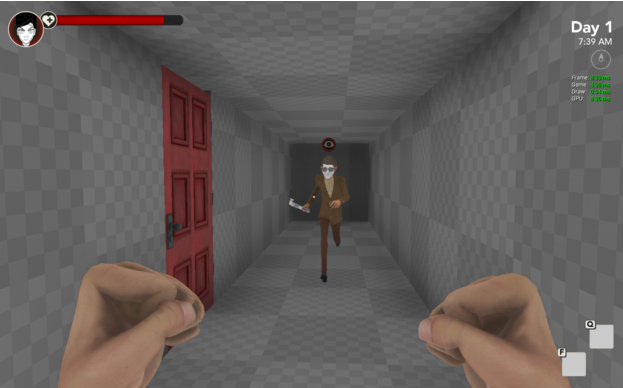
Find the rest of the team's update here.
Wednesday, December 16, 2015
I Want to Sue!
Q. I am filing a lawsuit against a movie studio who I believe stole my pilot for their movie [...]. I have a copyright from 2010, and the movie was released in 2012.Would you know of any good entertainment lawyers...?
A couple of things to consider: If their movie was released in 2012, it was presumably shot in 2011, which means there would have likely been a script in 2009-2010. Most projects go through several rounds of rewrites; development typically goes on for years.
There are many many scripts with similar elements. Many writers have similar ideas. Some ideas are just in the air. Some follow from the subject material. Can you prove that any specific person at the studio read your script? For example, Art Buchwald was able to sue Paramount over Coming to America because they’d signed a contract with him to work on the project.
If you did submit a script to a studio, they almost certain had you sign a release form. Release forms are not 100% effective (they are arguably unconscionable), but they are written specifically to insulate companies from "you stole my idea" suits.
Actually, you can legally steal any idea. Ideas are not copyrightable. You can only copyright the expression of an idea: plot, characterization, dialog, unique action sequences. You would have to prove that their movie has so many specific similarities to your script that they surely must have used your script.
Bear in mind: movie studios have lots of very fancy lawyers on retainer, who do nothing all day but fend off lawsuits. Unless you can invest $100,000 in your lawsuit, you’ll probably get swamped by their legal team no matter what the merits of the case are.
(I am not a lawyer; this is not legal advice.)
Friday, December 11, 2015
We Happy Few Update!

We’re making a big push to populate our procedural world with encounters, so I’m shifting my efforts from recording barks and cutscenes to fleshing out encounters. David has written a huge gigantic spreadsheet detailing all sorts of shenanigans you can get into on our various islands. My job is to take his gameplay specifications and make them into encounters that feel meaningful in addition to being fun challenges. Writing dialog is easy (well, I’ve been doing it for 25 years); the hard part is figuring out who the NPC we’re meeting is, what his unique agenda is, and making sure that is revelatory of our world, our lore and our theme.
Subscribe to:
Posts (Atom)