Sunday, September 18, 2016

Points

If you want Canadian government support for your movie, you need Canadians in key positions. There are ten possible points, for director, producer, writer, editor, composer, key cast, etc. The current government is planning to reduce the requirement so you don't need Canadian writers.

I have some experience that may be relevant.

In the 90s, I worked for a few indie production companies in LA that were trying to make movies in Canada. Specifically, they were trying to make Quebec co-productions so they could access Canadian and Quebecois government subsidies that amounted to about 25% of a film's budget.

A wholly Canadian production needed 10 out of 10 points. That wasn't very attractive to an LA production company because there were very few bankable stars willing to appear in a co-production. (Donald Sutherland came up a lot.) There were also not a lot of Canadian film directors acceptable to foreign distributors.

However, a co-production could allocate some of those roles to the co-production company. So a UK-Canada co-production could have, say, a British director if it had a script by a Canadian. It could have a British co-star. Moreover, each co-production company got to have one American cast member, so the top two cast members would be bankable Americans.

The point wasn't to make movies about British or Canadian culture. The point was to make low-budget direct-to-video movies for the international sales market; in other words, American thrillers and action movies and family films and so forth. The characters were all supposed to be Americans, and the stories set in the US.

I worked on, for example, an Israeli-Canadian co-pro; a French-Israeli-Canadian co-pro; a Dutch-Canadian co-pro; a French-Canadian-Israeli co-pro shot financed through a Welsh TV station and shot in Poland.

The Canadian government is now considering changing the Broadcast Act as regards 10-out-of-10 native Canadian productions that access Federal subsidies. They are considering reducing the required points to 6 out of 10.

So, let me tell you what will happen: American producers will swoop in and start making American movies with Canadian government money. These movies will be shot in Canada. They will have Canadian composers and Canadian editors. The name-below-the-title cast will be Canadian. But they will be American movies. The mailboxes will be blue, not red. The lawyers will wear suits, not robes. The stories will be generic thrillers and action movies and cabin-in-the-woods horror movies.

These American movies will snaffle up all the Federal funds for movies, so very few actually Canadian stories get told. No more Les Invasions Barbares; no more Atarnajuat: The Fast Runner; no more Incendies; no more Away from Her; no more Bon Cop / Bad Cop. Just Porky's and Resident Evil from now on.

Canada already has support for service productions -- films that shoot up here to take advantage of the weakened state of the Canadian dollarette. This would be taxpayers funding American stories.

Apparently the government is also considering loosening up the CMF rules, so American-written TV shows can satisfy Canadian content requirements for broadcasters.

Now, there are some good proposed changes. For example, under current rules, a Canadian produced show can't touch cultural subsidies without a Canadian broadcaster. This requirement may be scotched, and good riddance. I've had TV show pitches that had interest from, say, the BBC, but couldn't get a Canadian broadcaster, and therefore didn't get made.

But the 6-out-of-10 proposal would mean the elimination of Canadian culture on film and television. Canadian film and TV would become strictly service for American producers looking to save a few bucks. That's not why we have the Broadcast Act.

I know this isn't coming from the top. Lisa and I were honoured to have Justin Trudeau over to lunch years ago, when he was running for his first seat in Parliament. He was gung-ho about the need for Canada to support its own culture. More than that: when I argued that Canadian movies were good for tourism, he made the point that films that show the dark side of Canada were important too. A nation needs its voice.

I spent a decade working for American companies trying to get around Canadian cultural content rules to make American movies with Canadian taxpayer money. They hired Americans and Dutch guys and British guys who had "permanent residence" in Canada but actually lived in LA. One of the movies had an American writer, so they found an Israeli in Tel Aviv with the same name and gave him the credit. Producers will perform shenanigans if they possibly.

Reduce the points, and you open the floodgates. Don't be surprised when all the culture flows out.

Saturday, September 17, 2016

Predictability

Drama is conflict. Someone wants something; they can't get it. To make it a complete story, they get it, or they don't get it.

However, drama also needs conflict between what the audience expects, and what happens. Even if we know the outcome, we need to not know how it's going to get there, or at least not know how we're going to feel about it.

I recently read a few pages of a script about an Important Social Issue. As sometimes happens in scripts about Important Social Issues, the good people were good, and the bad people were bad. I knew what was going to happen and I knew how I was supposed to feel about it. And, indeed, events unfolded as expected.

In this case, the problem was that the main character was the person bearing the brunt of the Important Social Issue, i.e. the victim of discrimination. It's much harder to make a compelling story about a suffering saint. There's conflict, all right -- the saint can't get what he wants -- but I'm not pulled in because there's none of this second sort of dramatic tension. How are events going to unfold? How am I going to feel about them?

However, what if the same story had been told from another perspective -- from the persecutor's point of view? What if we humanized the bad guy, and showed him torn between his reasons for persecuting, and his dawning recognition that maybe he's not righteous. (Are we the baddies?)

Then I wouldn't be sure how to feel. And I wouldn't know exactly what was going to happen.

Or, if the saint isn't really a saint but a bit of a jackass. Or if the saint has doubts.

I realize that there are movies about saintly figures, from Jackie to Martin to Jesus. We know the stations of the cross, and we get a certain catharsis from watching a passion play. There's no dramatic tension. Instead, there's comfort in knowing exactly how we're going to feel. It's the sort of comfort we're seeking when we watch "mac'n'cheese" TV, where we know the cops will catch the bad guys and we're not even in much doubt how they'll do it. Or watching an old Star Trek episode.

But take a look at your work. Is there not only tension between the characters, but tension between the audience's assumptions and how you tell the story? Then you're off to the races.

Monday, August 22, 2016

Two TV Writers Watch a TV Show

So we watched THE GET DOWN on Netflix, Baz Luhrmann's show about the birth of rap during the disco era. I gather this show has provoked some controversy, being a show about black and Puerto Rican people in the South Bronx in the 70's made by a white dude from Australia. I don't really care if it's accurate. I'm not watching Baz Luhrmann because he's a documentarian. I'm watching him because ROMEO+JULIET and MOULIN ROUGE!

Oh, and because I lived New York in the 70's, and yeah, it was like that, dirty and beautiful, and full of despair and dreams.

Anyway, an hour into the show, after all sorts of michegas, a character tells the hero about a secret dance event called the Get Down, and asks, "Have you ever heard of someone named Grandmaster Flash," and chills went down my spine, because this is the epoch of disco and the kid is a rapper without knowing it, and yes, I have heard of Grandmaster Flash.

And I look on the TV, and I realize there's another 15 minutes of this. Whut? No.

No, Mr. Luhrmann. That is your out. That is how you end your pilot.

So we turned it off.

Not that we weren't enjoying it. But that was the perfect ending to the episode. So we made an executive decision.

TV writers watch differently. I have many times gone to a movie with my friend Doug, a movie writer, and afterwards we fix the plot.

Lisa sometimes accuses me of having ruined TV for her, because she now sees the seams and stitches of the shows she's watching — when the seams and stitches are showing, that is. On the other hand, when you see something really great, you appreciate it all the more. And you can turn off the show an hour in if it's earned its out.

Sunday, August 21, 2016

In which a magazine called Vice asks me about drugs...

Steven T. Wright (not the one-liner comedian) was kind enough to ask my thoughts for his article about drugs in games.

Drugs are part of our game because, well, drugs are part of our world. There's a lot of people who would be much less happy (or even functional) without anti-depressants. Drugs are part of our history. People have been tampering with their body chemistry for thousands of years. I have a pet theory that human beings didn't become farmers for the sake of food. It's well established that hunter-gatherers work less and eat better than primitive farmers. But alcohol! Ah, once people discover that grains ferment, and they can get blasted, then they settle down.

(This isn't purely a just-so story. There's some evidence that the very first settled site in Europe was a religious site, not a city. Religion and pharmacology go together like bread and wine.)

Drugs raise interesting philosophical questions. Conventionally, if you are stoned or drunk, that's not the "real you." The real you is the sober you. But if someone is depressive, we tell them that the depression is an illness, a departure from normal. A lot of people with depression feel that they're only "the real me" when they take their meds.

Is there a "real you"? Or is the you that you think you are just a function of your body chemistry, and if that chemistry changes, then who you are changes, for good or bad?

So that's a philosophical question our game highlights. I don't think we're making the game in order to make a case for or against drugs. I think we're using fictional drugs to talk about who we are.


Sunday, August 07, 2016

Convincing and Unconvincing Vamps

I borrowed THE ORIGINALS series 'cause it got a 7+ on the IMDB, but I had doubts about it literally the moment I saw what the lead actors looked like. They had that look that prime time actors have. They have the stink of Beverly Hills all over them. They're pretty, the boys and the girls, in a well-groomed, not particularly distinctive way.

And, sure enough, the dialog was kinda dumb and expositional, and the lore was ridiculous, and most of all, there was no way I could possibly believe that these three characters are the "original vampires."

It is hard to play a vampire convincingly. You have to seem like someone who's been around for hundreds of years (or, in the case of someone with a claim to being an "original" anything, I'd hope, tens of thousands).

That's why we often portray vamps as noblemen -- courtly, gracious, aristocratic. Gary Oldman's Dracula in Francis Coppola's movie of the book. Catherine Deneuve's Miriam in THE HUNGER. An aristocratic air makes it seem like the owner speaks for his whole house, all of its legacy.

James Marston pulled it off as Spike in BUFFY: THE VAMPIRE SLAYER without falling back on an aristocratic air. He was as sure of himself as someone could be who's killed hundreds of people one on one, who knew his own strength, who rarely has to convince anyone with his words.

Tom Cruise was a surprisingly convincing vampire, because he is so very sure of himself and has an ego the size of a truck.

I bet Grace Jones would make a fine vamp. Wesley Snipes made a superb half-vamp.

But vamps are not invulnerable, only immortal. You want someone who seems like they've been around the block. Like you've seen some horrific things, and done some, and had some done to you. Like you're aware that although you are ageless, you are mortal. The little vampire Eli in Let the Right One In, the old vampire in Cronos: they knew that, while they had super powers, they could die.

The best vampires also seem like a person. Not just "a vampire," but a human being who became a vampire.

Spike was a great vamp character because he was a punk rock star who knew he was no match for his own urges. "If I had to do it all over again -- who am I kidding, I would do it exactly the same." Drusilla was fun because she was crazy.

The characters in THE ORIGINALS were distinct enough that you could tell, barely, who was the roguish, "bad" one, and who was the uptight, "good" one and who was the girl. The series has gone at least two seasons, so I hope the characters developed since then. But if you don't start with the characters being people, it's hard to get there.

If I were casting vampires, I mean, sure, have Antonio Banderas. But have some vamps with traits that have nothing to do with being a vampire.

I mean, as you get older, you get wiser, but you don't stop being yourself. You get more and more yourself as you figure out who you are, and stop trying to be other people. A vampire is someone who's had hundreds of years to figure out what turns him or her on, and doesn't have to care about what doesn't turn him on. A vampire might be devoted to overseeing and protecting his human family. She might be an alcoholic. He might be a compulsion car thief. She might be a drama queen who likes to have multiple human lovers whom she would never feed on.

Have Steve Buscemi. Have Clare Danes, with all her crazy cryface. Have John Goodman.

One last thought about lore:  what prime time TV shows get wrong about lore is shoveling it into the pilot. That's a terrible way to treat lore. You get dialog like, "as you know, Bob, we've been vampires for three hundred years, but until recently I was immobilized by a magic silver dagger."

Obviously, people almost never remind each other of what they both know. But also, people who know deep things rarely talk about them. When they do, they just give a hint. They don't give you the download.

They refer to things elliptically. There are Southerners who refer to the "late, great unpleasantness" when they mean the Civil War.

They refer to things efficiently. You tell a Southerner, "It's Pickett's Charge," and you don't need to say more.

Lore is best used as a hook. Give a hint of something that creates a misty shape in the viewer's mind. Let their imaginations run with it.

In THE SANDMAN, Thessaly is a nerdy, humorless, utterly ruthless witch with big glasses. You get to know her as a witch for a while before someone asks, "How old are you?"

"I was born in the day of longest night," she says, "the year the bear totem was broken." And you suddenly realize that she was born before years had dates. Before days had numbers. She is incredibly old.

(And she's still pissed at Dream for the way their relationship didn't work out. And she probably didn't grow up thinking that forgiveness is a virtue, back on the tundra. And that's why she helps him destroy himself.)

I wasn't really writing this to talk about We Happy Few, just to vent about a terrible show and how it was terrible. But of course we have a great deal of lore in We Happy Few. We have a timeline that breaks off into alternate history in 1933. We have a people who did a Very Bad Thing that they've failed to confront.

And you'll put together what it was from newspaper articles, and old posters, and things crazy people say, and graffiti, and how the people entertain themselves. That's fun, and that's engaging.

If we just gave you a Star Wars-style title crawl, it wouldn't mean anything.

Saturday, August 06, 2016

I Celebrate and Cite Myself

I got into an interesting disagreement with a Wikipedia editor on the page for We Happy Few. The page asserted that, in the game's lore, Nazi Germany invaded England, but the English did a "Very Bad Thing" to get their freedom.

This is not quite right. In our game, it's the "German Empire" that invaded. We didn't want to deal with Nazis or the Holocaust. In Germany, you can't even release a game with swastikas in it. So, in our game, Hitler was deposed shortly after attacking Russia. Rommel is Führer. Also, the Very Bad Thing happened during the German occupation, and the Germans left some time later.

Some time in the future, you should eventually see an Iron Cross flag somewhere, and maybe a portrait of Erwin Rommel.

So I fixed the entry.

The editor reverted to his original entry.

I pointed out that I'm the writer of the story.

The editor insisted I provide citations to prove that my edits were correct.

Wikipedia, it seems, does not allow primary sources. You can't read War and Peace and say it's set in Russia during the Napoleonic invasion. You have to go find an article somewhere that says it is, and then cite that.

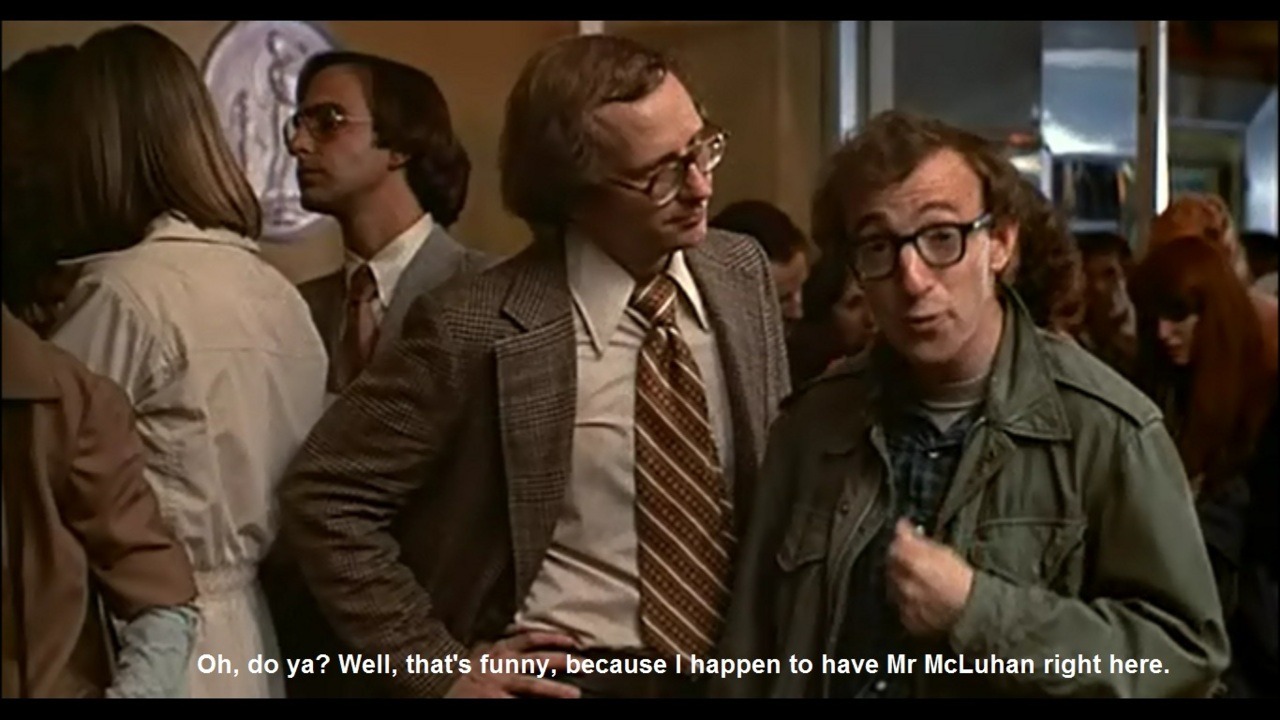
This makes sense. You can't have people rewriting articles based on their own interpretations. Suppose I think Annie Hall is a depressing, nihilistic movie about the futility of love. What's stopping me from editing the entry on Annie Hall accordingly? Only this rule.

So you can not, for example, pull Marshall McLuhan out from behind the poster and have him contradict someone. You have to cite an article in which someone quotes Marshall McLuhan.


That puts a writer in an odd bind. I happen to know that it was not Nazi Germany that invaded England in We Happy Few, because I wrote the timeline and all the lore to go with it. But that's not proof enough. I have to tell someone else, and they have to write it somewhere, and then I can cite their article, which quotes me.

So, hopefully, someone will quote this blog post in their blog, and then I can cite myself.

Friday, August 05, 2016

Compulsion Games is Hiring

We are looking for: A senior animator; a senior level designer; a gameplay programmer; a senior QA person; and an AI programmer. Check us out on LinkedIn. You do not have to live in Montreal; about 20% of the company works remotely.

Monday, August 01, 2016

We Happy Few Update -- Steam Early Access / Xbox Preview Launch!

I spent the first part of last week beating the game! As the narrative director, I don’t always get the luxury of time to sit down and go through a full playthrough. This week I did, and it took me about twelve hours! It was nice to finally get Arthur to the hatch on Apple Holm.

... which also meant writing a score of bug reports for issues that only I’m going to catch. I’m the guy whose responsibility is making sure that the world makes sense and that all the characters have in-game reasons to do the things they’re doing, and so I found a bunch of things I’d like to improve.

Of course after Tuesday morning’s launch, we’ve all been absorbing players’ reports of bugs. Some of them are bugs we know about. Some of them are not bugs at all. Some of them are new issues. For example, some people have complained that the NPCs can get a bit repetitious. Partly this is a bug in when they tell you to back off. Partly this is because we haven’t yet implemented the systems for atmosphere and showcased conversations. You should be hearing them talk lots more in our second update.

But, issue heard, I’m going to be writing and recording many more things for Arthur and the NPCs to say.


Of course, like Whitney, I’m sort of at the beginning of the pipeline – a lot of the things I do hit the game in weeks or months, rather than tomorrow. So I have to keep putting things in that pipeline.

Last week I recorded two voice actors for a series of audio flashbacks for Arthur. I've just finished editing them. You’re going to know a lot more about what exactly Arthur’s remembering.

And, I’m just starting on a similar system for another playable character, the Girl in White, or as Sam thinks of her, She Who Must Not Be Named. She’s going to have some surprising things to say for herself. You won’t hear this stuff for some time, but you will.