Friday, April 08, 2016

Pre-PAX We Happy Few Update!

This was a busy week for dialog. I recorded seven hours of sessions with six voice actors; next week I’ll record more.

Not every voice actor is equally talented. Some nail the line just from reading it; those actors are gold. I can easily get 180 lines an hour with someone that skilled. Fortunately, those are often the people who can do multiple different voices and accents, so we can use them for multiple encounters without the player thinking, “Enough with that guy, already.”

(On the other hand, there is always a limit to how different a human can make his voice sound; and the further someone gets from their natural voice, usually the harder it is for them to remain emotionally truthful as an actor.)

It goes more slowly with people who are less skilled. I sometimes have to build a performance, first saying, “really ask the question,” then “okay, and you’re 20 feet away from the player when you ask it” then “and you’re really pissed off.”

“Really ask the question” is something I have to say a lot. When you’re running through a bunch of lines on a page, it’s hard to invest your soul in each line. Sometimes they come out sounding like, well, like someone’s reading lines off a page. That’s when I have to say, “Okay, I really want to get a sense who you’re talking to,” or “Really ask the question like you want an answer.

Some actors can do an accent, or act, but not both at the same time. Fortunately, most of our NPC’s are regular middle class British folk, and so are our actors.

A lot of this work goes unnoticed, if I do it well. When it comes to conversations that you hear in the background, if it sounds human and real, then you won’t notice it. If it sounds wooden or contrived, you’ll notice that it’s bad.

I wonder what's playing on the Victrola.
No, seriously. That's part of my job.
Or, you won’t notice. But you will know somehow. You’ll feel more like you’re in a game and less like you’re in a world. I like to say, “The audience doesn’t know, but they know.” I guess I'd unpack that to mean, “The audience doesn’t know what’s right, but they do know when it’s wrong.” If the actors, even in the background, don’t believe in the imaginary circumstances, then the player won’t, either. If we get details wrong, the player may not necessarily be aware of them, but the player will feel shenanigans are going on.

Apropos, Whitney and I had a big argument over dumpsters, or “skips” as they seem to be called in England. David needs places for the players to hide. Dumpsters would be easy to make. And there were dumpsters in England in 1964.

However, in our world, there are no functioning dump trucks. The whole point of a dumpster is that it is emptied by machinery, not by hand. So, from my point of view, there can’t be dumpsters.

We had a big jolly back and forth about that. (I might have said something like "I hate that with the fiery passion of ten thousand suns.") In the end, we settled on ash carts. They’re a bit like dumpsters on wheels – a small skip that a horse pulls. While the Wellies don’t seem to have any surviving horses, they probably do burn coal, and coal makes ash, and ash has to go somewhere. So ash carts make sense. And it is revelatory if a world without horses is still using horse carts to get rid of coal ash. Clearly some poor bastards are dragging the ash carts around when you’re not looking.

Ceci n'est pas une ash cart. 
Also, we already have an ash cart, from Contrast.

The audience doesn’t know, but they know. They wouldn’t necessarily think, “Dumpsters, wtf?” But they would maybe feel like our world was a little less hallucinatory. Hand-drawn horse carts in 1964 reveal something about the world. It’s those details that create emotional engagement, I think.

We're off to PAX East in a couple of weeks. Come to our booth if you're there!

The rest of the team's update is here.

Thursday, April 07, 2016

Mostly Development People Don't Steal Ideas

Q. Several times have I sent short excerpt writing samples to (below-the-radar) microstudios that asked for them in Internet classified ads. Not once have I even gotten a "hello" in response. I have a sneaking suspicion that these sorts of cattle calls are to bring in fresh material to "inspire" the writer on the other end rather than bring in new writers, but I really have no idea. In the big leagues I imagine that practice is quite common, but at this (purported) level I don't see much benefit in ripping off the other little guy, though I suppose it is possible that these are A-list screenwriters running a sort of scam. What do you think?
I’d be surprised if that were true. Most writers get their inspiration from watching movies and TV, or their own lives, or occasionally from reading scripts that have won awards. Speaking personally, I don’t want to read someone else’s version of a story. I want to come up with my version of the story. That’s the fun of being a writer.

Most people don’t hear back. Unless a studio likes some material and wants to bring the writer in, they’re not going to write back. The exception would be if someone is really good and the reader likes their work but their boss went another way, they miiiiight send an encouraging note. But that’s rare.

That said, I have no idea what these “microstudios” are or why they’re asking for writing samples in “internet classified ads.” Do any readers know anything about this? Legit development people generally ask agents for material to read, not the internet. A development person would rather read material that at least one person (the agent) has already decided is worth reading; and the agent protects the writer, too, because there's now a third party that knows that the development person has read the writer's work.

On the other hand, it certainly is true that at the studios there is a habit of bringing in a lot of writers to offer their “take,” and then going with the guy with the reputation. I wouldn’t be surprised if the ideas some of the lesser-known writers offer do manage to make it into the eventual script. That’s just part of the deal you accept as a writer. Ideas are cheap. It’s the execution that people pay for, mostly.

Saturday, April 02, 2016

Again With Your Phones, and the Cover Letters

Q. I was especially excited to see yhat you are lart of a video game company. My company is already regiatered and i am devoted to video production.
ProTip: use your computer to contact potential employers. Not your phone.

Also, again: not necessary to start your email with "My name is ." I already know what your name is, from the header to your email!


Friday, April 01, 2016

We Happy Few Update!

This week I wrote up another slew of encounters, including one in which we discover how Wellies become Wastrels. I wrote up a bunch of conversations that Bobbies can have between each other while you’re stalking them. Apparently they discuss boots and food a great deal, but you might learn one or two things about the world if you listen. We’re prepping for our big recording sessions next week, where we hope to get quite a lot of encounter dialog with multiple actors in England, drawn from, I am told, a theatre. Let us know if any of the new dialog, once it’s integrated, sounds stagey.

As you know we’ve been working on a “death and dying” update. Naturally, that calls for Arthur to have an obituary. Because we are quite mad, the obituary for each cause of “going on vacation” will have a few different bits of Arthur lore; all of which requires a bit more thinking than writing.

In my copious free time, I’m continuing to work on Mad Scotsman’s playthrough, editing the cutscenes. We’ve discovered that some scenes were not adding enough to his story to justify their existence, so we cut them, and I’m weaving the remaining scenes back together. That will take a little new dialog, a new encounter, and some environmental cues.

And, I’ve been looking for someone to video us at PAX. I think I’ve found a good guy. Hopefully you’ll see some nifty updates.

Meanwhile we’ve been discussing and designing the new multiplayer mode. Obviously we can’t have players just talking to each other with headsets; they won’t have the right accent, generally. To keep the “voice” of the game we’ll probably have to use some sort of system where players can select barks from a range of prerecorded responses. In keeping with our overall ambitions, it should be a pretty wide range of responses. Once we implement full body awareness, players with motion capture rigs (like a Kinect) should be able to communicate by gestures, too. We won’t have any of that ready for PAX, but maybe soon after. So far, we’re primarily testing multiplayer in the Linux build.

Rest of the update here!

An Unexpected Development!

Everybody says a screenplay should have a theme, and game makers are coming around to the idea too. Well, I can't tell you much about it, but we are currently in negotiations to bring We Happy Few to a theme ... park! A major Japanese corporation, whose name sort of rhymes with "money," thinks We Happy Few would make the ideal theme park attraction. "You've really captured a whole world in your game," they tell us, and so they want to help us build a physical version of the world at a location I can't disclose yet.

This should be pretty amazing. I've always wanted one of those Happy Face Mask chairs for my living room. Maybe they can build me an extra one.

Obviously the attraction will mostly focus on the Village of Hamlyn; I'm not sure how many people really want to spend time in the Garden District. But what's most exciting is that they think they can make a deal with a pharmaceutical to bring an (over-the-counter, obviously) version of Joy to the deal. That's why the theme park won't be in Japan itself -- we need a country with slightly looser pharma regulations. But you'll not only be able to walk among the Wellies, you can be a proper decent Wellie yourself.

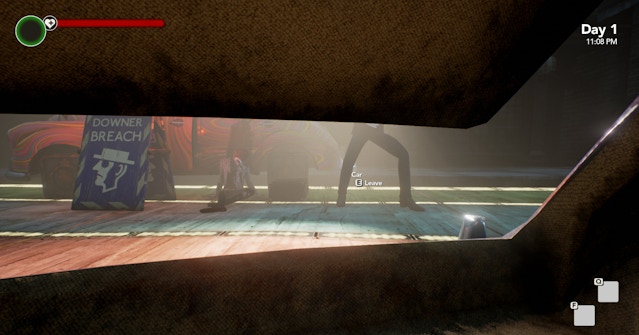
Just don't be a Downer. No one likes a Downer. You know what to do if you see a Downer, right?

Saturday, March 19, 2016

We Happy Few Update

I feel like I’ve had a productive day when I do something that results in big hunks of content. For example, the other day we had a recording session for a soldier. We got 180 lines recorded in an hour. Since we’d scheduled two hours, I had to scramble to come up with some other stuff for our actor to record.

However, I’m also responsible for lore. On Monday, Whitney asked me for some ideas for posters and things to flesh out the Garden District. The easy way to do this would be to repeat something you already know: a poster promoting Joy, for example, or another war poster. The harder and better thing to do is to show you something you didn’t know. In this case, it was, “What is it like for the Wastrels to come off Joy?” Now there’ll be a painting that tells you something about that. And a painting that’s the flip side of that: what proper decent Wellies do when they’re confronted with the awkward past. Sarah and I had fun coming up with that one.

You can hide in car trunks!
And, I wrote three editorial cartoons from some sort of samizdat dissident paper. Who knew there were ever dissidents?

I sometimes wonder where my day goes. Something like “think of five ideas for the art team” can take an hour or more. We are also coming up with a new game mode. But what to call it? The names of the modes have to communicate what they’re like while being of the game world -- for example Wakey Wakey for the mode where you wake up after death, and We’ve Come to the End of Our Time for permadeath mode. See if you can guess what the middle mode is from the following rejected trios of game mode names:

Die Another Day
You Only Live Twice
Dr. No

As the World Turns
General Hospital
One Life to Live

But Soft, What Light from Yonder Window Breaks
Double, Double, Toil and Trouble
To Be, Or Not to Be

This sort of thing can also take an hour or more: a lot of thinking, and not very much writing. The best way to do it is to write down all the ideas you have, not just the good ones; a probably bad idea (Please Sir, Can I Have Another mode anyone?) can be a “bridge” to a good idea.

These things take up a lot of time, but they’re the difference between feeling that the world is deep and rich and strange, and would exist even in Arthur’s absence, or feeling that it is merely there to support gameplay.

Rest of the update here.

Far Cry Primal: Some Thoughts


I've enjoyed the Far Cry franchise, particularly Far Cry 4. Exotic locations, solid combat, open world, lots of different strategies to try; but most interesting for me, Far Cry 3 and 4 told good stories. Far Cry 3 was about a privileged white kid who becomes a badass, and what that costs him. Far Cry 4 made you choose between two or three allies, each of whom had serious flaws. Oh, and the hero is non-white! As is almost everybody in the game.

So I was pretty excited about Far Cry: Primal. And it does indeed have exotic locations, solid combat, a big huge open world to explore, and lots of different strategies to try. Oh, and the only white people in the game are Neandertals!

And it has colorful characters, oh yes, from the crazy shaman to the badass queen of one of your enemy tribes. But with the exception of one joke character, none of them has flaws. They are all just fighting for the survival of the clan.

It could have been possible to give the player some flawed characters, and some of the choices that flaws lead to. As written, your tribe is in an existential crisis, squeezed between cannibals and human sacrificers. You can kill them or be wiped off the face of the planet.

Suppose one of your allies wanted to try to reach out to these enemies? Suppose one of the enemies was willing to be an ally, at least against a third party? Without making the whole game about factions, developing one or two characters so that they present choices? You could make "kill'em all" the straightforward, low-risk road, and "reach out" a high-risk, high-reward road, where if you play it right you get an ally, but if you play it wrong, some of your people get killed.

Or, even, if you don't want to go that far in re-tooling the franchise, do what Far Cry 4 did, and demand that the player choose between two visions for the society he's building.

Or even simply, have some of the allies ask the player to do things that are not purely 100% good things. E.g. an optional mission to slaughter all the mammoths to deprive the Neandertals of their food supply, reducing their number.

Or even simply, give them some character flaws of the personal sort: an ally who does not like you, who has to be placated with gifts. An ally who leaves you in a ditch to die, who you need to work with anyway.

As it is, the game is strangely flat. Although it has tons of atmosphere and lovely rendered animals and mountains you can climb and combat that is simply yet flexible... I'm not as engaged as I was by Far Cry 3 and 4.

Character flaws are why we care about characters. Can a AAA single player game really afford these days not to have emotional engagement?


Saturday, March 12, 2016

We Happy Few Update


This week I’ve been working on passive conversations. These are conversations that you might hear while you are very stealthily not interacting with Wastrels or Wellies.

Active conversations are conversations that NPC's have with you, either while they're trying to persuade you to take your Joy, or if they have a problem they hope you can solve, like this guy, whose wife seems a bit under the weather:


We have two kinds of these. One I’m calling “Atmosphere.” These are the sort of conversations you might hear dozens of times. “Oh, there you are!” “Were you looking for me?” “Not at all – but there you are. Hahaha!” “Hahaha!”

These sorts of conversations are standard in video games. However, we’ll also have showcased conversations. These are conversations you’re probably only going to hear once in a playthrough. They’re longer, and they are about people’s distinct desires and problems. We’ll rig these conversations to play in specific encounters where you will, for example, have to stealth your way through a specific location in order to achieve a goal. So your reward for not killing everyone in the house, in addition to whatever loot we give you for being non-homicidal, will be learning about someone’s life.

The showcased conversations really came about because in my first effort at writing atmosphere, all the conversations came out very specific and personal – all way too memorable to be conversations that you might hear from any number of totally different people in totally different places. Asking a screenwriter to write undistinctive dialog is like asking a singer to sing off-key: all their ten thousand hours of training are telling them not to do what you’re trying to do. Fortunately, rather than scrapping the memorable conversations, we’re going to use them along with some more general conversations.

All of this represents yet another metastasis of the amount of recorded narrative in this game! This game is going to have a lot a lot a lot of voice work. Should be fun.

Read the rest of the team's update here.